
Last updated November 15, 2026
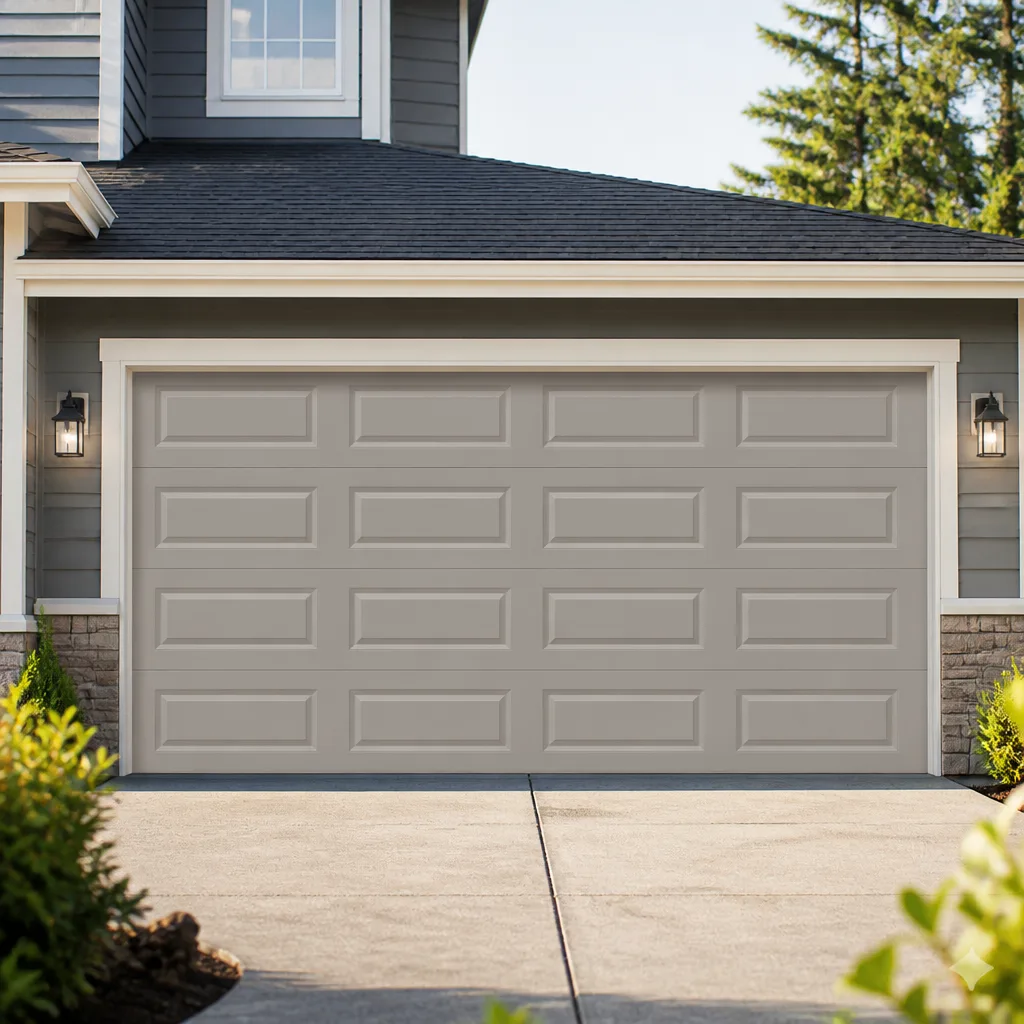 Raised-panel steel
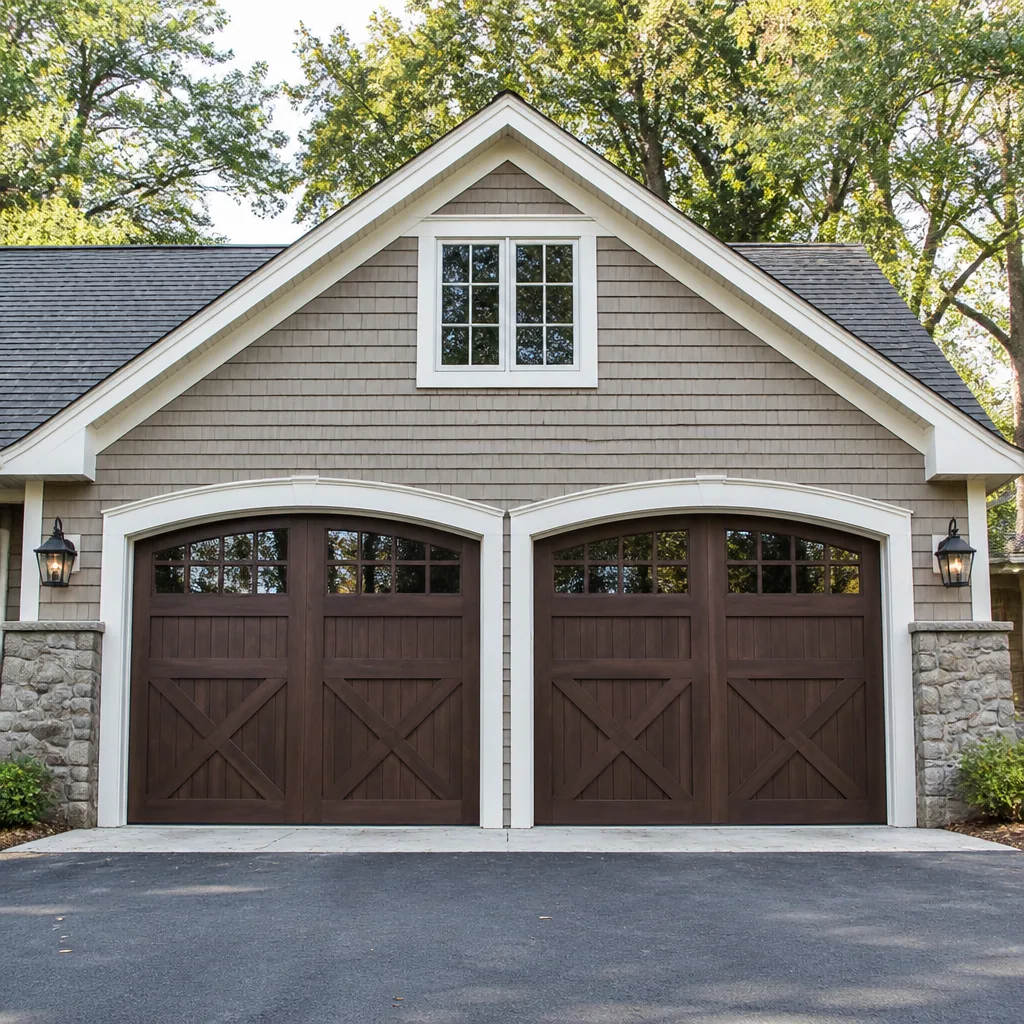 Carriage house
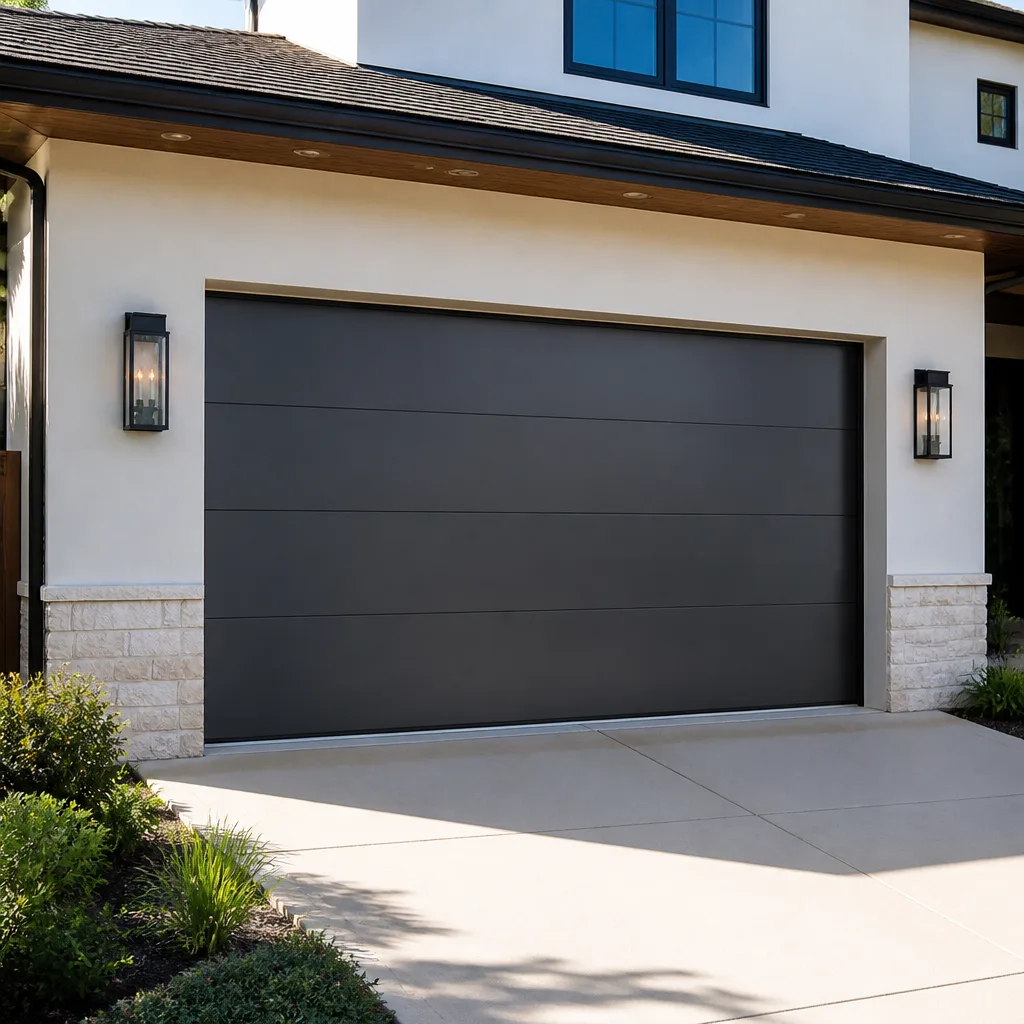 Modern flush
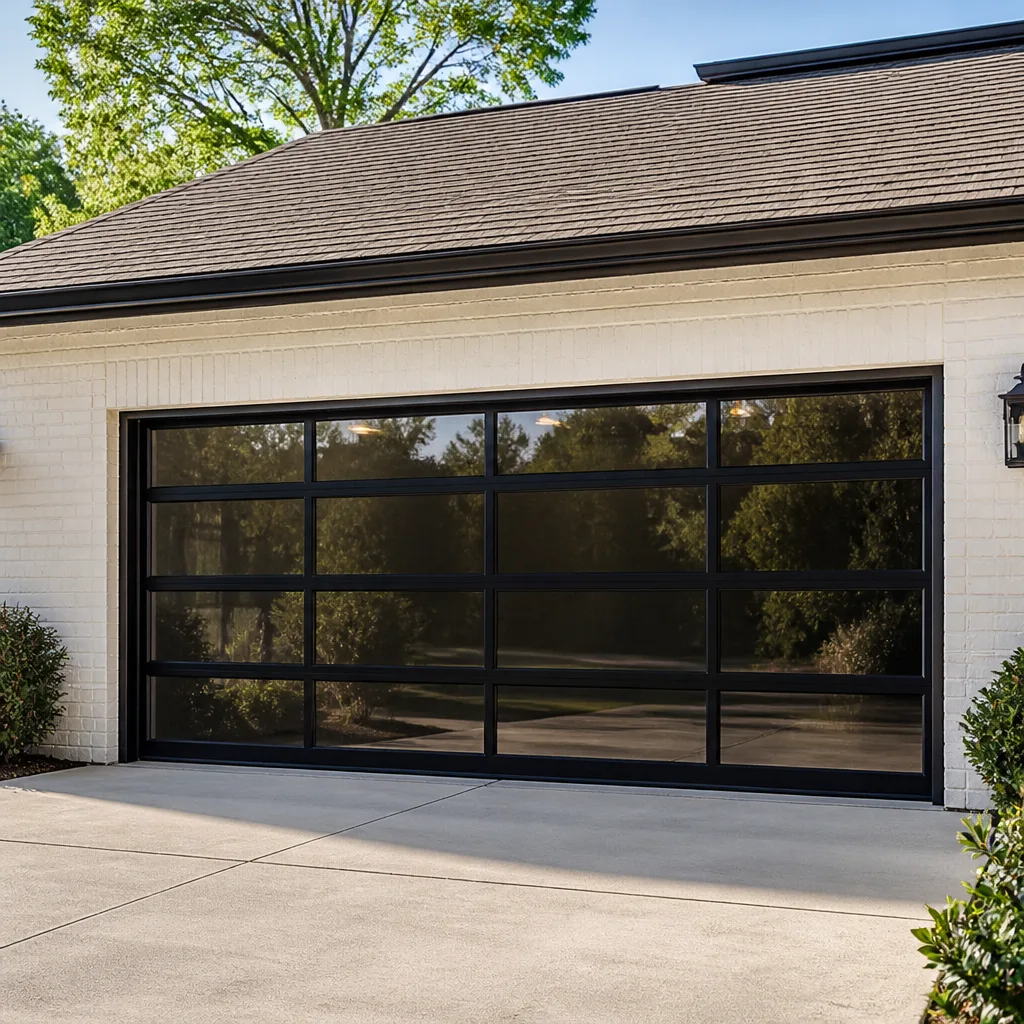 Full-view glass
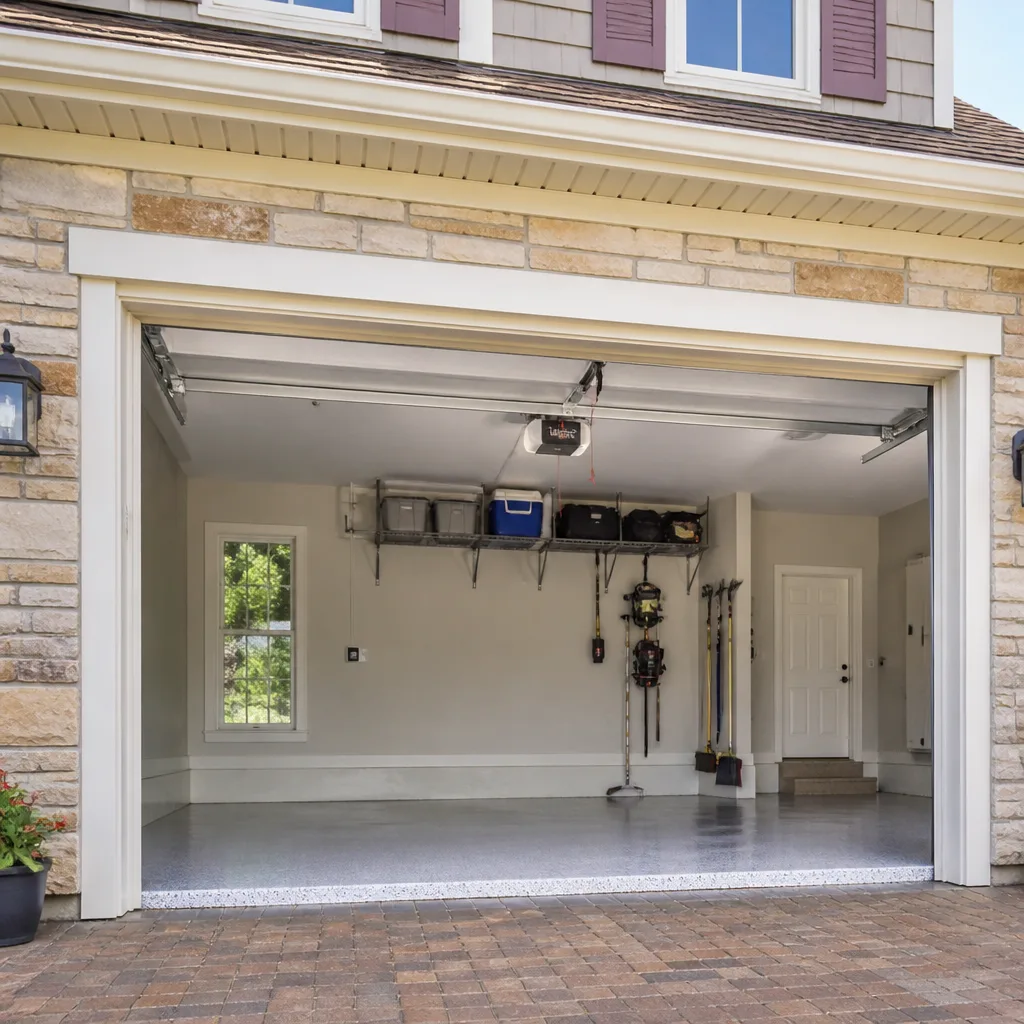 LiftMaster openers
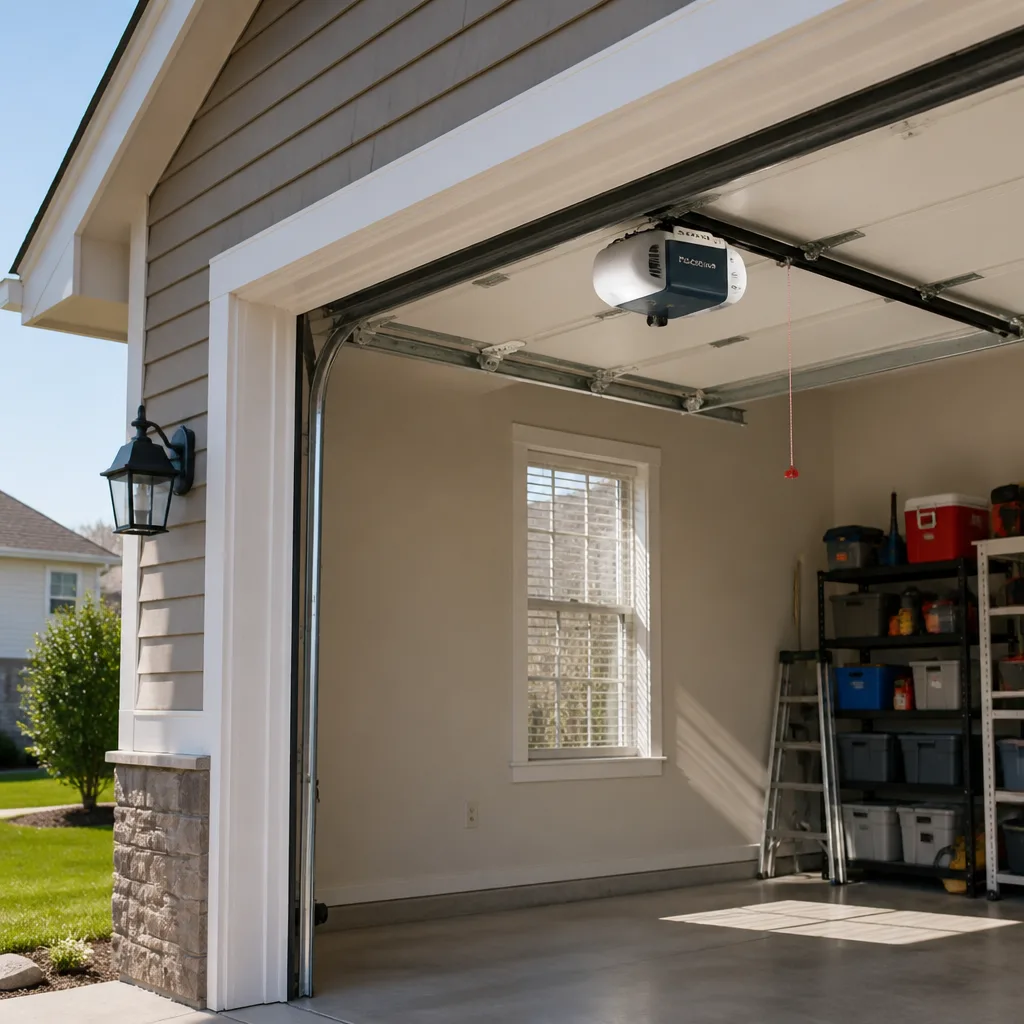 Chamberlain openers
Full 25-point door and opener safety check with every visit - springs, cables, rollers, tracks, and your LiftMaster or Chamberlain opener included
You get a price before we start. It does not change when the pro arrives.
Get your free estimateHow to Hire a Garage Door Contractor in Santa Maria: A Step-by-Step Guide
Most Santa Maria homeowners hire a garage door contractor the same way they hire a painter: get three bids, pick the middle one, hope for the best. That approach falls apart with garage doors because the work isn’t cosmetic. Springs, cables, and opener logic boards fail in specific ways that a generalist can’t diagnose and a part-swapper won’t admit they can’t. The single best filter isn’t price. It’s a handful of technical questions that separate a brand-fluent technician from someone reading a manual for the first time. This guide walks you through those questions, the licensing check that takes less than a minute, the red flags buried in written quotes, and how to compare bids when the parts listed don’t match. Everything here is written from Santa Maria, where the housing stock and the market shape what a fair quote looks like.
Quick Answer
To hire a garage door contractor in Santa Maria, verify their California contractor license on the CSLB website, ask five technical questions about your specific door and opener brand, and insist on a written quote that itemizes parts and labor separately. Choose the contractor whose answers show they diagnose the actual problem rather than defaulting to replacement. A fair quote names the spring type, the opener model, and the brand-specific parts involved. If a contractor can’t answer basic questions about your equipment before touching it, that’s your answer.
Styles & brands we work with
- Raised-panel steel
- Carriage house
- Modern flush
- Full-view glass
- LiftMaster openers
- Chamberlain openers
Table of Contents
- The Five Technical Questions That Reveal a Specialist
- What California Licensing Covers and How to Verify It
- Red Flags in a Garage Door Quote
- How to Compare Three Quotes Apples-to-Apples
- Special Considerations Near Vandenberg AFB
- What the Santa Maria Market Looks Like
- Springs, Cables, and the Safety Line You Should Never Cross
- Common Mistakes to Avoid
The Five Technical Questions That Reveal a Specialist
Ask these five questions before you agree to a quote. You don’t need to know the answers yourself. You need to hear whether the contractor answers with confidence and specificity, or deflects with vague reassurance. In our experience, a technician who works on your brand every week answers these in plain language within seconds. A generalist stalls, guesses, or pivots to “we’ll take a look when we get there.”
- “What spring system does my door use, and how can you tell?” A specialist will ask about door weight, track configuration, and whether the door has one spring or a matched pair. Torsion and extension springs are different systems with different failure modes. If the answer is “we’ll figure it out on site,” they haven’t thought about your door yet.
- “Do you work on my opener brand, and which drive type is it?” Belt-drive, chain-drive, and screw-drive openers behave differently, and smart openers from LiftMaster or Chamberlain have logic boards that fail in specific patterns. A contractor who services Genie and LiftMaster regularly will name the drive type and the common failure points without hesitation.
- “Is the problem the door, the opener, or the balance?” This is the diagnostic question. A door that binds, jerks, or reverses mid-travel could have a spring problem, a track alignment problem, or an opener force-setting problem. A specialist separates these before quoting. A part-swapper quotes a new opener.
- “How do you test balance and force after the repair?” The answer should involve a physical balance test and a force test, not just “it works now.” Safety is the finish line, not speed. If they can’t describe how they verify the door is balanced and safe to operate, they aren’t finishing the job properly.
- “Which brands do you service regularly?” You’re listening for whether your brand comes up naturally. Raynor, Clopay, Amarr, Wayne Dalton, Craftsman, and the opener brands above all have quirks. A contractor who says “we work on everything” without naming any brand is telling you they specialize in nothing.
If a contractor answers all five cleanly, you’re likely talking to someone who diagnoses rather than guesses. That’s the standard to hold every bid against.
What California Licensing Covers and How to Verify It
Garage door installation and repair in California falls under contractor licensing rules enforced by the Contractors State License Board. A contractor performing this work should hold an active license in the appropriate classification, and you can verify it yourself in about a minute. Go to the CSLB website, enter the license number or the business name, and check three things: the license status, the classification, and whether there are any complaints or disciplinary actions on record.
Here’s what to look for on that check:
- Active status. A suspended or expired license means the contractor shouldn’t be taking new work. Walk away.
- Classification. Ask the contractor which classification they hold and whether it covers garage door work. If they can’t explain it, that’s a concern worth noting.
- Business name match. The name on the license should match the name on your quote and contract. Mismatches are a warning sign.
- Insurance. California requires licensed contractors to carry workers’ compensation insurance for employees. Ask for a certificate of insurance and confirm it’s current. A contractor who hesitates on this question is one you don’t want on your property.
Licensing doesn’t guarantee quality, but it does confirm the contractor is accountable to a state board. In Santa Maria, where the market includes both established specialists and newer operations, the CSLB check is the fastest way to separate the two. Do it before you sign anything, and don’t accept “we’re licensed” as a substitute for seeing it yourself.
Red Flags in a Garage Door Quote
The written quote is where generalists reveal themselves. A specialist’s quote reads like a diagnosis: it names the part, the brand, the quantity, and the labor as separate lines. A generalist’s quote reads like a guess. Watch for these specific warning signs.
- Bundled “parts and labor.” A single line item covering everything hides what’s actually being installed. You can’t compare it to another bid, and you can’t tell whether the spring type or opener model matches what your door needs. Ask for itemization before you sign.
- Vague part descriptions. “Standard spring” or “replacement opener” tells you nothing. A proper quote specifies torsion or extension, one spring or a matched pair, and the opener model by name.
- No brand mentioned. If the quote doesn’t name the brand of the part being installed, ask. A specialist works on your brand and will say so. A contractor who installs whatever’s in the truck is steering you toward what’s convenient, not what fits.
- Immediate replacement recommendation. A door that needs a spring or a cable does not need a new door. If the first recommendation is full replacement without a diagnostic conversation, get a second opinion. The right fix is often smaller than the first quote suggests.
- Pressure to decide now. A contractor who won’t put the quote in writing and give you time to compare is telling you they don’t want you comparing.
- No mention of balance or force testing. The job isn’t done until the door is balanced, force-tested, and safe to operate. A quote that doesn’t mention this step is a quote from someone who skips it.
How to Compare Three Quotes Apples-to-Apples
The biggest comparison mistake is lining up the bottom-line numbers and picking the lowest. Three quotes for “spring replacement” can describe three entirely different jobs. To compare fairly, you need to normalize them. Here’s how.
- List what each quote names as the problem. Diagnosis first. If one quote says “broken torsion spring” and another says “door off track,” they’re not quoting the same job. Resolve the diagnosis before comparing price.
- Match the parts. Spring type, spring count, opener model, and brand. If Quote A specifies a matched pair and Quote B specifies one spring, the prices aren’t comparable. A matched pair usually costs about twice a single spring.
- Separate labor from parts on every quote. Ask each contractor to break it out. Bundled quotes can’t be compared, and they hide whether you’re paying for a genuine part or a cheap substitute.
- Confirm what’s included. Balance testing, force testing, haul-away of the old parts, and a final safety check should be in the scope. If one quote includes these and another doesn’t, the cheaper one may be cheaper because it’s leaving steps out.
- Check the written estimate against the verbal one. The written estimate sets the final price. If the verbal number and the written number don’t match, ask why before any work starts.
Once the quotes are normalized, the price difference often shrinks. And when it doesn’t, the lower quote usually shows you why: fewer parts, fewer steps, or a diagnosis that doesn’t hold up. For more on what specific repairs involve, see our garage door repair service details.
Special Considerations Near Vandenberg AFB
Homeowners in the neighborhoods closest to Vandenberg AFB sometimes face requirements that don’t apply to the rest of Santa Maria. Military-adjacent housing, including rentals and base-adjacent properties, can carry access rules, insurance conditions, or property-management approval steps that affect which contractors can legally service a home. If you rent, manage a multi-unit building, or live in base-adjacent housing, confirm three things before booking.
- Access requirements. Some properties require advance scheduling, gate clearance, or a specific check-in process. Ask your property manager or housing office what’s required, and pass it to the contractor when you book.
- Insurance conditions. Property managers sometimes require proof of insurance before a contractor is allowed on site. Get the certificate in advance so the appointment doesn’t stall at the door.
- Approval steps. Some rental agreements require written approval for non-emergency repairs. If your door is failing, document the issue and get approval in writing so the repair isn’t delayed.
These aren’t garage door rules. They’re property and access rules that interact with the garage door trade. A contractor who works in the area regularly will know to ask about them. If you’re unsure what applies to your property, ask before you book, not when the technician is standing at the gate.
What the Santa Maria Market Looks Like
Santa Maria’s housing stock spans a wide range: older homes with original extension-spring doors, mid-century builds with early chain-drive openers, and newer construction with smart openers and insulated doors. That range matters when you’re hiring, because the contractor who’s comfortable with a 1970s extension-spring door isn’t necessarily the one who can troubleshoot a LiftMaster logic board. Ask what kind of doors they see most often in Santa Maria, and listen for whether their experience matches your equipment.
The local climate is mild, which means garage doors here don’t face the extreme seasonal stress that doors in colder or harsher climates do. What they do face is daily use and the slow wear that comes with it: springs fatiguing, cables fraying, openers losing their force calibration over time. The typical failure pattern in Santa Maria is gradual, not sudden, which means a contractor who inspects and diagnoses will often catch problems before they strand you. That’s another reason to ask about testing and inspection in the hiring conversation.
Pricing in Santa Maria follows the same general shape as the rest of the region. Spring replacement typically runs in the low hundreds for a single spring, with a matched pair costing about twice that. Opener repair varies with the model and the part. Installation is a scheduled, measured job with a written price, not a same-day repair. Use these ranges as a rough guide only. The written estimate sets the final price, and it should be agreed before any work starts. For opener-specific work, our garage door opener repair page covers drive types and common failures in more detail.
Springs, Cables, and the Safety Line You Should Never Cross
Torsion springs and the cables under tension are the most dangerous components on a garage door. A spring under load can release violently, and the cables that run alongside it are equally unforgiving. We mention this because hiring the wrong contractor isn’t just a quality problem; it’s a safety problem. A technician who doesn’t understand spring tension, balance, and force testing is a technician who can leave you with a door that operates unpredictably.
What you should ask, and what you should never do yourself:
- Ask how they handle spring tension. A trained technician will describe winding and unwinding with proper tools and a controlled procedure. If the answer is vague, that’s a concern.
- Ask about cable inspection. Cables fray and can snap. A proper repair includes checking the cables, not just the spring.
- Never attempt spring or cable work yourself. This is the one part of garage door maintenance that genuinely can cause serious injury. Leave it to a trained professional.
- Confirm the balance test. After any spring or cable work, the door should be balanced and force-tested. A door that isn’t balanced strains the opener and can reverse unexpectedly.
A contractor who treats safety as the finish line, not an afterthought, will talk about these steps without being asked. That’s the standard. If you’re comparing bids and one contractor skips the safety conversation, that’s a reason to look elsewhere.
Common Mistakes to Avoid
- Hiring on price alone. The lowest bid is often low because it leaves out steps or substitutes parts. Compare the scope, not just the number.
- Skipping the CSLB check. It takes a minute and tells you more than any review. Verify the license before you sign, every time.
- Accepting a bundled “parts and labor” quote. You can’t compare it, and you can’t tell what’s being installed. Ask for itemization.
- Letting a generalist talk you into replacement. A failing spring or opener is usually a repair, not a new door. Get a diagnosis before agreeing to replacement.
- Ignoring brand compatibility. Your opener and door have specific parts. A contractor who doesn’t work on your brand may install the wrong part or guess at the fix.
- Booking without confirming access requirements. Near Vandenberg AFB and in managed properties around Santa Maria, access and insurance rules can stall an appointment. Confirm them in advance.
- Not asking about testing and safety. Balance and force testing are the finish line. A quote that doesn’t mention them is a quote from someone who skips them.
See the difference
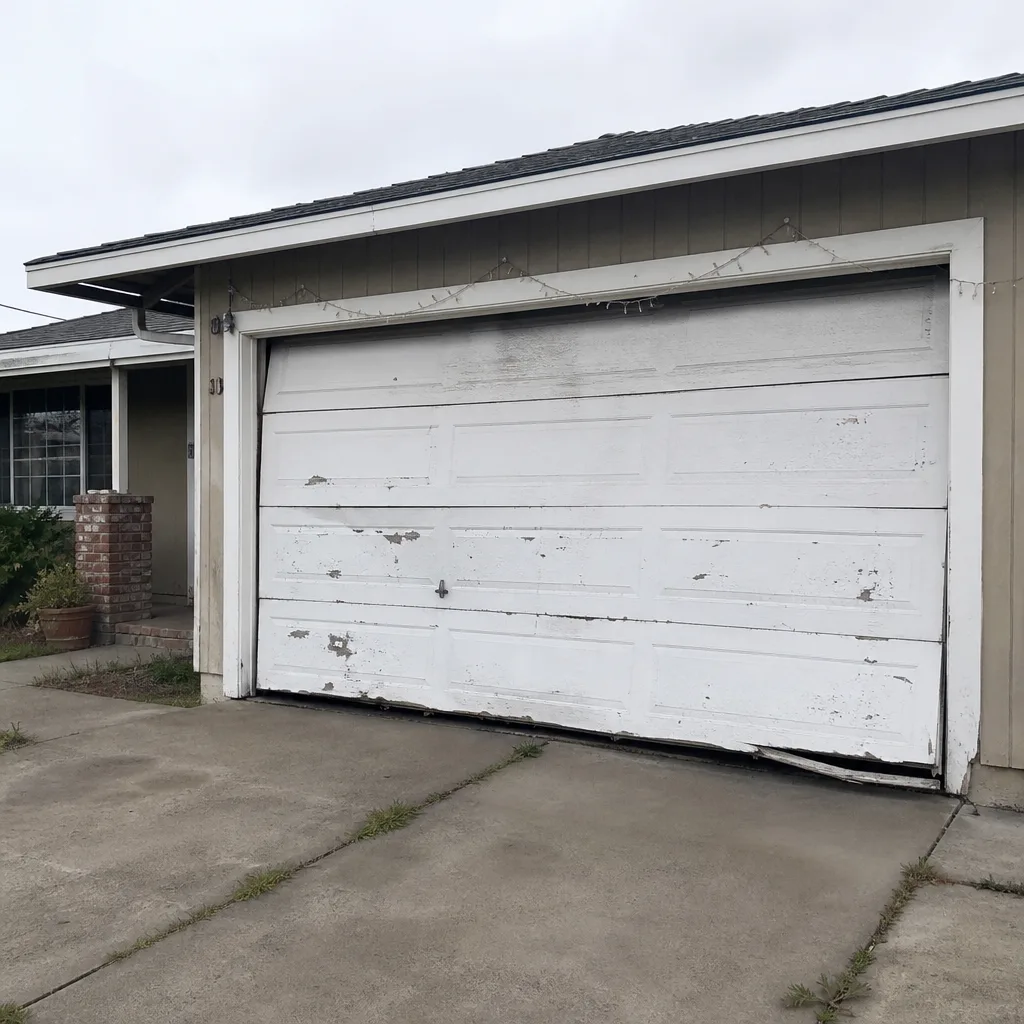 Before
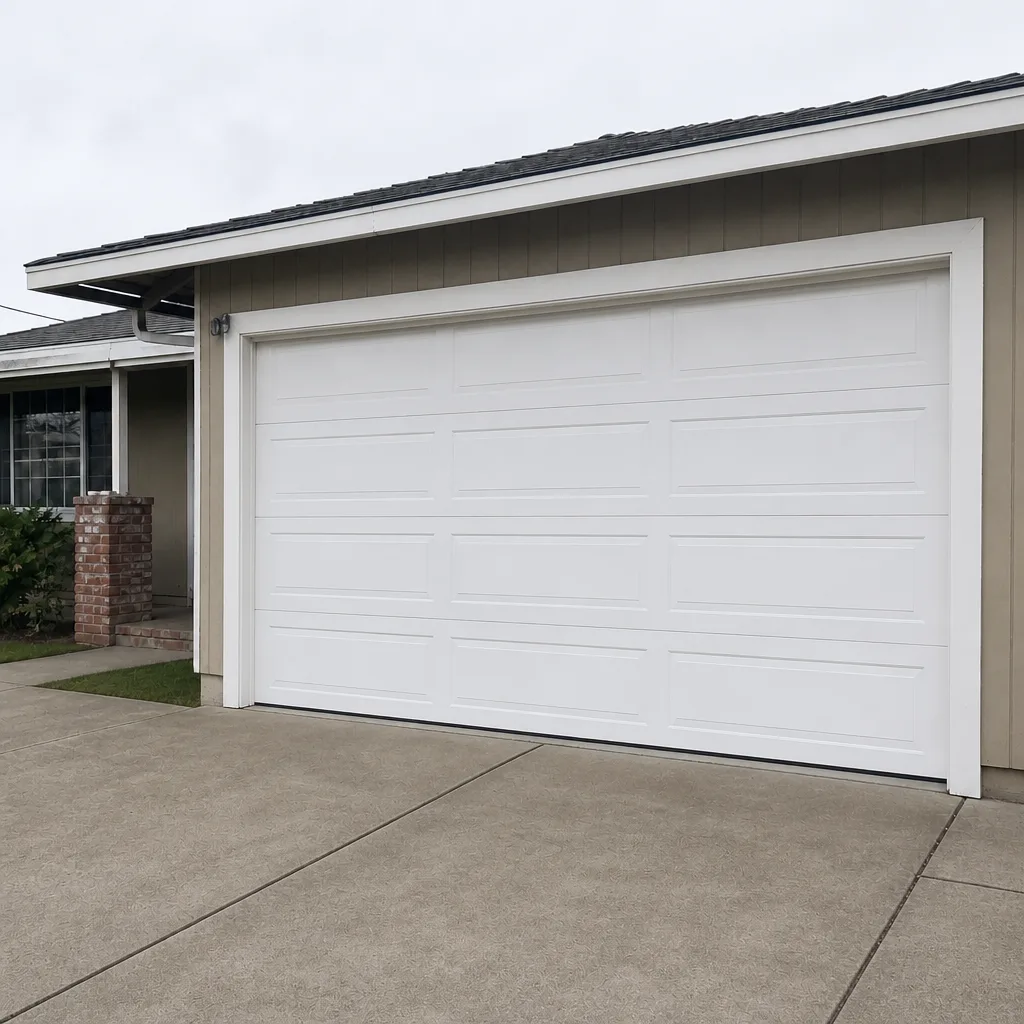 After
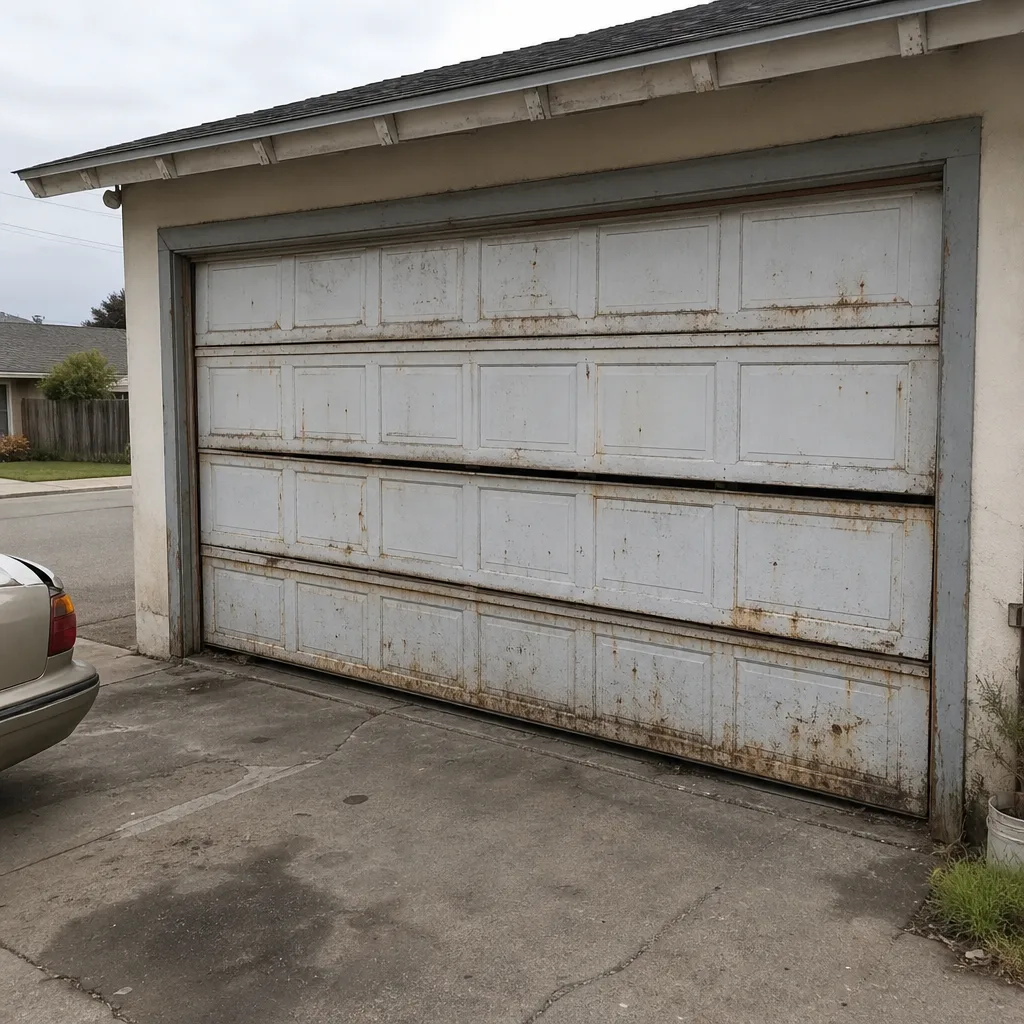 Before
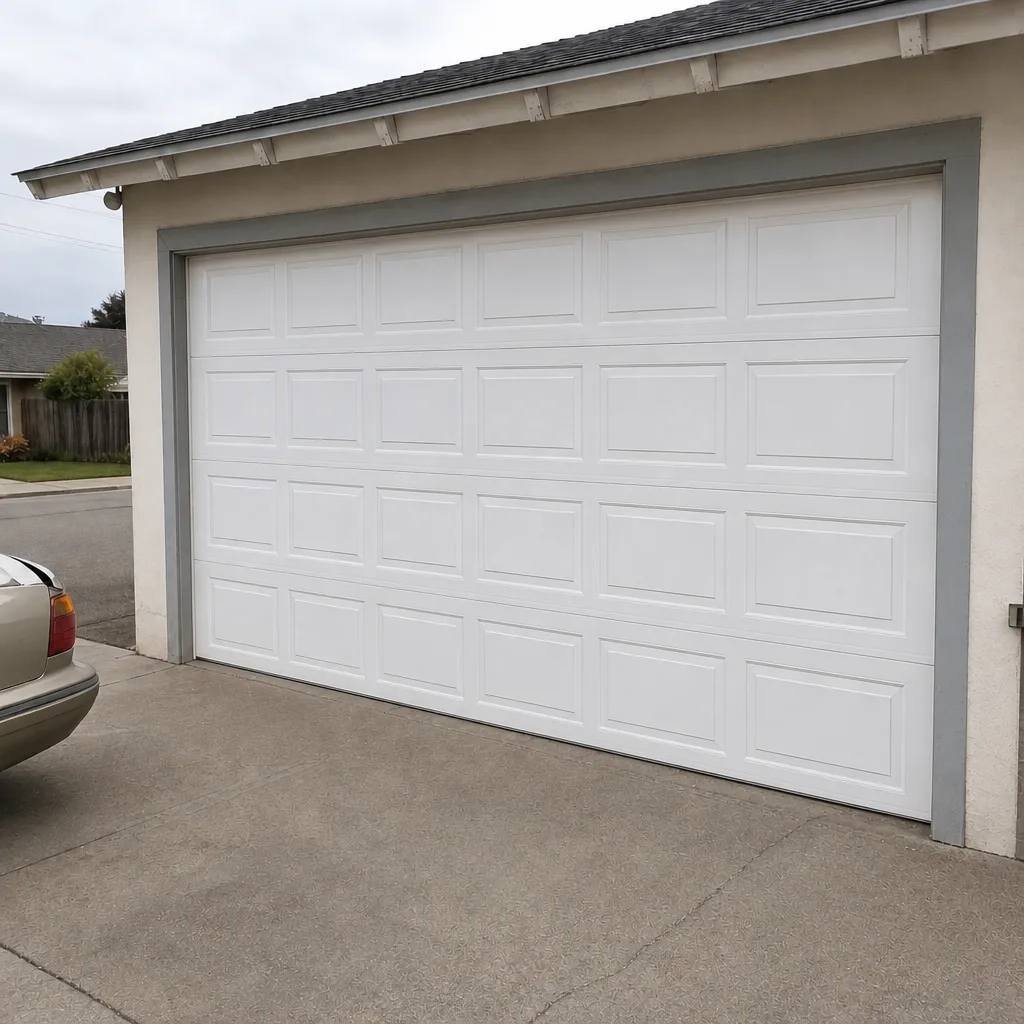 After
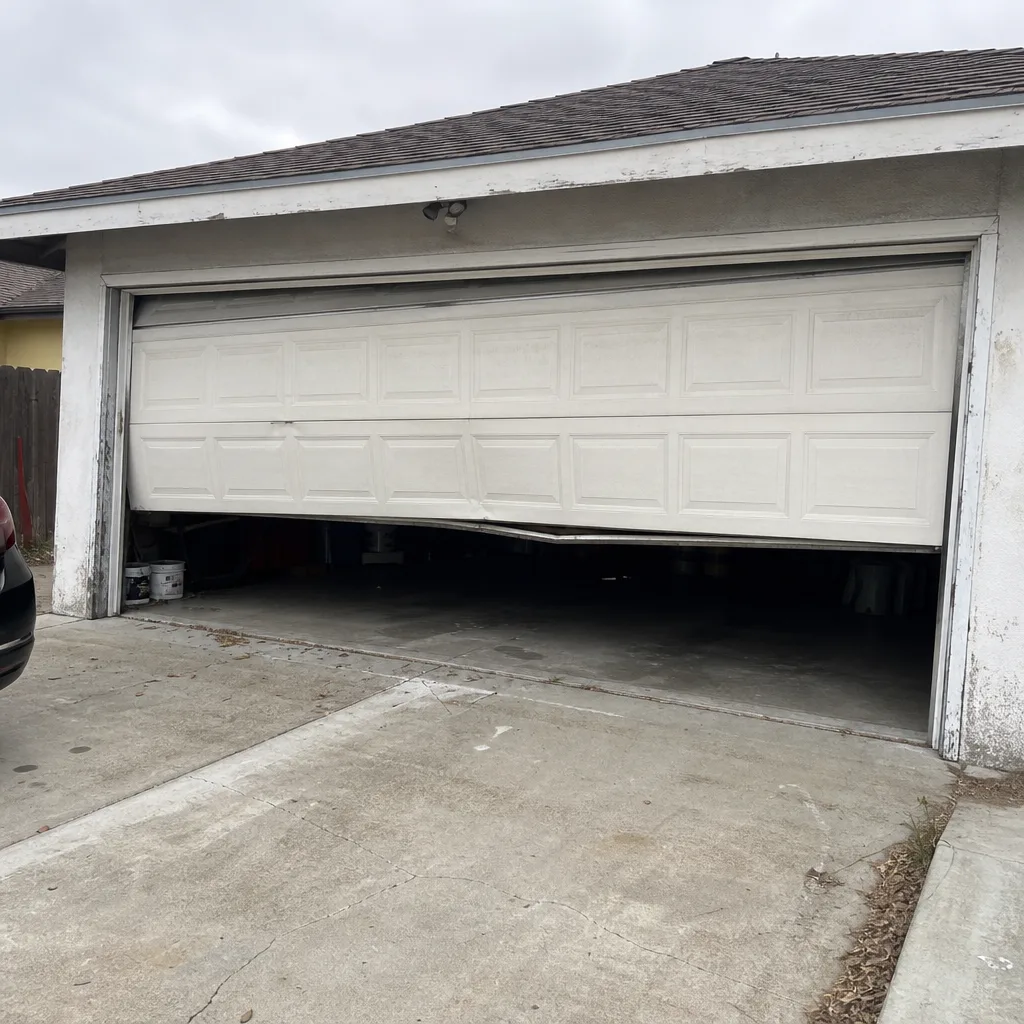 Before
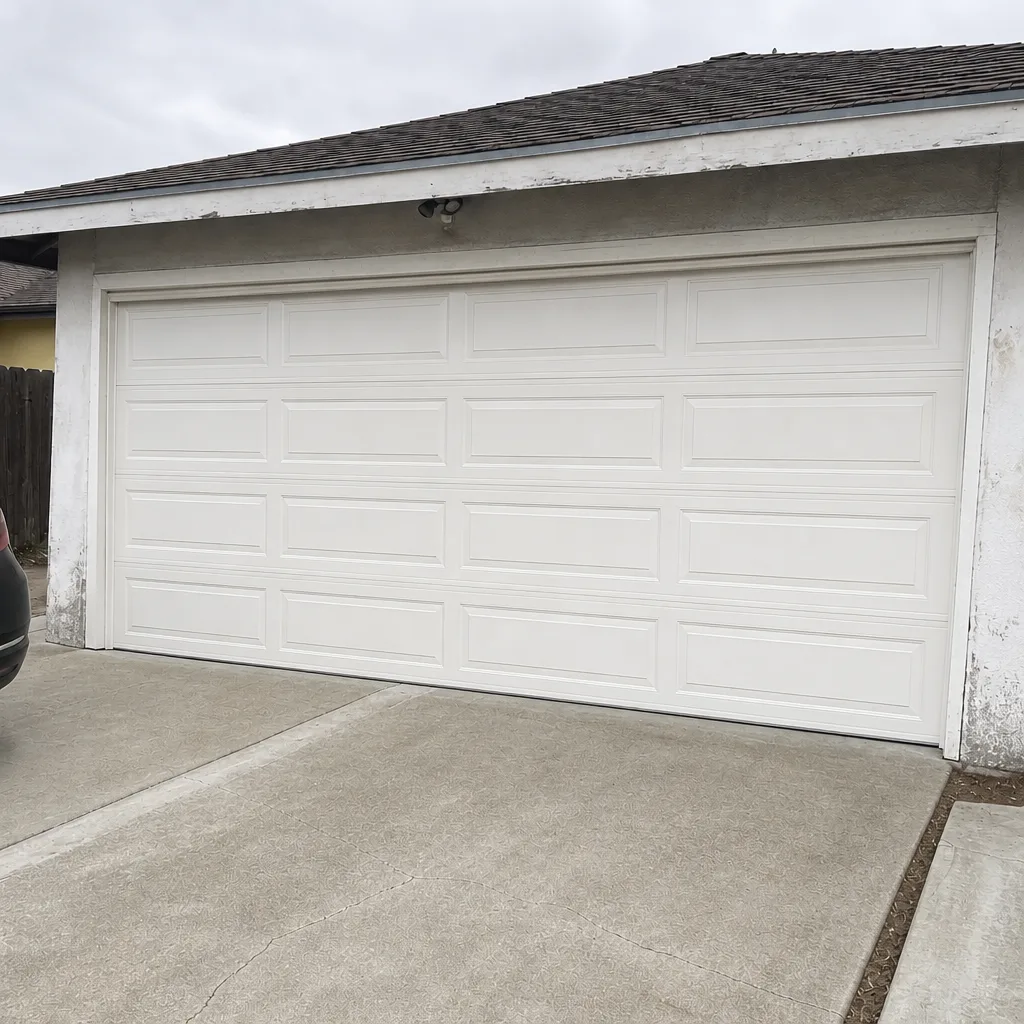 After
When to Call a Professional
Some garage door problems are cosmetic. Others are genuinely dangerous or will get worse fast. Call a professional when the door won’t open or close, when it reverses unexpectedly, when you hear a loud snap from the spring area, when the door is visibly off track, or when the opener runs but the door doesn’t move. Call before you touch a torsion spring or a cable under tension, and call if a repair you tried didn’t hold. For everyday opener issues, an opener specialist can often diagnose the problem quickly. If you’re in Santa Maria and want a straight answer before you commit to anything, Halo Garage Door Repair offers free estimates in Santa Maria. Call (866) 361-7506. We answer 24/7. Fast dispatch from 7am to 7pm, Sunday through Friday.
Frequently Asked Questions
Ask the five technical questions above and listen for specific, confident answers about your door and opener brand. A specialist names the spring type, the opener drive type, and how they test balance and force after the repair. A generalist deflects or promises to “figure it out on site.” If the answers are vague, keep looking. Call (866) 361-7506 for a free estimate if you’d like to hear how a specialist answers.
A proper quote itemizes parts and labor separately, names the spring type and count, names the opener model if relevant, and describes the testing step. Bundled “parts and labor” lines hide what’s being installed and make comparison impossible. The written estimate sets the final price, and it should be agreed before any work starts. Call (866) 361-7506 for an exact quote, with estimates free.
For repair work, same-day service is often possible. We answer 24/7, and a call outside dispatch hours is booked into the next opening, Sunday through Friday, 7am to 7pm. Installation and replacement are measured and scheduled, not same-day. Call (866) 361-7506 to check availability for your repair.
It shouldn’t. A written estimate agreed before work starts sets the price for that job. If the diagnosis changes after inspection, the contractor should stop and re-quote before proceeding. You should never be surprised by an invoice larger than the quote. Ask for any change in writing, and call (866) 361-7506 if you want a free estimate to start from.
Licensed contractors should hold an active California contractor license and carry insurance, and you can verify both on the CSLB website in about a minute. Ask for the license number and a certificate of insurance before you book. A contractor who hesitates on either question is one to avoid. Call (866) 361-7506 for a free estimate from a licensed and insured team.
Some properties near Vandenberg AFB and in managed buildings around Santa Maria require advance scheduling, gate clearance, or proof of insurance before a contractor can service a home. Ask your property manager or housing office what applies, and pass the requirements to the contractor when you book so the appointment doesn’t stall. Call (866) 361-7506 if you need to confirm what’s needed for your address.
The Bottom Line
Hiring a garage door contractor in Santa Maria comes down to diagnosis, not price. Verify the license on the CSLB site, ask the five technical questions, and insist on an itemized written quote that names the parts and tests the door. Compare bids by scope, not by the bottom line, because the cheapest quote is often cheap for a reason. Near Vandenberg AFB, confirm access and insurance requirements before booking. And when a spring or cable is involved, leave it to a trained professional. For a free estimate from a team that works on your brand and finishes with a safe, balanced door, call (866) 361-7506. We answer 24/7, with fast dispatch from 7am to 7pm, Sunday through Friday. Learn more about Halo Garage Door Repair and what we do.
Written by the team at Halo Garage Door Repair.