
Last updated November 15, 2026
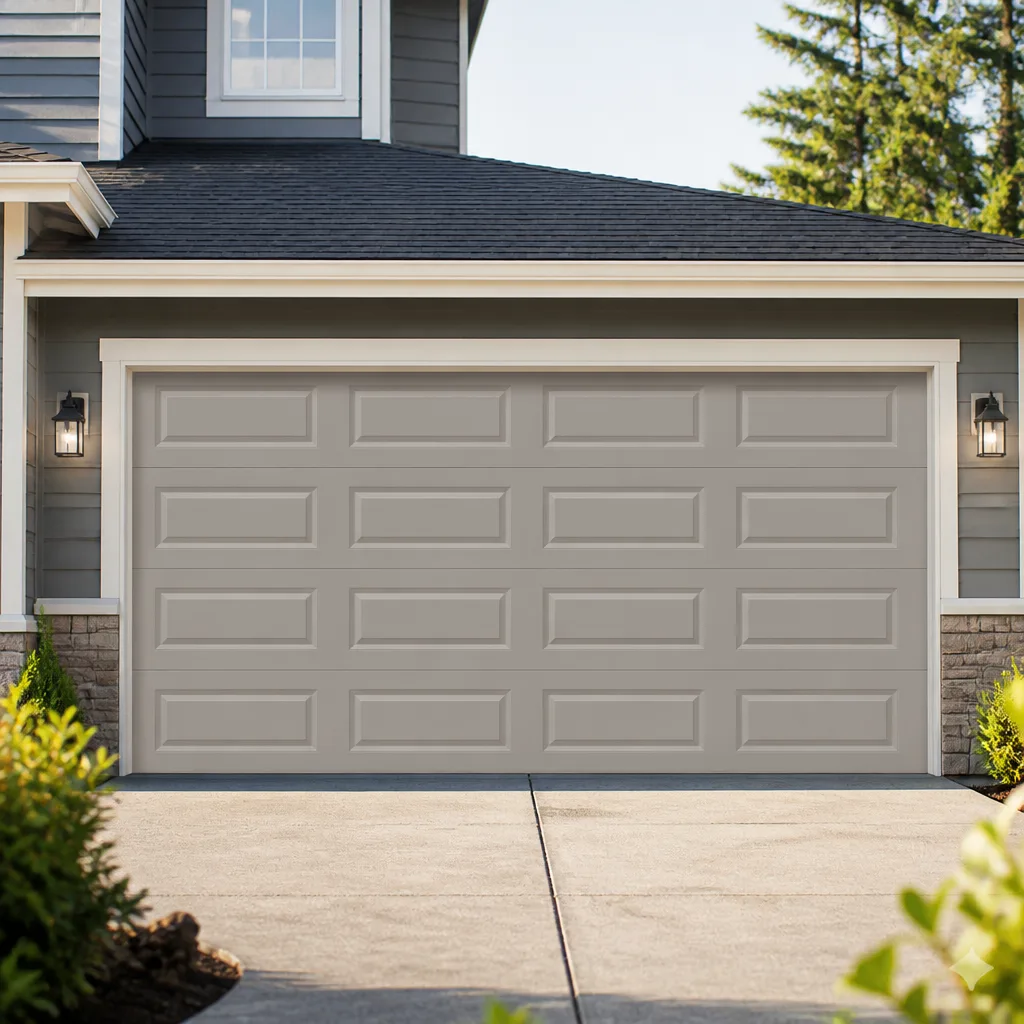 Raised-panel steel
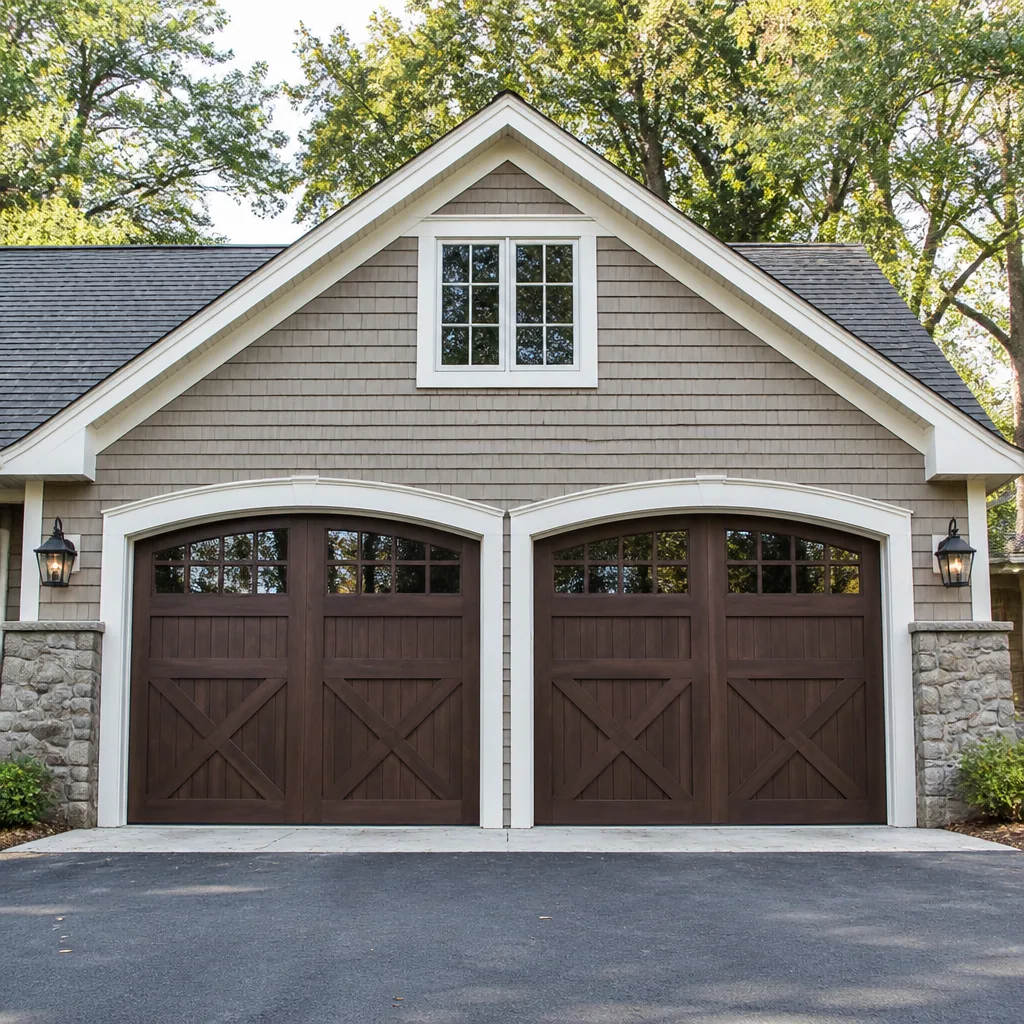 Carriage house
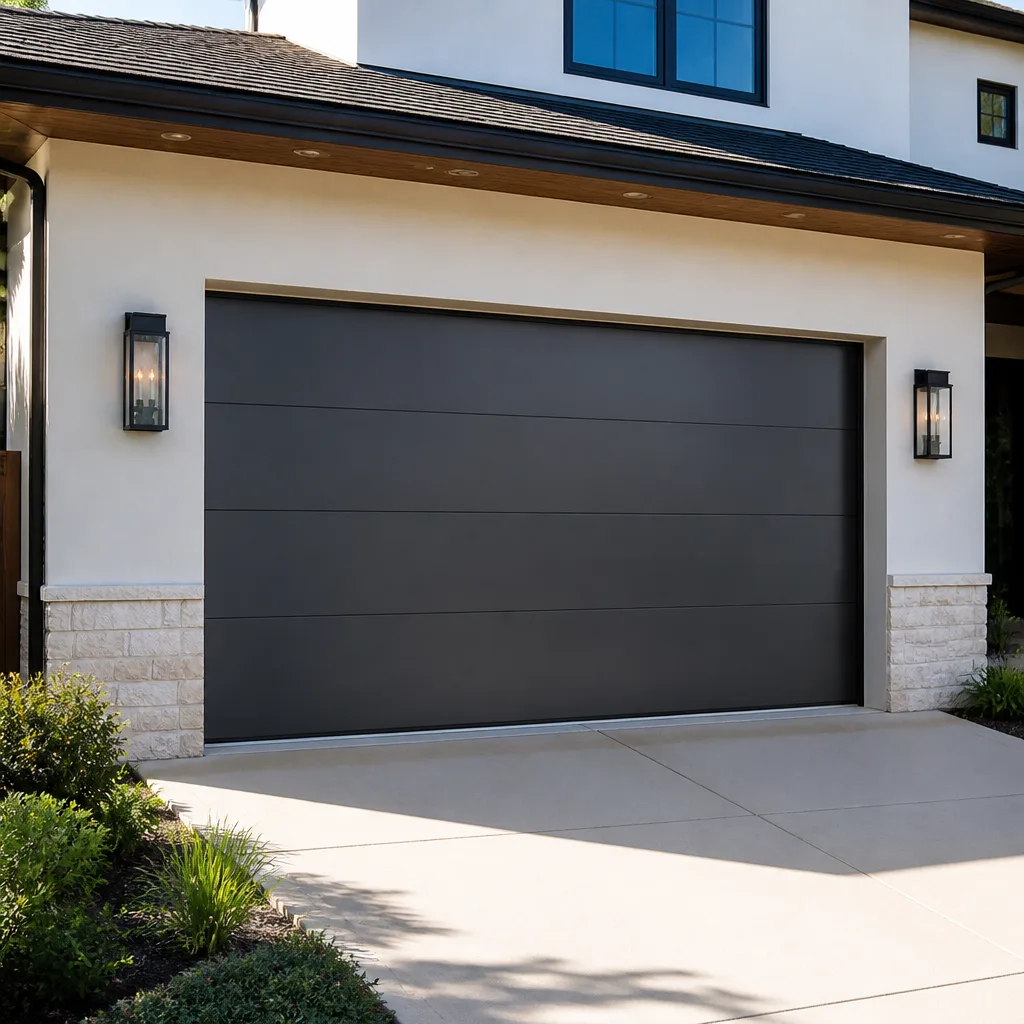 Modern flush
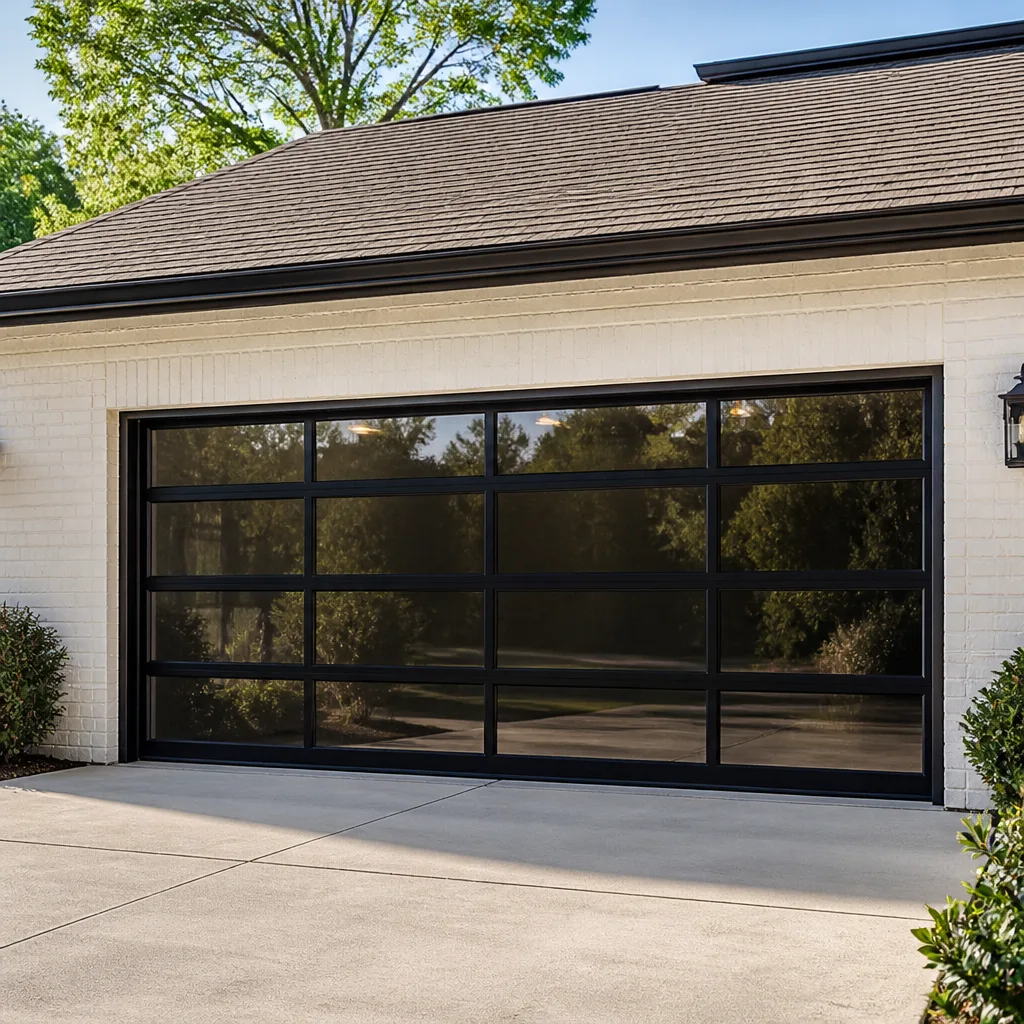 Full-view glass
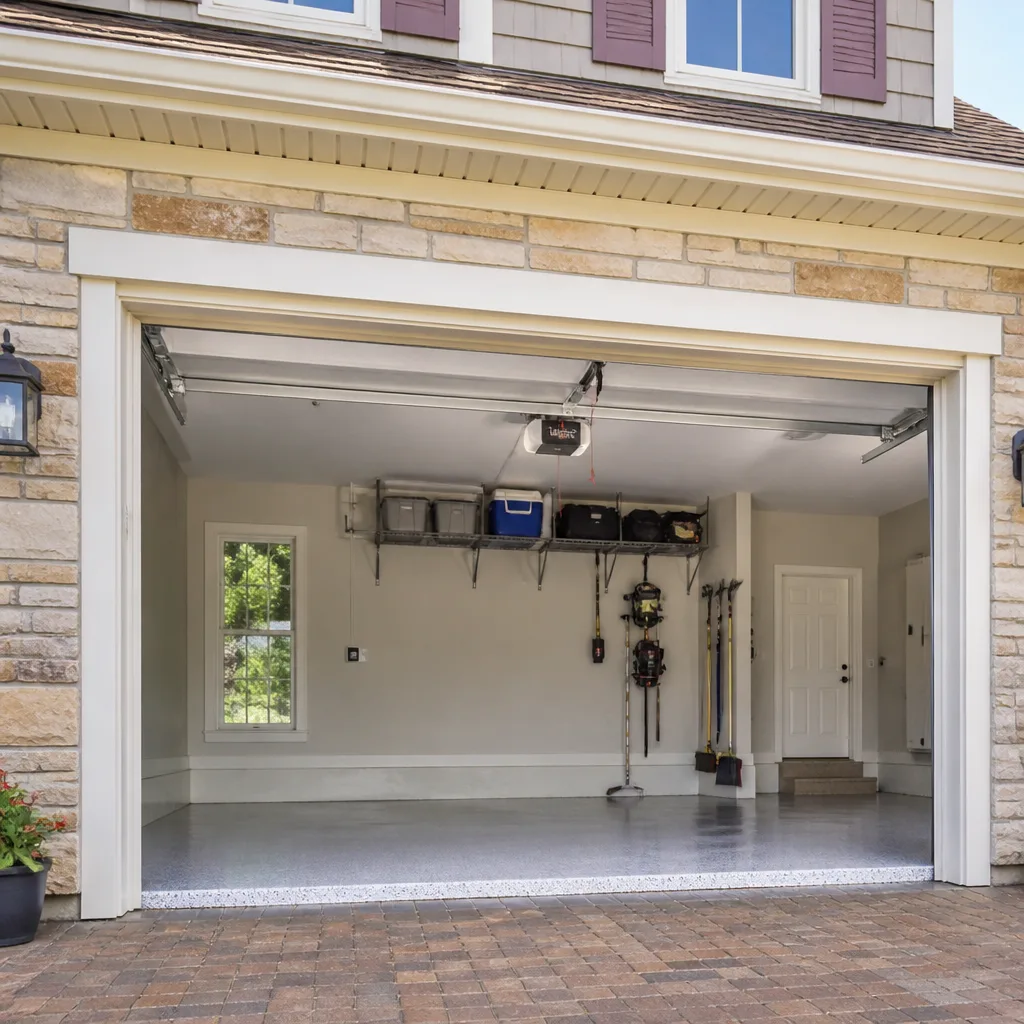 LiftMaster openers
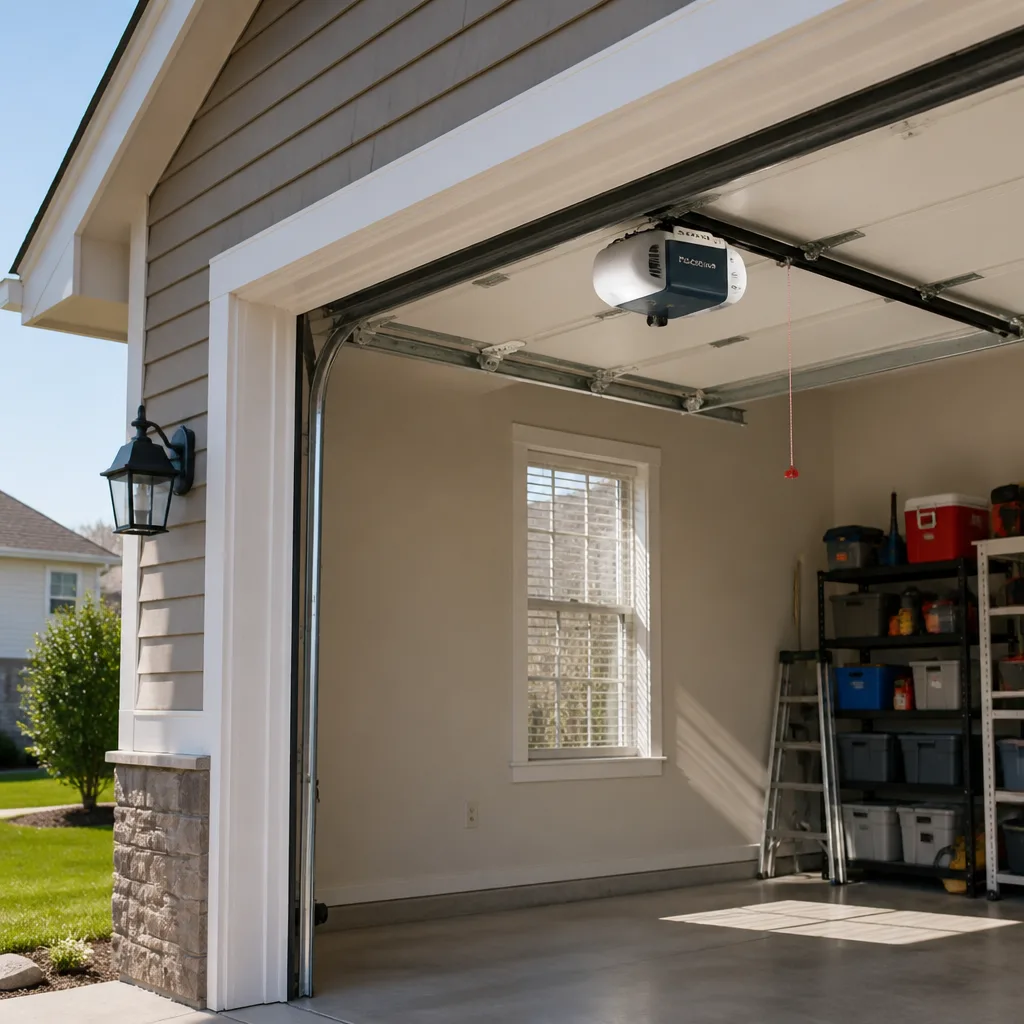 Chamberlain openers
Full 25-point door and opener safety check with every visit - springs, cables, rollers, tracks, and your LiftMaster or Chamberlain opener included
You get a price before we start. It does not change when the pro arrives.
Get your free estimateThe Complete Guide to Garage Doors in Santa Maria
Most garage door guides you’ll find online were written for Phoenix or Atlanta, and it shows. They talk about extreme heat baking panels and freeze-thaw cycles cracking concrete, neither of which describes what happens to a door in Santa Maria. Here, the marine layer sits over the valley for months at a time, the UV is steady year-round, and the seasonal wind shifts push dust and grit into every moving part. Those conditions wear a door differently. This guide maps every major door type, opener category, and material choice to what actually holds up here, so you can make a decision that lasts rather than one that just gets you through the season.
Quick Answer
A garage door in Santa Maria lasts longest when you match the material and finish to the local climate: insulated steel with a factory finish handles the marine layer best, opener electronics need occasional moisture checks, and springs should be inspected yearly because humidity accelerates corrosion. Most doors here need professional service every two to three years, and a full replacement typically runs $1,200 to $3,500 depending on size, material, and insulation. The single biggest factor in how long your door lasts is whether it’s balanced, lubricated, and correctly installed in the first place.
Styles & brands we work with
- Raised-panel steel
- Carriage house
- Modern flush
- Full-view glass
- LiftMaster openers
- Chamberlain openers
Table of Contents
- How Santa Maria’s Climate Affects Your Garage Door
- Door Materials: What Holds Up in the Santa Maria Valley
- Single, Double, or Triple-Layer: Is Insulation Worth It Here?
- Choosing the Right Opener for Your Door
- Common Door Sizes in Santa Maria Homes
- A Maintenance Schedule That Actually Works
- Red Flags That a Guide (or a Contractor) Isn’t Local
- What Garage Door Work Costs in Santa Maria
How Santa Maria’s Climate Affects Your Garage Door
The marine layer is the biggest single force acting on a garage door in Santa Maria. For much of the year, cool moist air rolls in and settles over the valley, and that moisture doesn’t just sit on the outside of the door. It works into hinges, rollers, and the torsion spring assembly, where condensation forms overnight and evaporates slowly the next day. That daily wet-dry cycle is what drives rust on steel components far faster than most homeowners expect. A spring that would last a decade in a dry inland climate can show surface corrosion in half that time here if it’s never lubricated.
UV exposure is the second factor. Santa Maria sits in a valley that gets strong, consistent sunlight even when the morning marine layer lingers, and that light breaks down paint, wood finishes, and the plastic components inside openers. A door facing south or west takes the worst of it. The paint on a steel door will chalk and fade, wood doors will dry and crack at the joints, and the rubber weather seal along the bottom will harden and split.
Then there’s the wind. The seasonal shifts that move through the Santa Maria Valley carry fine dust and grit, and that material gets pushed into every track, roller, and hinge. Grit in a track acts like sandpaper on rollers. Grit in a hinge works into the pin and accelerates wear. It’s a slow process, but it’s relentless, and it’s the reason a door here needs cleaning and lubrication more often than the manufacturer’s general recommendation.
- Marine layer humidity: accelerates corrosion on springs, hinges, and steel panel seams
- Year-round UV: fades paint, dries wood, hardens rubber seals
- Windborne grit: wears rollers, tracks, and hinge pins
- Temperature swings: mild, but enough to work fasteners loose over time
None of this means a garage door can’t last here. It means the maintenance rhythm is different, and a door that’s ignored will fail sooner than the same door in a drier place. If you’re already noticing stiffness, squealing, or a door that doesn’t sit flush, that’s the point to have garage door repair looked at before the problem compounds.
Door Materials: What Holds Up in the Santa Maria Valley
Steel is the most common door material in Santa Maria, and it’s the one that responds best to the local climate, provided the finish is right. A steel door with a factory-applied baked-on finish resists moisture far better than one painted on site, because the factory finish seals the panel edges and seams. The gauge matters too. A 24-gauge steel door will hold its shape better than a 27-gauge door of the same design, and in a valley with steady wind pressure, a heavier gauge resists denting and panel flex. Steel doors need touch-up on any scratch that reaches bare metal, because once the finish is broken, rust starts quickly in the marine layer.
Aluminum is lighter and won’t rust, which makes it a reasonable choice for a modern full-view door with glass panels. But aluminum is softer than steel and dents more easily, and the anodized or powder-coated finish can develop a chalky surface over time from UV exposure. It’s a good material if you want a specific look, less good if you want a door that shrugs off impacts.
Wood is the material most affected by the local climate. A wood door needs sealing and refinishing on a schedule, and here that schedule is shorter than the manufacturer suggests. The joints and end grain absorb moisture from the marine layer faster than the flat faces, so cracking and checking starts at the panel edges and the bottom rail. If you love the look of wood, a wood-look steel door or a composite is a lower-maintenance route that keeps the appearance without the ongoing refinishing.
Fiberglass and composite doors sit in the middle. They won’t rust and they hold paint well, but the surface can develop a chalky haze under steady UV, and the lighter construction means they need a quality frame and hardware to stay rigid. Most homeowners in Santa Maria do fine with a well-finished steel door. The material matters less than the finish quality and the frame it’s hung in.
Single, Double, or Triple-Layer: Is Insulation Worth It Here?
Insulation in a garage door does more than hold heat in, and that’s the part most guides skip. A single-layer door is one skin of steel with no backing, which makes it the lightest and least expensive option. It’s also the noisiest, the most prone to denting, and the least rigid. A double-layer door adds an insulating layer of polystyrene or polyurethane bonded to the back of the steel. A triple-layer door sandwiches insulation between two steel skins, front and back, and is the stiffest and quietest of the three.
Santa Maria’s temperatures are mild, so you won’t see the kind of energy savings a homeowner in a hotter or colder climate would. But insulation here still earns its cost for three reasons: sound, rigidity, and moisture control. A triple-layer door is dramatically quieter in operation, which matters if a bedroom sits above or beside the garage. The extra rigidity resists wind flex and denting. And the sealed panel construction keeps the marine layer’s moisture from condensing on the inside face of the door.
- Single-layer: lowest cost, lightest, noisiest, most prone to denting. Fine for a detached or unheated garage.
- Double-layer: good middle ground, quieter, more rigid, moderate cost.
- Triple-layer: quietest, stiffest, best moisture control, highest cost. Worth it for an attached garage or a garage under living space.
If your garage is attached to the house or a room sits above it, we’d steer you toward double or triple-layer construction even in this climate. The comfort and noise benefits alone justify the step up. If it’s a detached shop or a storage-only garage, a single-layer door with a quality frame does the job.
Choosing the Right Opener for Your Door
An opener is only as good as its match to the door it’s lifting, and mismatch is one of the most common problems we see in Santa Maria homes. Openers come in four drive types, and each suits different situations. A chain-drive opener is reliable and inexpensive but noisier. A belt-drive opener is quieter and smoother, which makes it the better choice if anyone sleeps near the garage. A screw-drive opener is strong and low-maintenance but louder than belt. A jackshaft opener mounts on the side of the torsion bar rather than overhead, which frees ceiling space and suits high-lift or cathedral-ceiling garages.
Smart openers have become standard on new installs, and the electronics are where the marine layer really shows its hand. Moisture in the air can fog the circuit board over time, corrode the terminal connections, and cause intermittent faults where the door opens on its own or the remote stops responding. That’s why garage door opener repair is its own specialty rather than a footnote to door repair. The electronics and drive systems need to be diagnosed on their own terms, not swapped out wholesale.
Brand matching matters here too. LiftMaster and Chamberlain share a great deal of internal architecture, so a technician familiar with one is well-prepared for the other. Craftsman openers, common in older homes, use their own logic boards and remote frequencies. If you’re replacing an opener, the existing door’s weight and balance determine the horsepower you need, and the door’s brand and model help determine what will fit cleanly. That’s the kind of assessment a specialist makes before recommending anything.
- Check the door first. A door that isn’t balanced will wear out any opener you put on it.
- Match the drive type to the garage. Belt for quiet, chain for value, screw for low maintenance, jackshaft for ceiling clearance.
- Confirm the brand and frequency. Older Craftsman and Genie systems may need a matched remote and receiver.
- Size the horsepower to the door. Heavier insulated doors need more lift than a light single-layer door.
- Test the safety reverse. Every install ends with a force test and a safety-reverse check.
Common Door Sizes in Santa Maria Homes
Door size drives everything: the spring you need, the opener you can use, and the price of a replacement. Santa Maria’s housing stock runs from mid-century tract homes to newer builds on the valley’s edges, and the door sizes follow those patterns. The most common single-car door here is 8 or 9 feet wide by 7 feet tall. The most common double-car door is 16 feet wide by 7 feet tall. Some older homes have a 9-by-7 single door, and newer builds with taller garages sometimes use an 8-foot-tall door.
Why does this matter? Because a door’s weight and size determine the spring tension required to balance it, and a spring sized for a 16-foot door is not interchangeable with one sized for an 8-foot door. It also determines the opener’s lifting capacity. And it determines what replacement panels or a full replacement will cost. We’ve seen homeowners order a door online only to discover the opening was framed for a different size, which turns a simple replacement into a reframing project.
- 8×7 or 9×7: standard single-car door, most common in mid-century homes
- 16×7: standard double-car door, the most common size overall
- 8×8 or 9×8: taller single door, seen in newer builds with higher ceilings
- Custom widths: found in some custom homes; measure the opening, not the old door
Before you shop for a door, measure the rough opening, not the existing door panel. The opening is the true dimension, and it’s what any replacement has to fit. If you’re unsure, a free measure from a specialist settles it in minutes and saves you from a costly ordering mistake.
A Maintenance Schedule That Actually Works
Most manufacturer maintenance schedules were written for a generic climate. Here’s a schedule tuned to Santa Maria’s conditions, and it’s more frequent than the manual because of the marine layer and the grit. Following it is the cheapest way to extend the life of a door and opener, and it’s the difference between a door that lasts and one that fails early.
- Monthly: Look at the door’s balance. Disconnect the opener and lift the door halfway by hand. It should stay put. If it drifts down or up on its own, the springs need attention.
- Monthly: Listen. Squeaks, grinding, or a door that shudders in the track signal worn rollers or dry hinges.
- Every three months: Wipe down the tracks with a damp cloth to clear grit, then lubricate hinges, rollers, and the spring with a garage-door-specific lubricant. Don’t use WD-40 as a long-term lubricant; it attracts dust.
- Every six months: Check the weather seal along the bottom and the sides. If it’s hard, cracked, or not touching the floor, replace it. This is the single most effective moisture barrier on the door.
- Every six months: Test the safety reverse. Place a small object in the door’s path and close it. The door should reverse on contact.
- Yearly: Have the springs, cables, and hardware inspected by a professional. Corrosion on a torsion spring is hard to see and dangerous to handle.
One safety note we won’t skip: torsion springs and the cables under tension are the most dangerous components on a garage door. A spring under load can cause serious injury if it’s adjusted or removed without the right tools and training. Never attempt to replace or adjust a spring or cable yourself. That’s a job for a trained professional, and it’s the one part of maintenance where the risk genuinely outweighs the savings.
If your door is in the Vandenberg AFB area and has been through a few seasons without service, a professional inspection is a sensible next step. You can find more about how we handle Vandenberg AFB homes on our dedicated page, and the same maintenance principles apply throughout the valley.
Red Flags That a Guide (or a Contractor) Isn’t Local
Not every garage door guide was written for Santa Maria, and not every contractor who shows up knows the local conditions. Here’s how to tell the difference, whether you’re reading an article or evaluating a quote. A guide written for a different climate will talk about problems you don’t have and skip the ones you do.
- It talks about freeze-thaw or snow load. Neither applies here. If a guide leads with winter damage, it wasn’t written for this valley.
- It never mentions humidity or the marine layer. Moisture is the number one wear factor on a door in Santa Maria. A guide that ignores it is generic.
- It recommends the same maintenance schedule everywhere. Local grit and humidity mean a shorter lubrication interval than the national standard.
- It pushes one brand exclusively. A specialist works on the door you have. A contractor who only recommends one product line is selling, not diagnosing.
- It quotes a single price for every door. Size, material, insulation, and opener all change the number. A flat price is a red flag.
- It skips the safety check. Any guide that doesn’t mention balance, force testing, and the danger of springs is missing the most important part.
- It never mentions your area. A guide that could have been written for any city in the country probably was.
The same test works for a quote. A contractor who measures the opening, checks the door’s balance, and asks about the opener before recommending anything is diagnosing. One who quotes from the driveway without opening the door is guessing. We work on Wayne Dalton, LiftMaster, Raynor, and the other major brands precisely so the recommendation fits the door in front of us, not a product line we’re trying to move.
What Garage Door Work Costs in Santa Maria
Costs here follow the same structure as anywhere, but the local climate affects how often work is needed and what fails first. A spring replacement is the most common repair, and it’s typically priced per spring. Because a matched pair is usually replaced together, a pair costs about twice the single-spring figure. Opener repair depends on whether the issue is the logic board, the drive gear, or the safety sensors. A full replacement is sized by the door’s dimensions and material.
- Torsion spring replacement (one spring): typically $180 to $340
- Matched pair of springs: about twice the single-spring figure
- Opener repair: varies by fault; a written estimate sets the price
- New opener installation: depends on drive type and door weight
- Full door replacement: typically $1,200 to $3,500 depending on size, material, and insulation
The price you’re quoted is agreed before any work starts, and the written estimate is the number that holds. If something changes once the door is open and the technician can see the full picture, you’ll hear about it before anything proceeds, not after. That’s the standard we hold to, and it’s why we put the estimate in writing. Estimates are free, and there’s no charge for coming out to look.
Common Mistakes to Avoid
- Skipping lubrication because the door “works fine.” A door that’s quiet today can have dry hinges and a corroding spring. In Santa Maria’s humidity, the wear happens slowly and then all at once. Lubricate on schedule even when nothing seems wrong.
- Ignoring a door that’s out of balance. A door that drifts when you let go is telling you the springs are tired. Continuing to run it wears out the opener and stresses the cables. Get it checked before it becomes a bigger repair.
- Replacing the opener when the door is the problem. A door that’s hard to lift will burn out any opener. Fix the balance and the hardware first, then decide whether the opener needs attention.
- Choosing a door by color and price only. Finish quality, steel gauge, and insulation layer matter more than the paint color. A cheap door with a thin finish will look tired within a few years in this UV.
- Refinishing a wood door on a national schedule. Wood here needs sealing more often than the label says. Waiting too long lets moisture into the end grain and starts cracking that can’t be reversed.
- Letting grit build up in the tracks. Windborne dust in the tracks acts like sandpaper on the rollers. A quarterly wipe-down is cheap; worn rollers and damaged tracks are not.
- DIY spring or cable work. This is the one mistake that can cause serious injury. Springs and cables are under high tension and belong to a trained professional.
See the difference
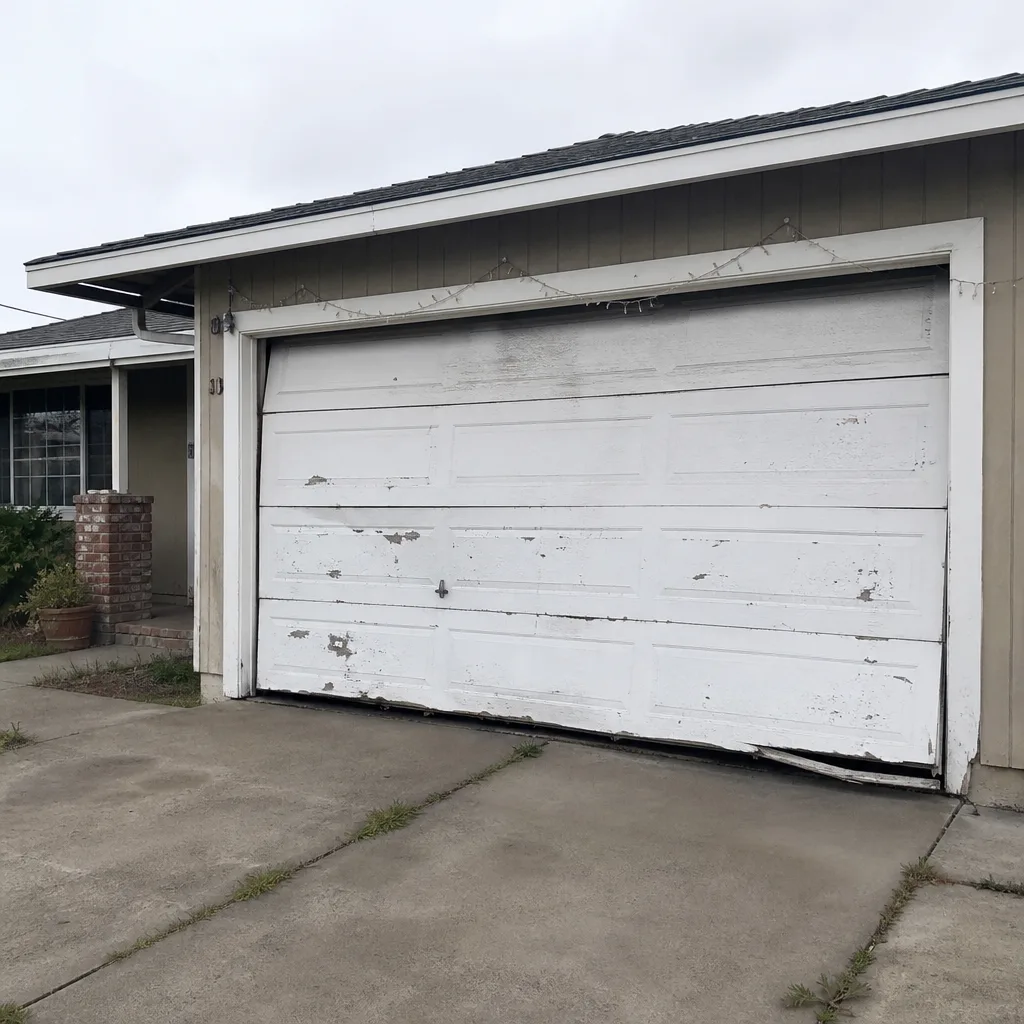 Before
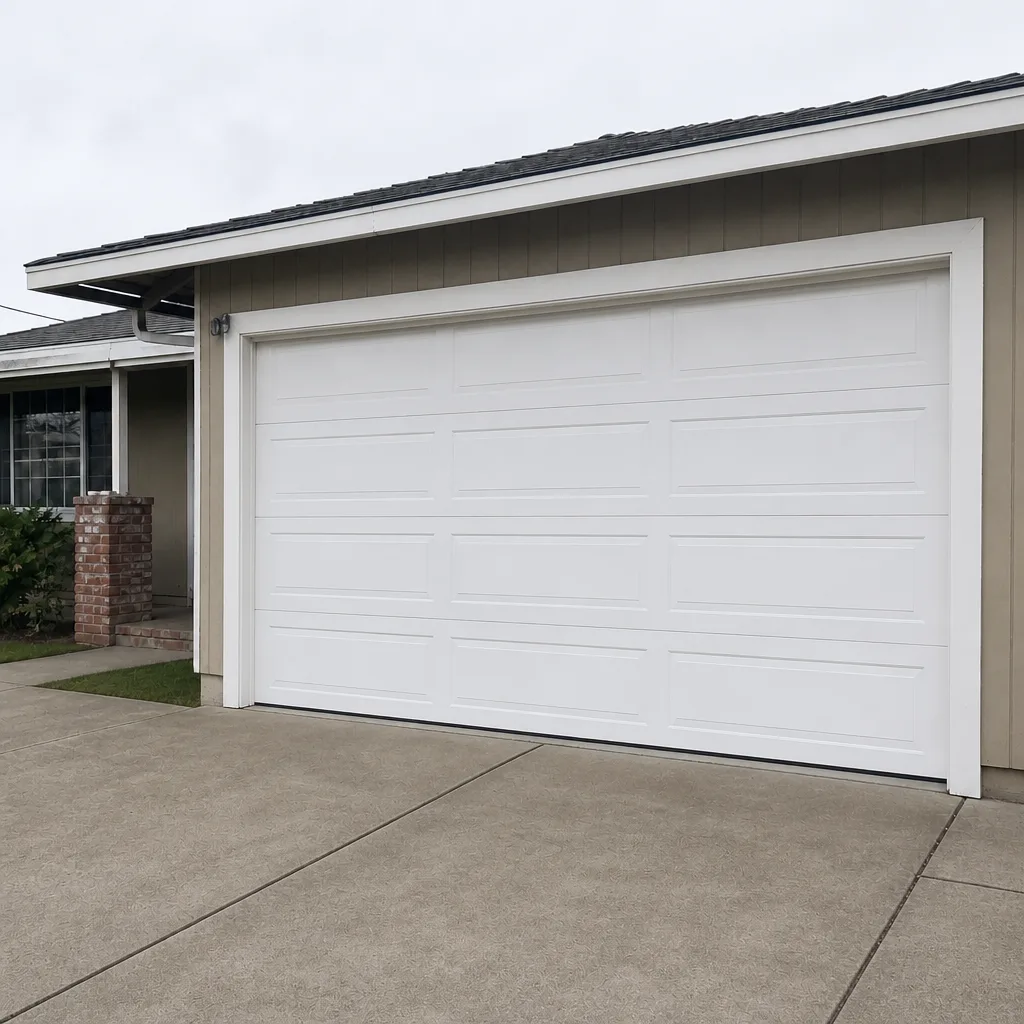 After
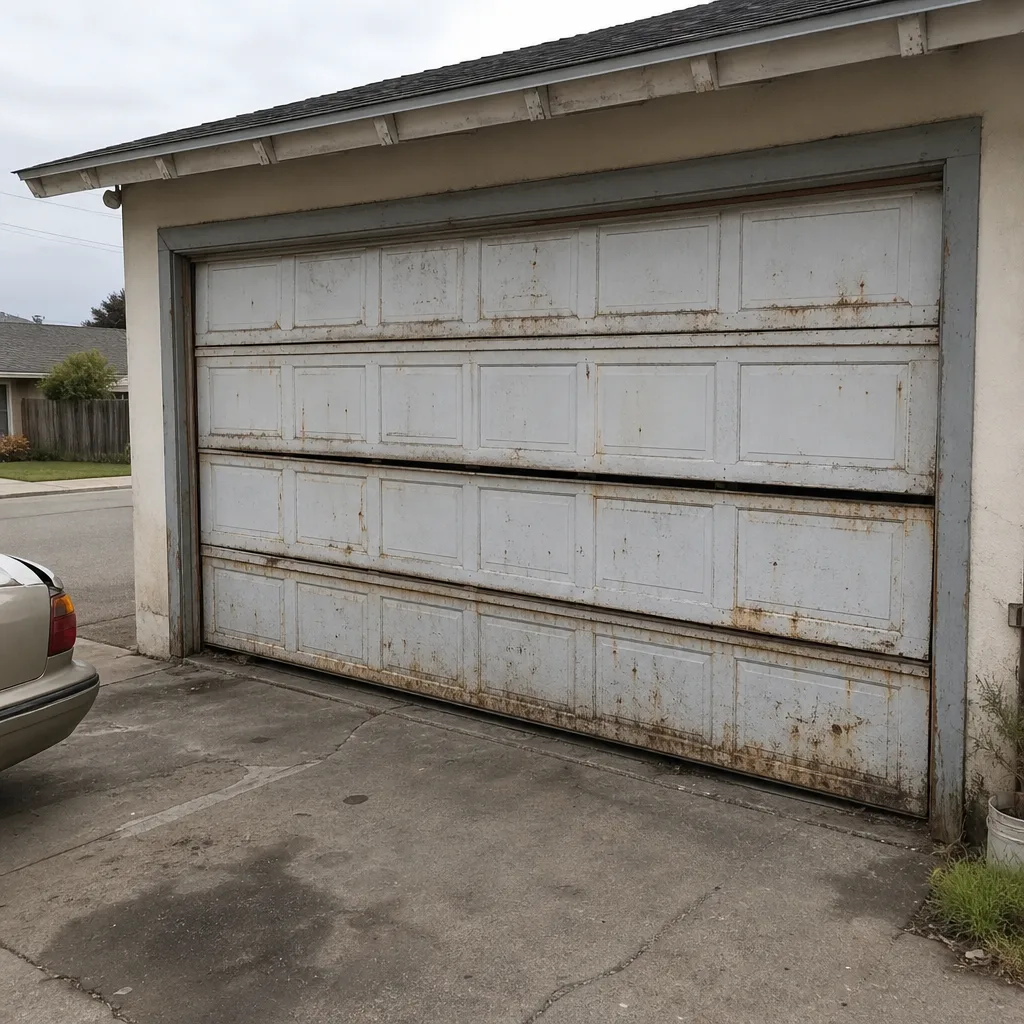 Before
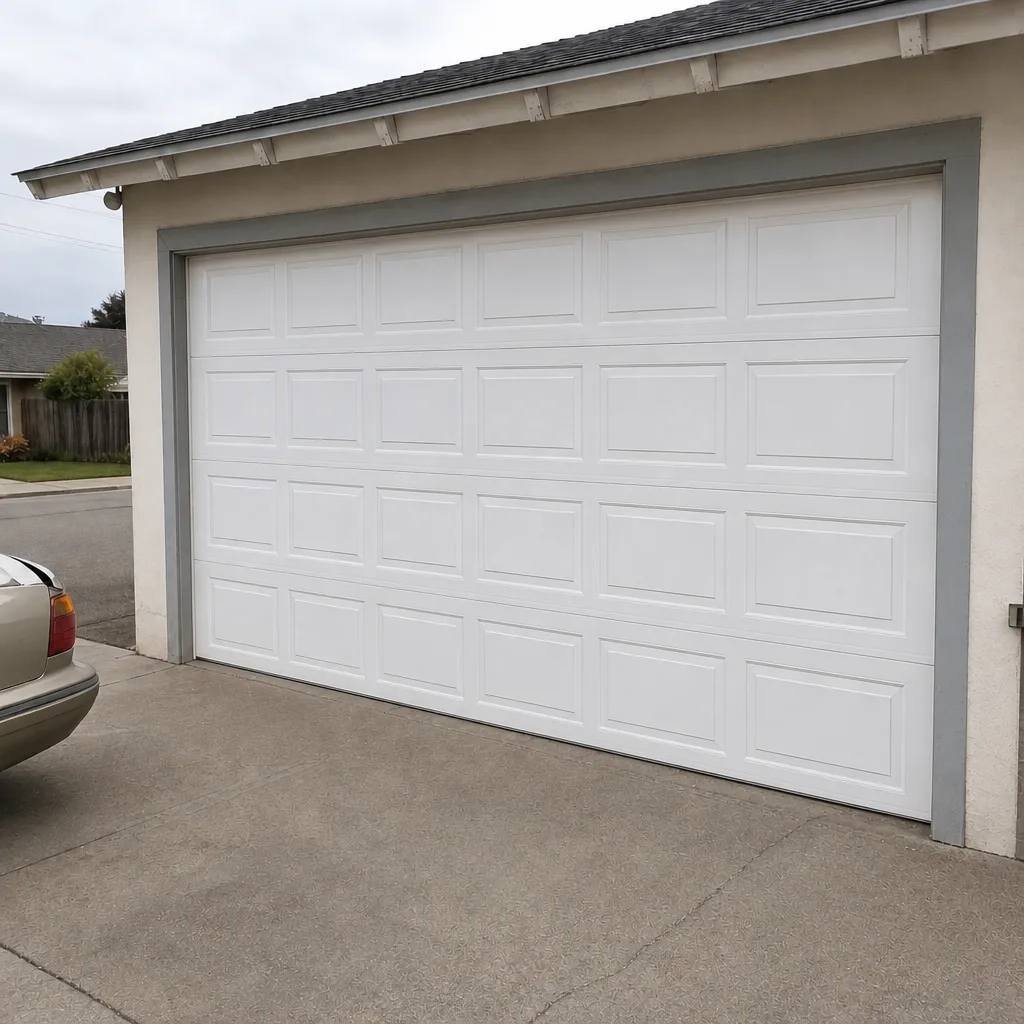 After
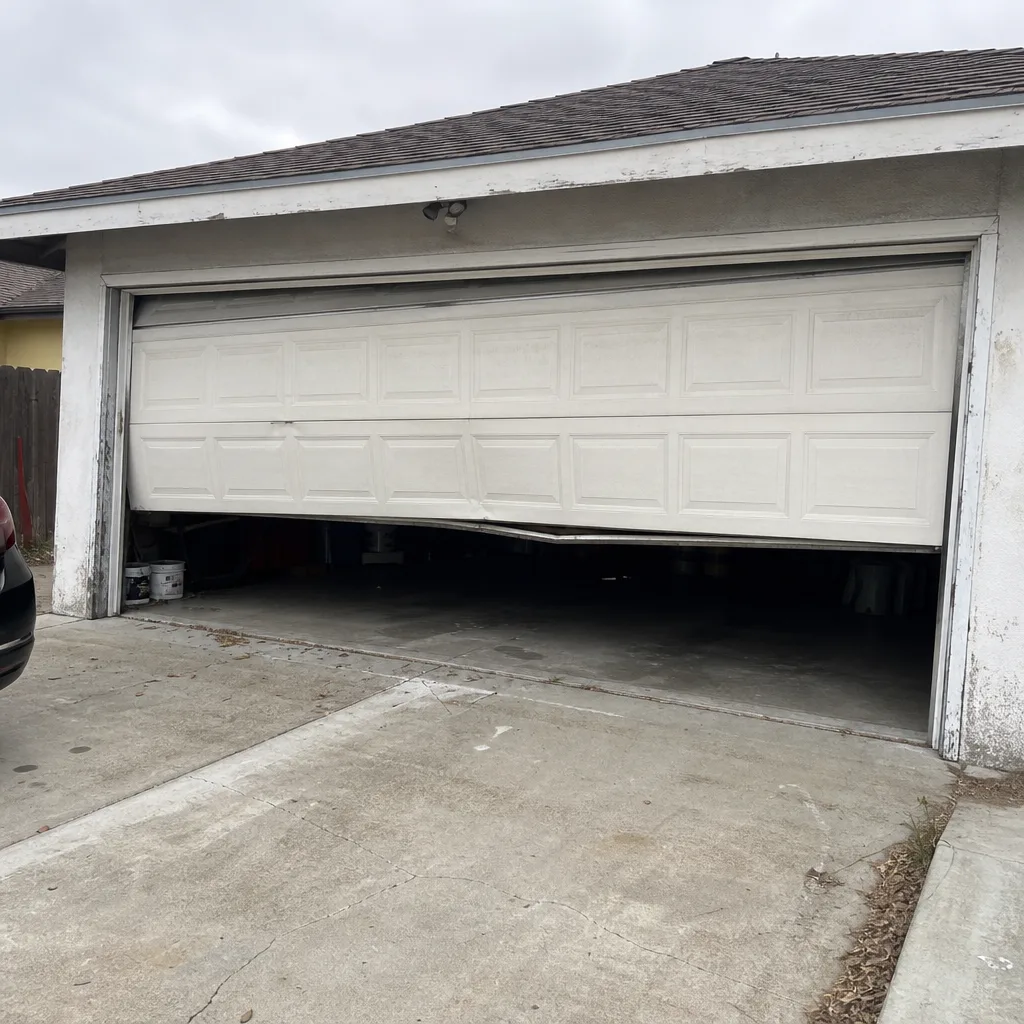 Before
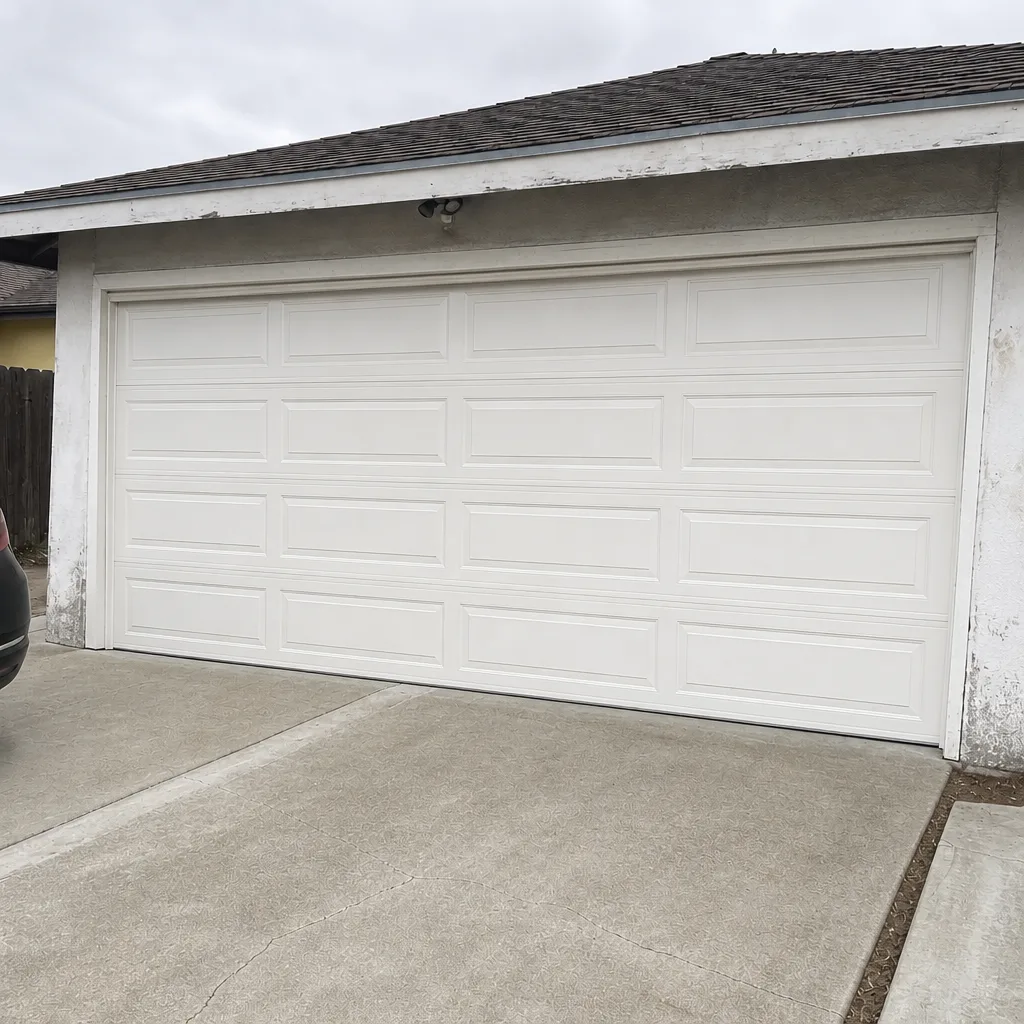 After
When to Call a Professional
Some jobs are maintenance, and some are calls for a specialist. If the door won’t balance, if a spring is broken, if the door is crooked in the opening, or if a cable is frayed, stop using it and call. Those are the components that fail dangerously and shouldn’t be handled without training. If the opener runs but the door doesn’t move, if the safety reverse fails the test, or if the door opens or closes on its own, the electronics need a proper diagnosis. And if you’re planning a replacement or a new opener, a free measure and a written estimate come before any purchase decision, so you’re choosing the right size and type rather than guessing.
Halo Garage Door Repair offers free estimates in Santa Maria. Our technicians have up to 15 years of experience, and we work on the major brands rather than steering you toward one product line. Call (866) 361-7506. We answer 24/7. Fast dispatch from 7am to 7pm, Sunday through Friday.
Frequently Asked Questions
A well-maintained steel door in Santa Maria typically lasts 15 to 20 years, and an opener usually gives 10 to 15 years of service. The marine layer is the variable that shortens those numbers if maintenance is skipped. Doors that get yearly spring inspections and quarterly lubrication tend to reach the upper end of the range.
Yes. The daily wet-dry cycle from overnight condensation accelerates rust on springs, hinges, and panel seams. It’s why we recommend yearly spring inspections here rather than the longer intervals you’ll see in drier climates. The seal along the bottom of the door is your first line of defense, so replace it as soon as it hardens or cracks.
Insulation is worth it here for quiet and rigidity more than for energy savings. A double or triple-layer door is noticeably quieter and resists denting better than a single-layer door. If your garage is attached to the house or has a room above it, the step up is well justified.
Most opener problems are repairable, and a new opener is only the right answer when the unit is worn beyond repair or the door’s weight demands more capacity. We diagnose the electronics and drive system first, then recommend the right fix. Call (866) 361-7506 for an exact quote, and estimates are free.
We work on LiftMaster, Chamberlain, Genie, Clopay, Amarr, Wayne Dalton, Craftsman, and Raynor. That covers the brands most common in Santa Maria homes, from economy doors to smart openers. If your equipment is one of those, we’ll know its architecture and its quirks before we arrive.
The written estimate is the price, and it’s agreed before any work starts. If the technician finds something that genuinely changes the scope once the door is open, you’ll hear about it before anything proceeds. Estimates are free, so there’s no risk in having us look.
The Bottom Line
Santa Maria’s climate doesn’t make garage doors fail, it just sets a different maintenance rhythm. The marine layer drives corrosion, the UV breaks down finishes, and the wind pushes grit into every moving part. A factory-finished steel door, properly insulated, with a matched opener, handles all three better than a lightly finished or uninsulated one. Springs need yearly inspection, seals need replacing when they harden, and balance is the test that catches most problems early. Get those right and a door lasts well past the national average. When something needs a specialist, call (866) 361-7506 for a free estimate from Halo Garage Door Repair.
Written by the team at Halo Garage Door Repair.