
Last updated November 15, 2026
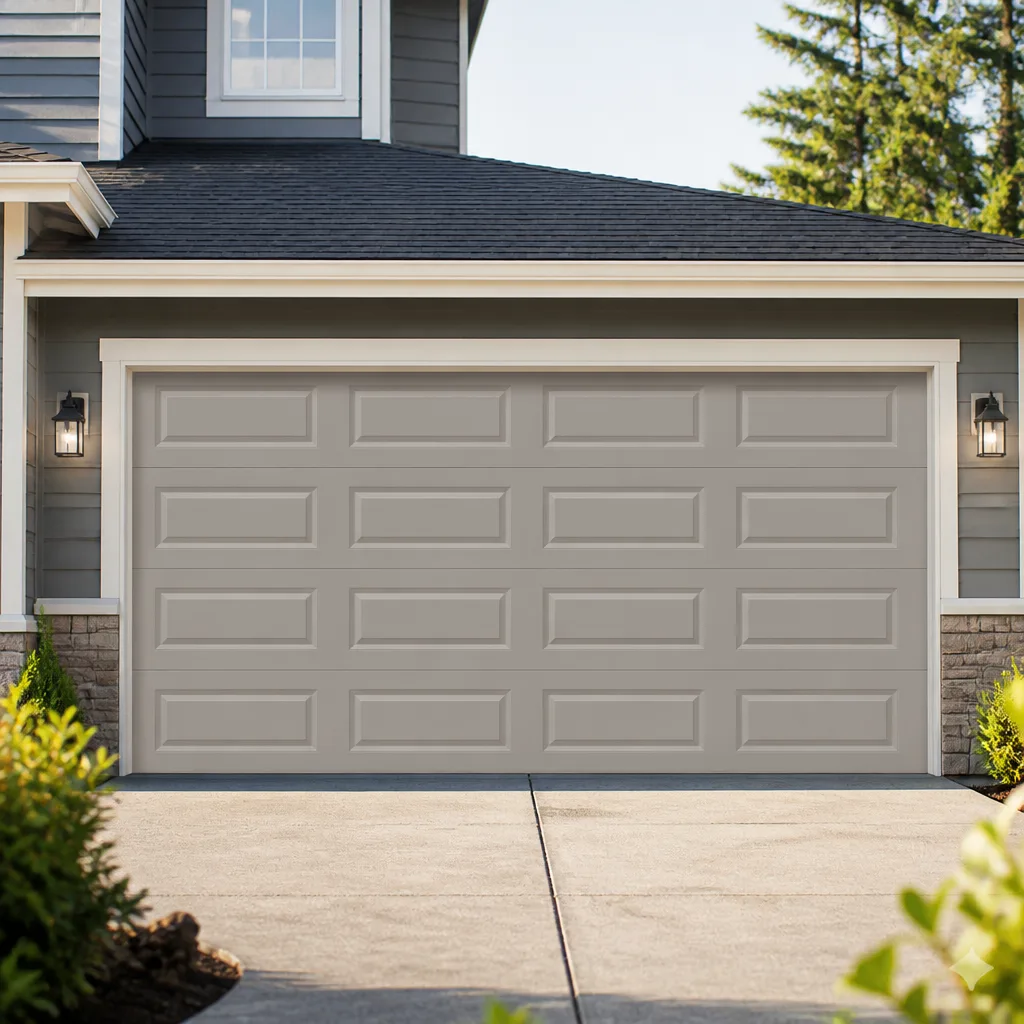 Raised-panel steel
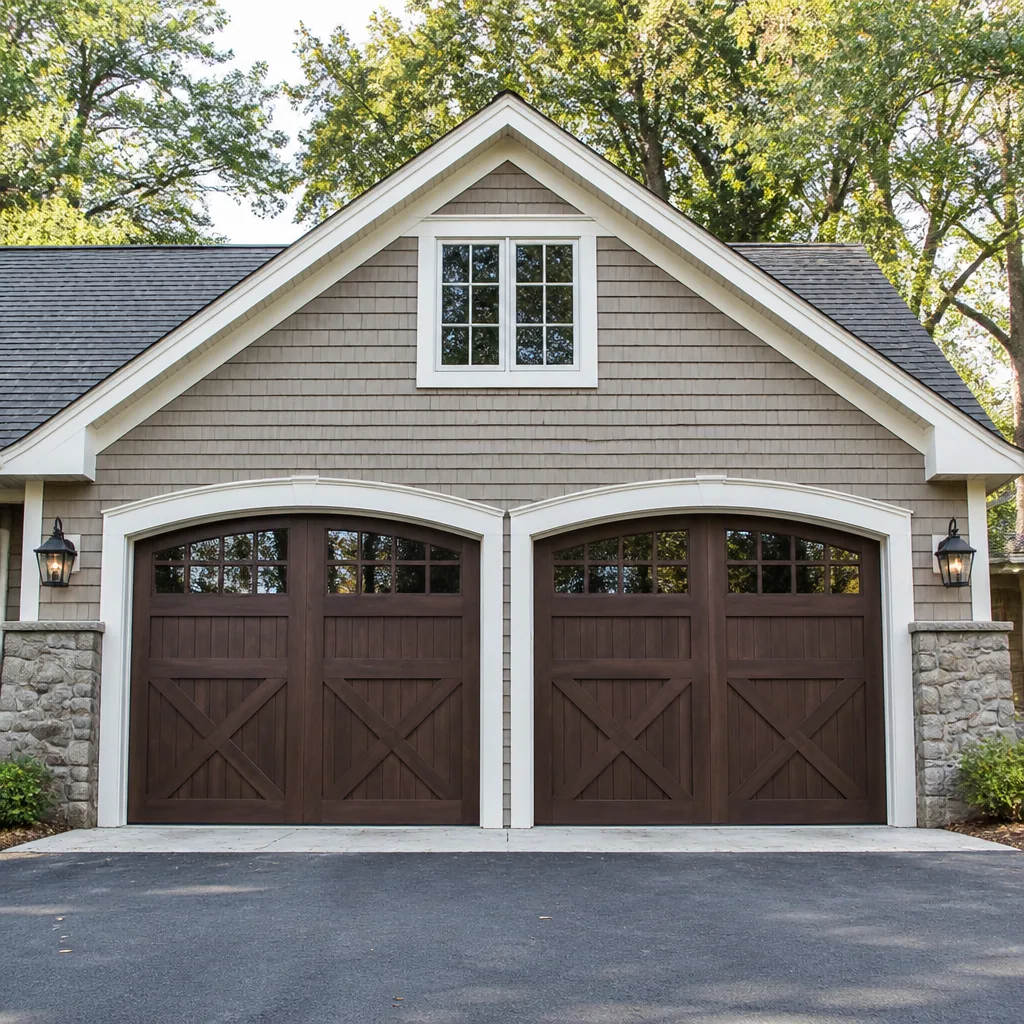 Carriage house
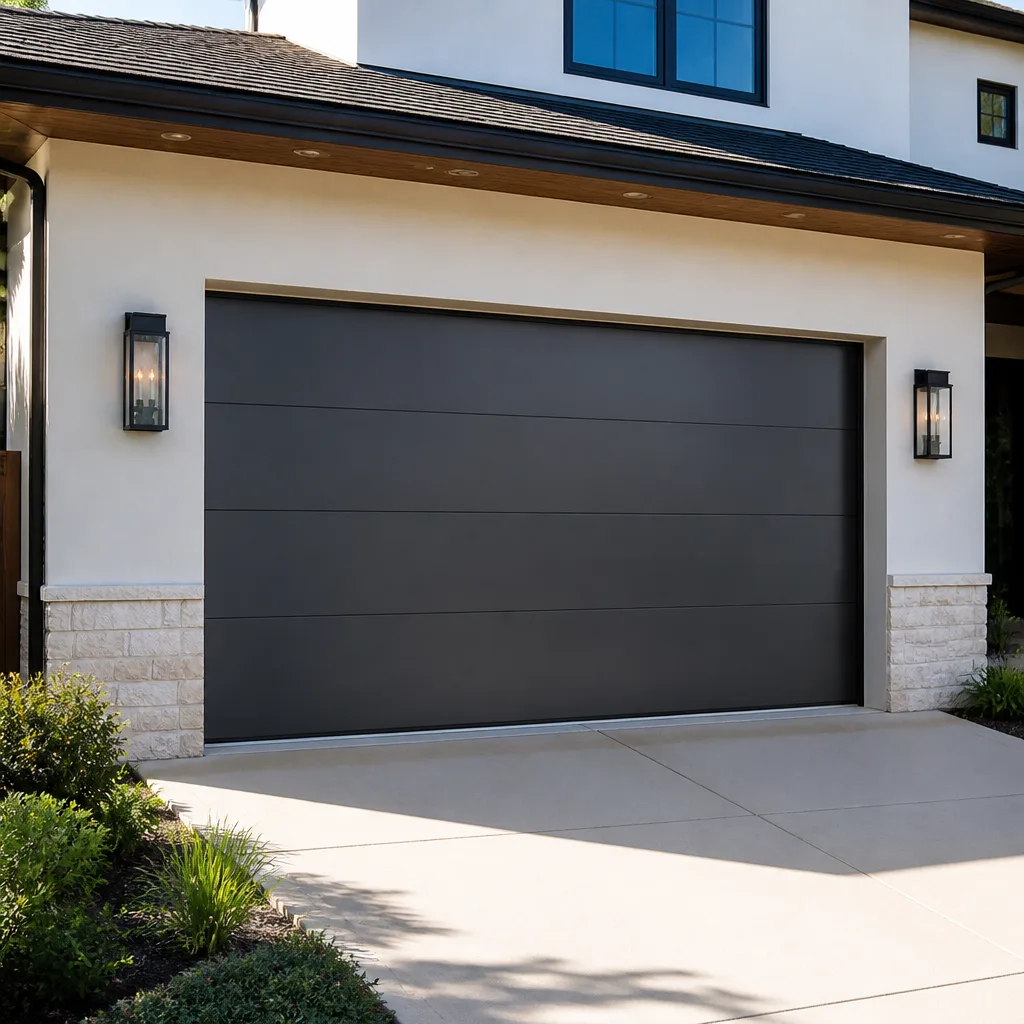 Modern flush
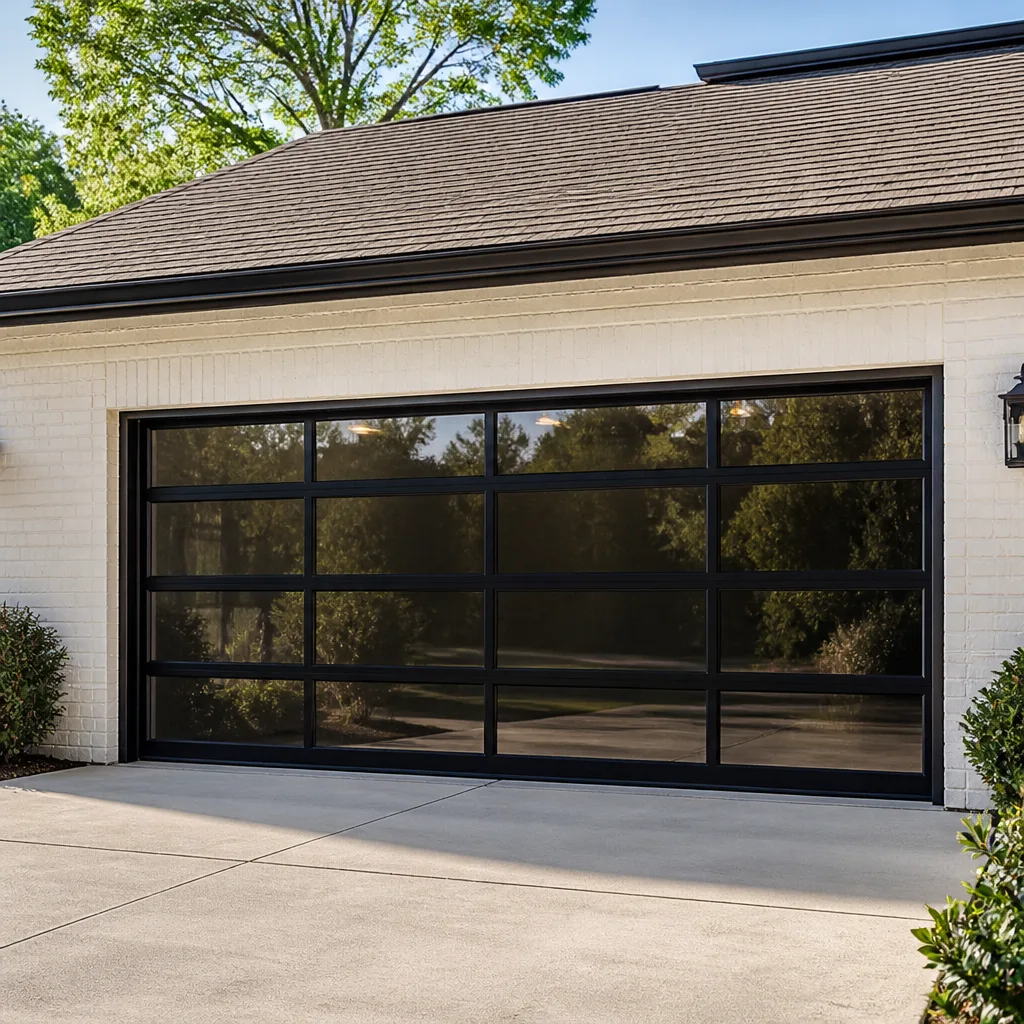 Full-view glass
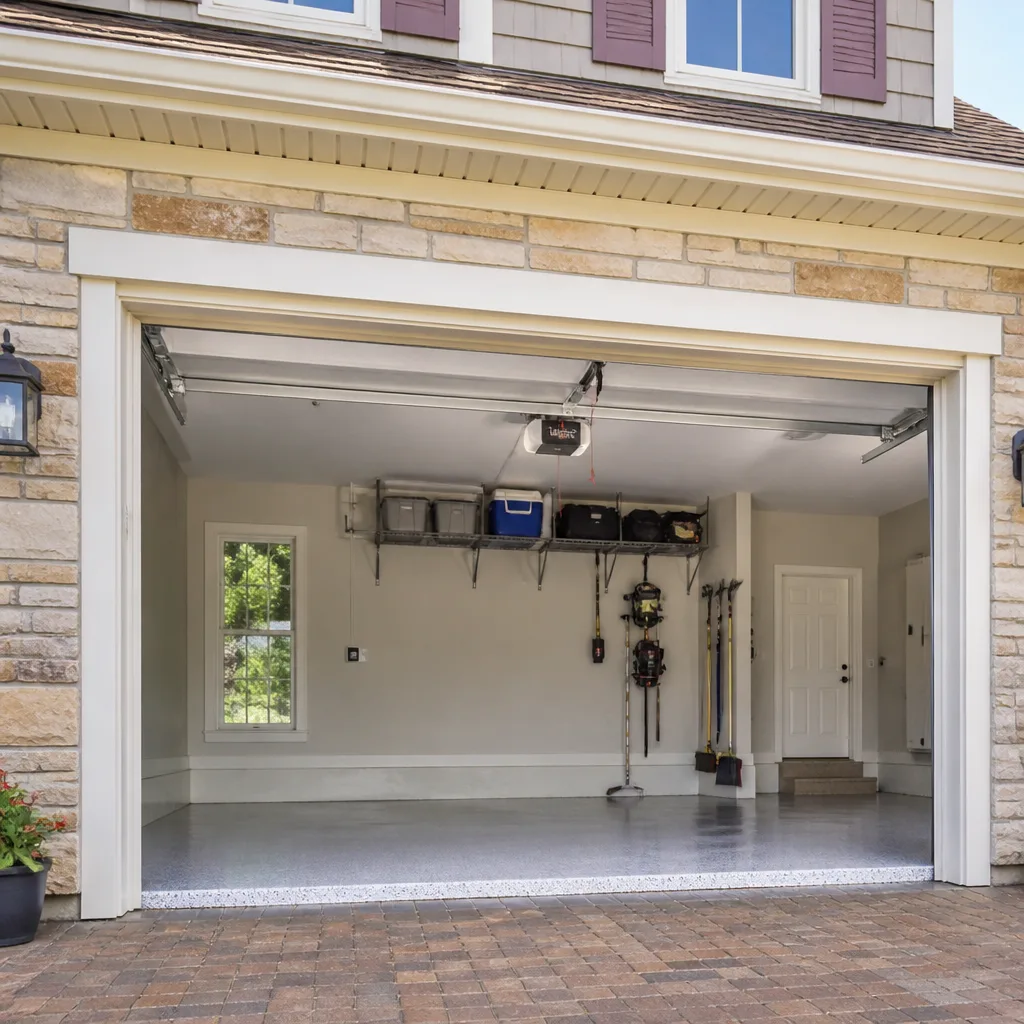 LiftMaster openers
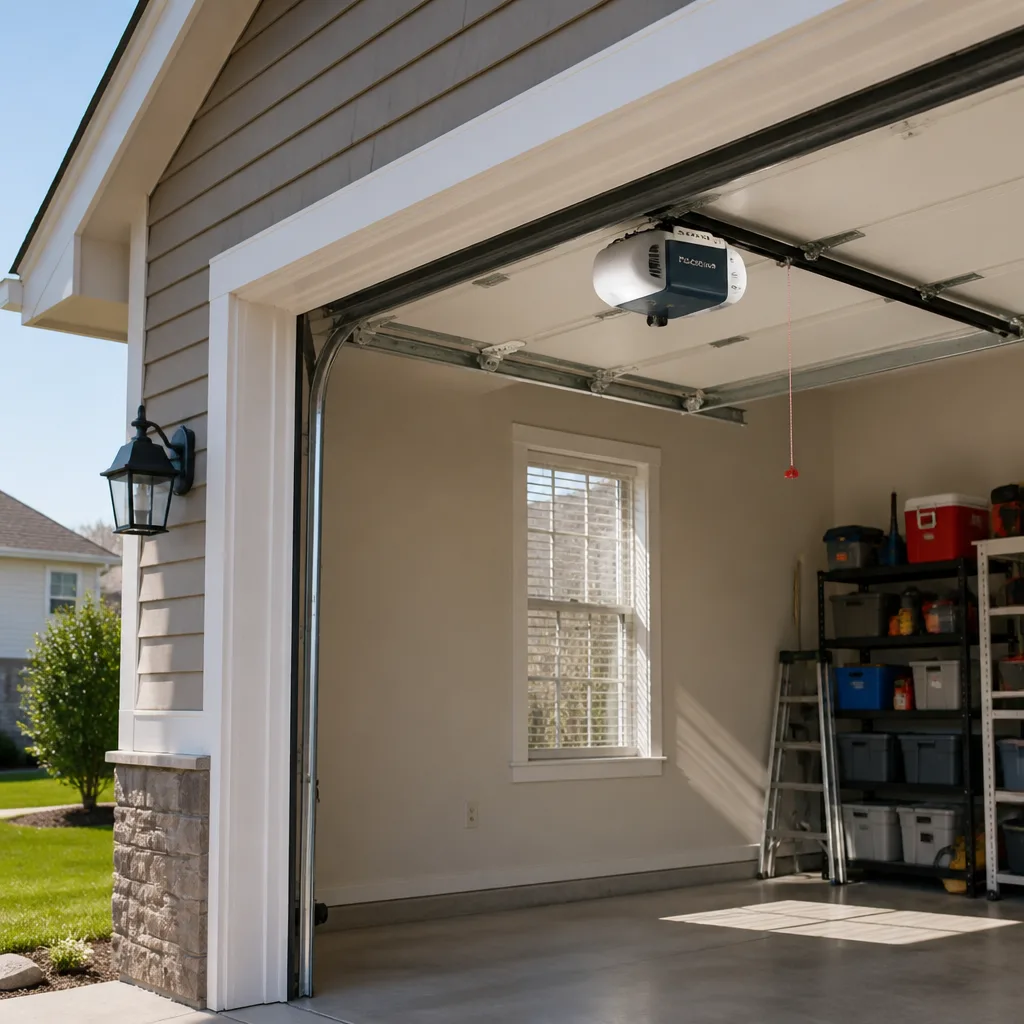 Chamberlain openers
Full 25-point door and opener safety check with every visit - springs, cables, rollers, tracks, and your LiftMaster or Chamberlain opener included
You get a price before we start. It does not change when the pro arrives.
Get your free estimateGarage Door Permits, Codes & Inspections in Santa Maria, CA: What You Need to Know
Here’s a belief that gets people into trouble at closing: that any garage door work is automatically permit-free. It isn’t. A like-for-like panel swap usually needs no paperwork. Change the structural opening, add a new opener with features the code now regulates, or alter load-bearing framing, and the rules change. If a buyer’s inspector later finds unpermitted work, your escrow timeline can slow down while everyone sorts out what was done and whether it was legal. This guide lays out exactly when Santa Maria homeowners need a permit, when they don’t, which jurisdiction signs off, and what to keep after the work is done.
Quick Answer
In Santa Maria, a like-for-like garage door replacement (same size, same opening, same hardware type) typically needs no building permit, but structural changes to the header or opening framing, many new opener installations, and any work that changes the door’s footprint or configuration usually require a permit from the City of Santa Maria or Santa Barbara County, depending on where the property sits. California requires newly installed openers in many cases to have battery backup so the door still works during a power outage. A final inspection checks that the work matches the approved plans and that the door operates safely, and you should keep the permit number and inspection sign-off for future resale disclosure.
Styles & brands we work with
- Raised-panel steel
- Carriage house
- Modern flush
- Full-view glass
- LiftMaster openers
- Chamberlain openers
Table of Contents
- Do You Need a Permit for a Garage Door in Santa Maria?
- The Santa Barbara County Line: Replacement vs. Modification
- California’s Battery Backup Rule for New Openers
- City of Santa Maria vs. Unincorporated County and Vandenberg Village
- What a Final Inspection Actually Checks
- What It Means If a Previous Owner Skipped the Inspection
- Documents to Keep for Resale Disclosure
- Step-by-Step: How Garage Door Permitting Usually Goes in Santa Maria
Do You Need a Permit for a Garage Door in Santa Maria?
Sometimes yes, sometimes no. A straight replacement of a standard sectional door with one of the same size and configuration, using the same type of torsion or extension springs and the same opener mounting, is typically treated as maintenance and doesn’t need a permit. If any of the following apply, expect a permit or at least a call to the city’s building department to confirm:
- Structural changes to the header or opening framing. Widening the opening, raising the header, or adding new posts almost always requires a permit.
- A change in door type or size. Moving from a single-car door to a double-car door, switching from sectional to a one-piece or roll-up door, or adding a second door is a modification, not a replacement.
- New opener installation on many properties. California code sections added in recent years regulate certain new opener installations, so a permit check is worth the phone call.
- Electrical work. New circuits, outlets, or wiring changes to support a new opener usually need an electrical permit, regardless of the garage door itself.
- Work on a commercial or multi-unit property. More scrutiny overall, plus ADA and fire-door rules that don’t apply to a single-family home.
We’ve seen homeowners in Santa Maria assume the whole category is permit-free because the last two replacements didn’t trigger one. Each case is its own call. If you’re unsure whether your project crosses the line, a two-minute phone call to the City of Santa Maria Building and Safety Division settles it. Bring the door size, the opening width, and whether the framing is changing, and they’ll tell you which application applies.
The Santa Barbara County Line: Replacement vs. Modification
The threshold most homeowners miss sits in the wording of local building codes and California’s own Uniform Housing Code: a permit is required when the work changes the size, configuration, or structural framing of the opening. A straightforward replacement does not. A modification does. The distinction turns on three things: dimension, structure, and function.
- Dimension. If the new door and opening are the same width and height as the old, the work is a replacement. If either measurement changes, it’s a modification.
- Structure. Removing or altering a header, post, or the framing above the opening is structural. That work is never permit-free, because it affects the load path above the door.
- Function. Adding an opener where there wasn’t one, changing the door from manual to automatic, or adding a second door to a wall changes how the garage is used, and typically requires review.
The practical takeaway: if you can pick up the old door, set it aside, and slide the new door into the exact same opening with the same anchor points and hardware, you’re probably fine. If a technician is cutting framing, adding a post, or rearranging the tracks and springs to suit a different door geometry, plan on applying for a permit. That’s not Halo trying to slow your project down. It’s the reality of how the code reads. Better to spend the application fee than to have an inspector flag the work at resale years later.
California’s Battery Backup Rule for New Openers
California has a rule that surprises a lot of Santa Maria homeowners: many new garage door opener installations must include battery backup so the door still opens during a power outage. This came out of a state legislative push to make homes safer when the grid goes down, and it applies to many residential installations of new openers. The exact scope and any local amendments matter, so confirm with the city or county before you install. What we can say clearly: if you’re buying a new opener today, buy one with a battery backup, or you risk failing your final inspection or discovering the gap when the power goes out and you can’t get your car out.
Battery backup matters more here than in some parts of California because Santa Maria sits inland from the coast in Santa Barbara County, where heat waves, wind events, and Public Safety Power Shutoffs can knock the grid out for hours at a time. Losing garage access during a blackout is not a theoretical problem. Ask any homeowner who has had to manually lift a door with a tired torsion spring.
Most of the major opener brands now offer battery backup models in their lineup. LiftMaster, Chamberlain, and Genie all make units with backup included or as a factory option. If you already have a Genie or Chamberlain opener and want to add backup, that’s usually a battery and harness addition rather than a full replacement, but it’s worth having a specialist confirm your model is compatible. We work on all three of those brands plus Clopay doors and a handful of others, and we can tell you what your specific opener supports before anyone touches the wiring.
City of Santa Maria vs. Unincorporated County and Vandenberg Village
Where the property sits matters as much as what’s being built. Santa Maria is a mix of incorporated city parcels, unincorporated Santa Barbara County pockets, and properties near the base and the surrounding communities. Each jurisdiction has its own building department, its own application forms, and its own inspection process. Filming the wrong application is the most common permitting misstep we hear about.
- Inside Santa Maria city limits. The City of Santa Maria Building and Safety Division handles the permit and the inspection. This covers most of the residential neighborhoods within the city grid, from the older blocks near downtown to newer subdivisions on the edges.
- Unincorporated Santa Barbara County. Properties outside the city limits fall under Santa Barbara County Planning & Development, which has its own application and inspection process. If your mailing address says Santa Maria but you’re on county land, the county is usually the authority.
- Vandenberg Village and the areas near the base. Many parcels around Vandenberg Village and the surrounding area sit in unincorporated county territory, which puts them under county review. If you’re not certain which side of the line your parcel is on, the county parcel viewer or a call to the county building department resolves it quickly.
This matters most when a project is close to the line between a simple replacement and a structural change, because the county and the city sometimes interpret the same code differently. If you live in a neighborhood where you’re not sure of your jurisdiction, get that settled first. For homes near the base, our garage door repair page covers the on-the-ground realities, and our Vandenberg AFB page is a good starting point if you’re still orienting to the area.
What a Final Inspection Actually Checks
A final inspection is not a rubber stamp, and it isn’t a full safety audit of your garage either. It’s a verification that the work matches what was approved, and that the finished product meets the code requirements that triggered the permit. In our experience with Santa Maria-area inspections, the checklist usually runs like this:
- Plans match reality. The door size, opening width, and hardware configuration on site match the approved plans. If something was changed mid-build without a revision, the inspector will flag it.
- Framing and anchoring. Posts, headers, and anchors are installed as specified, with the correct fasteners and spacing. This is where shortcuts show.
- Opener installation. The opener is mounted correctly, the manual release works, and where required, battery backup is present and functional.
- Safety features. Photoelectric eyes (the sensors near the floor) are aligned and tested. The door reverses when it contacts an object. The auto-reverse function responds correctly.
- Balance and travel. The door opens and closes fully, stays balanced when disconnected from the opener, and doesn’t hit the stops or bind in the tracks.
- Labeling and warnings. Required labels stay visible, and any caution placards that come with the door or opener are in place.
What the inspector typically does not do: test every torsion spring to spec, examine every hinge, or grade the overall craftsmanship. The inspection is a code compliance check, not a quality grade. That’s why the safety work at the end of an installation matters as much as the inspection, and it’s why our standard is a door that’s balanced, force-tested, and operating correctly before we consider the job done. A pass on paper doesn’t tell you the door will still feel right six months later.
What It Means If a Previous Owner Skipped the Inspection
Unpermitted work isn’t automatically a deal-breaker, but it always turns into a conversation. If you’re buying a Santa Maria home and the seller can’t produce a permit for a garage door or opener installation that required one, there are two possible outcomes, and which one you’re in depends on how the work was actually done.
The good outcome: the work is sound, an inspector reviews it after the fact, and the permit is finalized through a route the city or county sometimes calls a “permit after the fact” or “as-built” process. That usually requires opening up finished surfaces so the inspector can see the framing, which is a cost, but a contained one.
The harder outcome: the work isn’t to code, requires rework, and the correction becomes a condition of the sale or a negotiation point. If the seller has already moved out, you may be the one holding the bag. It’s not a crisis, but it extends the escrow timeline and can shift the price.
If you’re the seller and you know a permit was missed, get ahead of it. Call the city or county building department, ask about the after-the-fact process, and get the work reviewed before you list. Buyers respond much better to a documented fix than to an open question.
Documents to Keep for Resale Disclosure
Whether you sold a home last year or plan to sell in ten, keep a paper trail for every permitted garage door or opener job. In California, sellers must disclose material facts about the property, and unpermitted improvements are exactly the kind of thing that shows up in a disclosure package. Having the paperwork ready heads off the whole problem.
- The permit number and final inspection sign-off. Both should be printed or saved as a PDF. If you have the approved plans, keep them too.
- The written estimate and final invoice. These document what was actually installed, by whom, and when, which closes the loop with the inspector’s notes.
- Manufacturer documentation for the door and opener. Warranty cards, owner’s manuals, and safety labels that came with the product. LiftMaster, Chamberlain, and Genie all provide manuals with the battery backup and safety-reverse details the next homeowner will want.
- Any service records for the opener. If a technician serviced or adjusted the unit, a written record helps the next owner know the history.
- Photographs of the installation. Before, during, and after. These are gold if a future inspector or buyer questions how the framing was done.
Keep everything together with the rest of the home’s records. A binder labeled “Garage Door” is a small thing, but it’s the sort of small thing that makes a buyer trust the rest of the package.
Step-by-Step: How Garage Door Permitting Usually Goes in Santa Maria
For a project that does need a permit, the path is fairly standard across the city and county. The exact forms and turnaround vary, so treat this as a general map and confirm every step with the authority having jurisdiction.
- Confirm the scope. Write down the exact door size, opening size, whether framing changes, and whether a new opener is going in. This is what the application will ask for.
- Call the right building department. City of Santa Maria Building and Safety if you’re inside the city limits. Santa Barbara County Planning & Development if you’re on unincorporated land, which includes much of the area around Vandenberg Village.
- Submit the application. Most jurisdictions allow an online or over-the-counter submission. Simple replacements that need a permit (because of opener installation, for example) often qualify for an over-the-counter review.
- Get the approval and post the permit. The permit card goes somewhere visible on the property until the final inspection passes.
- Do the work. If framing is involved, the inspector may want a rough-in inspection before the door is fully installed.
- Schedule the final inspection. The inspector reviews the door, opener, and any structural elements against the approved plans.
- File the sign-off. Keep the permit number and inspection result with the rest of the home’s records.
For a straightforward opener installation or a like-for-like door replacement, the whole permit process is usually a few days of paperwork rather than weeks. For structural projects, plan for more. Either way, the work shouldn’t start before the permit is issued, because that’s the one step that can’t be undone after the fact.
If you’re replacing the opener and want a specialist who knows the difference between an opener that needs backup to pass inspection and one that barely scrapes by, garage door opener repair covers what we see and how we handle it. Halo works on LiftMaster, Chamberlain, Genie, and the rest of the major brands, and we diagnose the actual problem rather than steering you toward a replacement.
Common Mistakes to Avoid
- Assuming every garage door replacement is permit-free. Most like-for-like swaps are, but structural changes and many new opener installations are not. Confirm before you start, not after.
- Filming with the wrong jurisdiction. Santa Maria has city limits that don’t match the mailing address, and unincorporated parcels near Vandenberg Village go through the county. Filing with the wrong department wastes weeks.
- Skipping the battery backup. A new opener installed in Santa Maria without backup may fail the final inspection and will definitely be a problem the next time the grid goes down. Buy the model with backup or add it.
- Starting the work before the permit is issued. Some homeowners take a contractor’s word that the permit will “come through later.” If it doesn’t, the work is already sitting there undocumented.
- Losing the paperwork. Seven years from now when you list the house, that permit number matters more than it did on the day you pulled it.
- Letting a generalist guess at the code. A handyman who mostly does fences and drywall isn’t the right source on the county’s interpretation of a garage door header change. Ask someone who does this every day.
- Ignoring the safety features after inspection. A passed inspection doesn’t keep the safety eyes aligned forever. Test the auto-reverse every few months, especially after any door adjustment.
See the difference
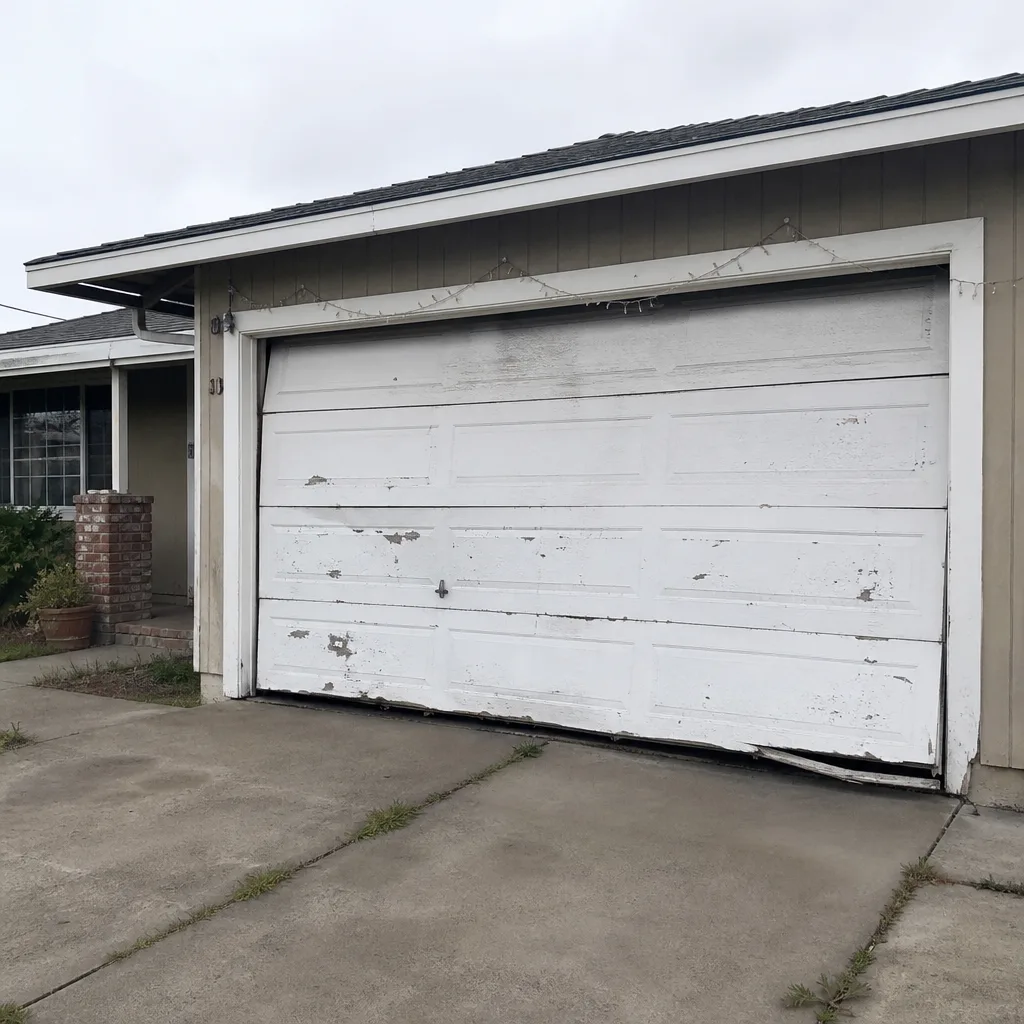 Before
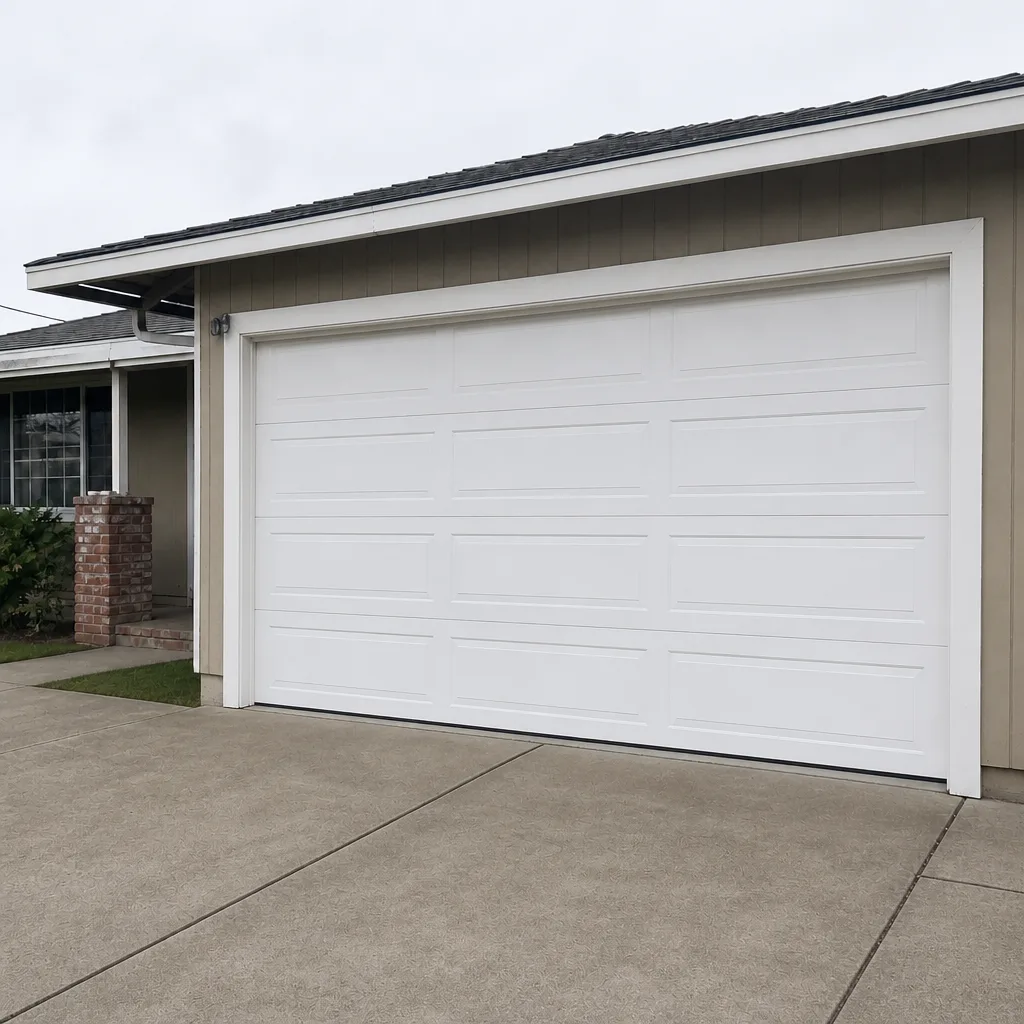 After
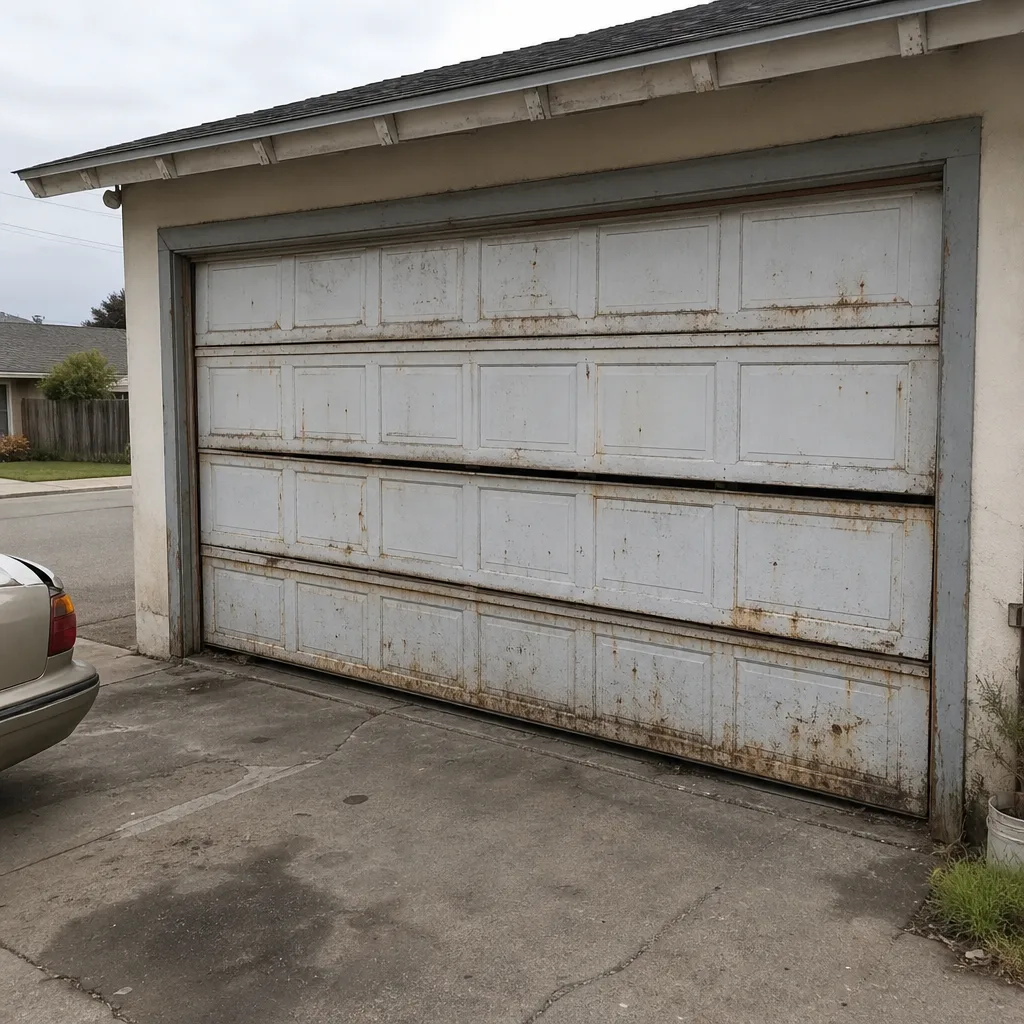 Before
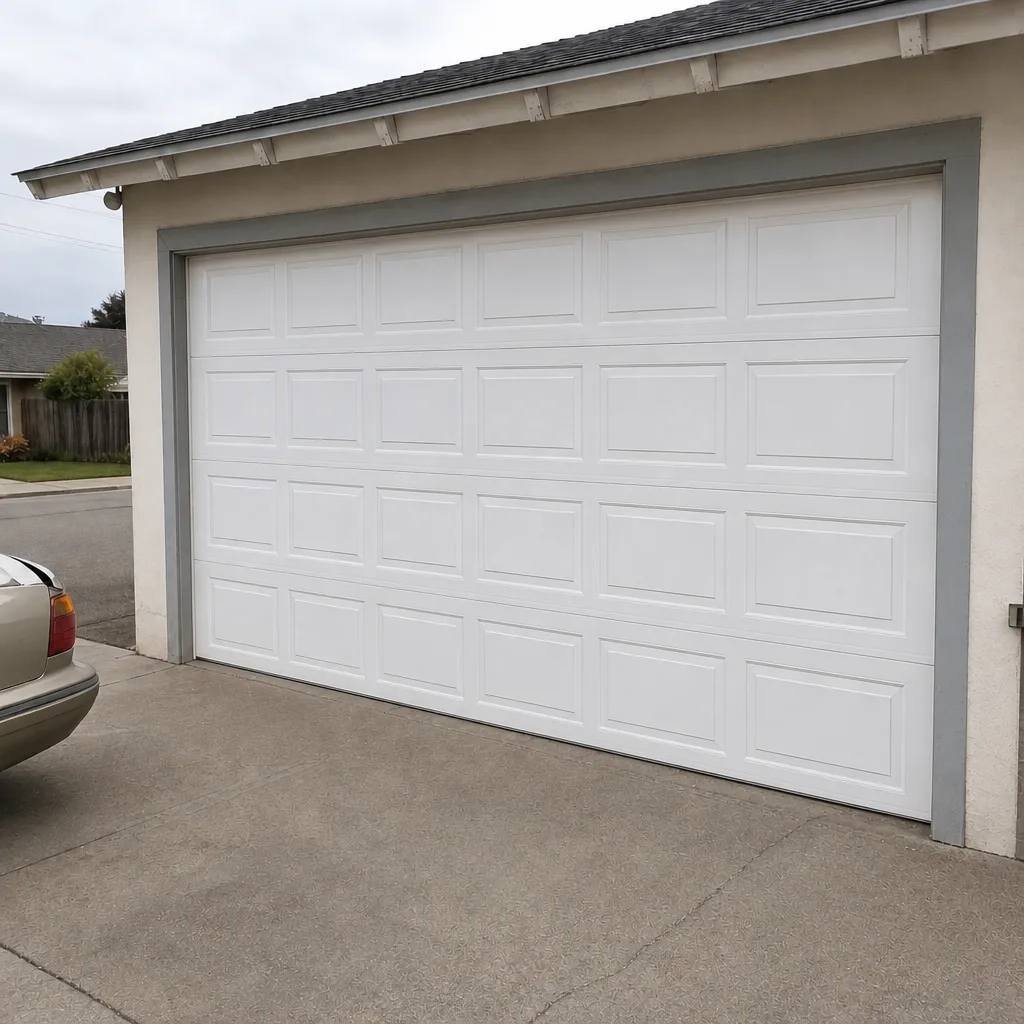 After
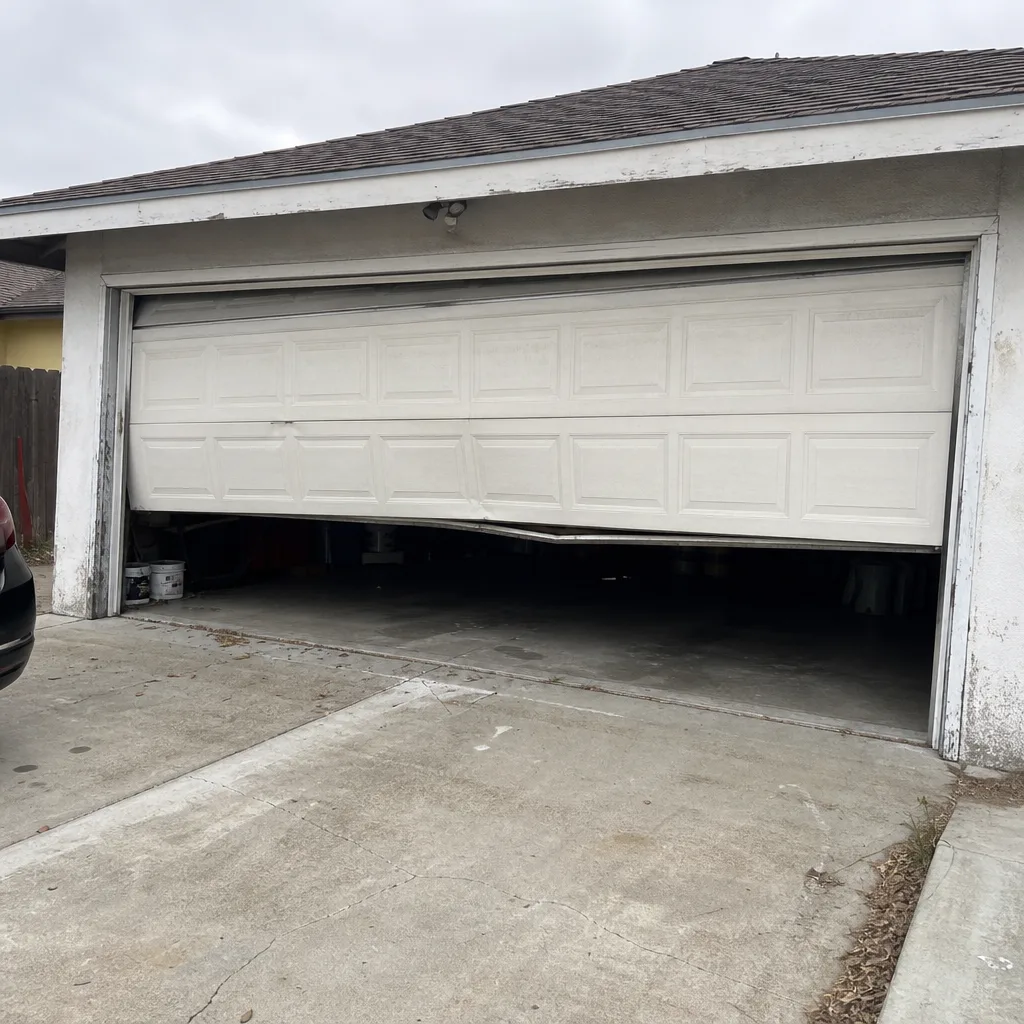 Before
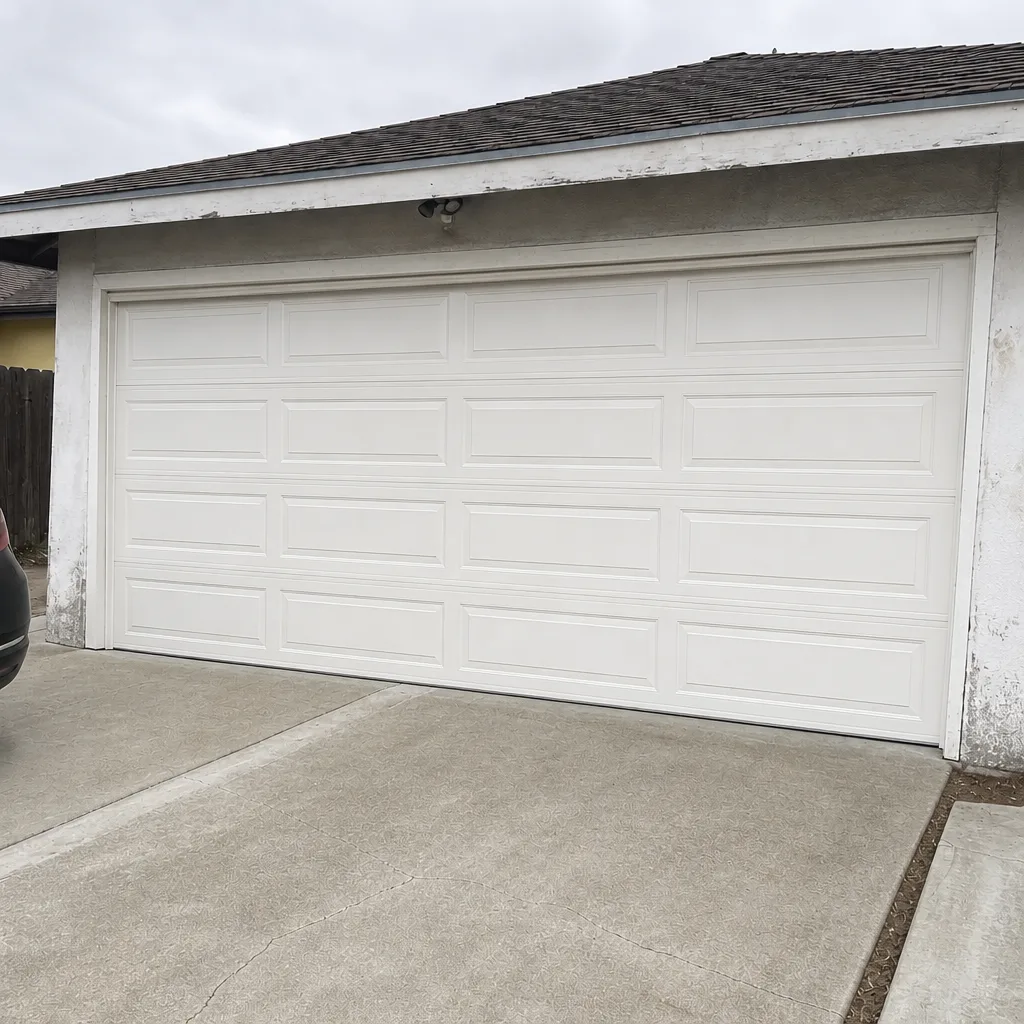 After
When to Call a Professional
Some questions are worth a quick call to the building department. Others are worth a call to a specialist. If you’re not sure whether your project crosses the line from replacement into modification, if your opener needs battery backup and you don’t know which models qualify, if the framing above your opening is showing signs of stress, or if a previous owner left you with a door that operates erratically and no paperwork, these are the situations where experience pays for itself. We see Santa Maria homes with a wide range of door ages, brands, and installation quality, and the diagnosis is usually faster and cheaper than guessing. Halo Garage Door Repair offers free estimates in Santa Maria. Our technicians have up to 15 years of experience, and we work on every major brand without pushing one over the others. Halo Garage Door Repair can walk you through the right fix and, when a permit is involved, the safest order to do the work. Call (866) 361-7506 to set up an estimate.
Frequently Asked Questions
Usually no, if the replacement is like-for-like: same size, same opening, same hardware configuration. If the opening is widened, the header or framing is changed, or a new opener is being installed that triggers code requirements, a permit is typically required. Call the City of Santa Maria Building and Safety Division or Santa Barbara County Planning & Development, whichever has jurisdiction over your parcel, to confirm. Call (866) 361-7506 if you want a second opinion on whether your project crosses that line – estimates are free.
In many residential installations, yes. The rule was added to keep garage doors usable during power outages, and it applies to many new opener installs across the state. The exact scope and any local amendments should be confirmed with the city or county before you install. If you’re picking a new opener, choose one with battery backup built in; LiftMaster, Chamberlain, and Genie all offer models that comply. Call (866) 361-7506 for help matching your opener to the code.
It comes down to location. If your parcel is inside the city limits, the City of Santa Maria handles the permit and inspection. If it’s in unincorporated Santa Barbara County, including much of the area around Vandenberg Village, the county does. The forms, timelines, and inspection styles differ slightly between the two, which is why the first step on any garage door project is confirming jurisdiction. Call (866) 361-7506 if you’re not sure which side of the line you’re on – we can usually tell you from the address.
A final inspection checks that the work matches the approved plans: the door configuration, the anchoring and framing, the opener mounting, the battery backup where required, and the safety features like the photoelectric sensors and auto-reverse. Inspectors test operation, then sign off. What they don’t check is the long-term quality of the installation, which is why a door that’s balanced and force-tested on completion matters as much as the pass. Call (866) 361-7506 to schedule a safety check after any permitted work.
It’s fixable, but it takes a phone call and sometimes a re-inspection. The city or county may allow a permit after the fact, which typically requires opening up any finished surfaces so the inspector can see the work. If the work needs correction, that becomes a condition or a negotiation point at sale. Handle it before you list your Santa Maria home rather than discovering it during a buyer’s inspection. Call (866) 361-7506 if you want an honest read on the installation before you start the paperwork.
Keep the permit number, the final inspection sign-off, the written estimate and final invoice, the manufacturer’s documentation for the door and opener, and any service records. Save photographs of the installation as well. All of it goes into your home’s records and travels with the property at resale disclosure. If you’ve used us for a permitted project, we’ll hand you the documentation to file. Call (866) 361-7506 if you need records pulled for a project in the works.
The Bottom Line
Garage door permits in Santa Maria come down to one distinction: replacement versus modification. A like-for-like swap usually needs no permit. A change to the opening, framing, or the way the garage functions usually does, and a new opener in California often has to include battery backup. Your jurisdiction matters as much as your project: City of Santa Maria inside the city limits, Santa Barbara County on unincorporated parcels, with some real differences around Vandenberg Village. Get that confirmed first. Then do the work in the right order, keep the paperwork, and treat the final safety check as the real finish line, not the inspection sign-off. If you’d rather have a specialist look before you commit, call (866) 361-7506. We answer 24/7. Fast dispatch from 7am to 7pm, Sunday through Friday, and the estimate is free.
Written by the team at Halo Garage Door Repair.