
Last updated November 15, 2026
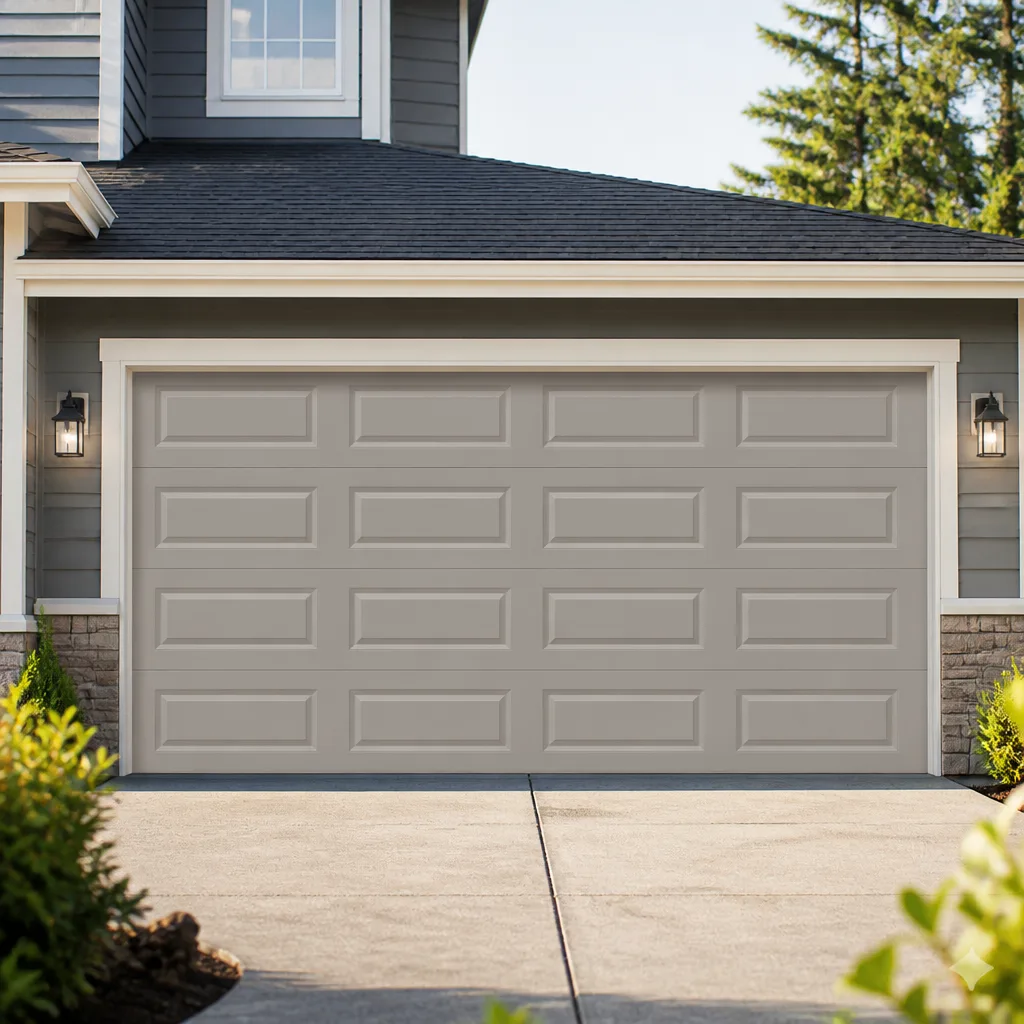 Raised-panel steel
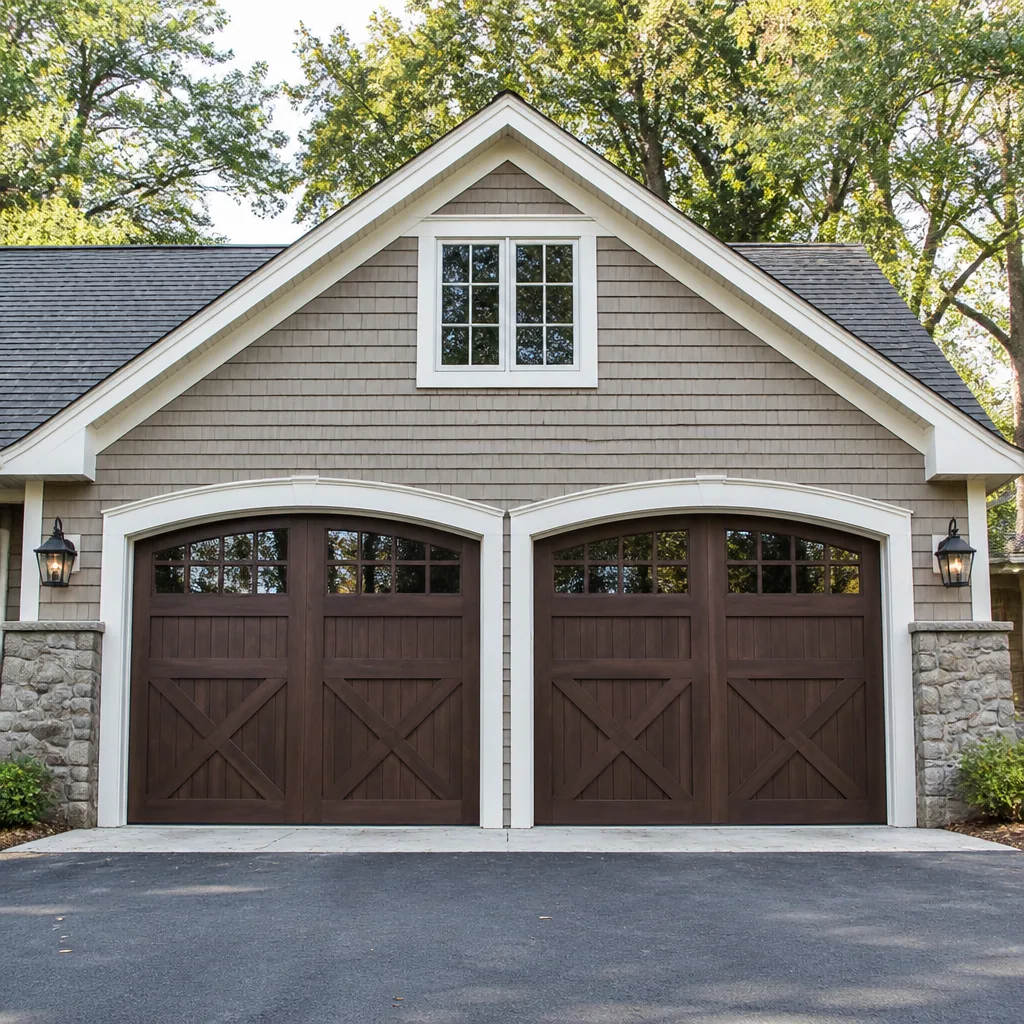 Carriage house
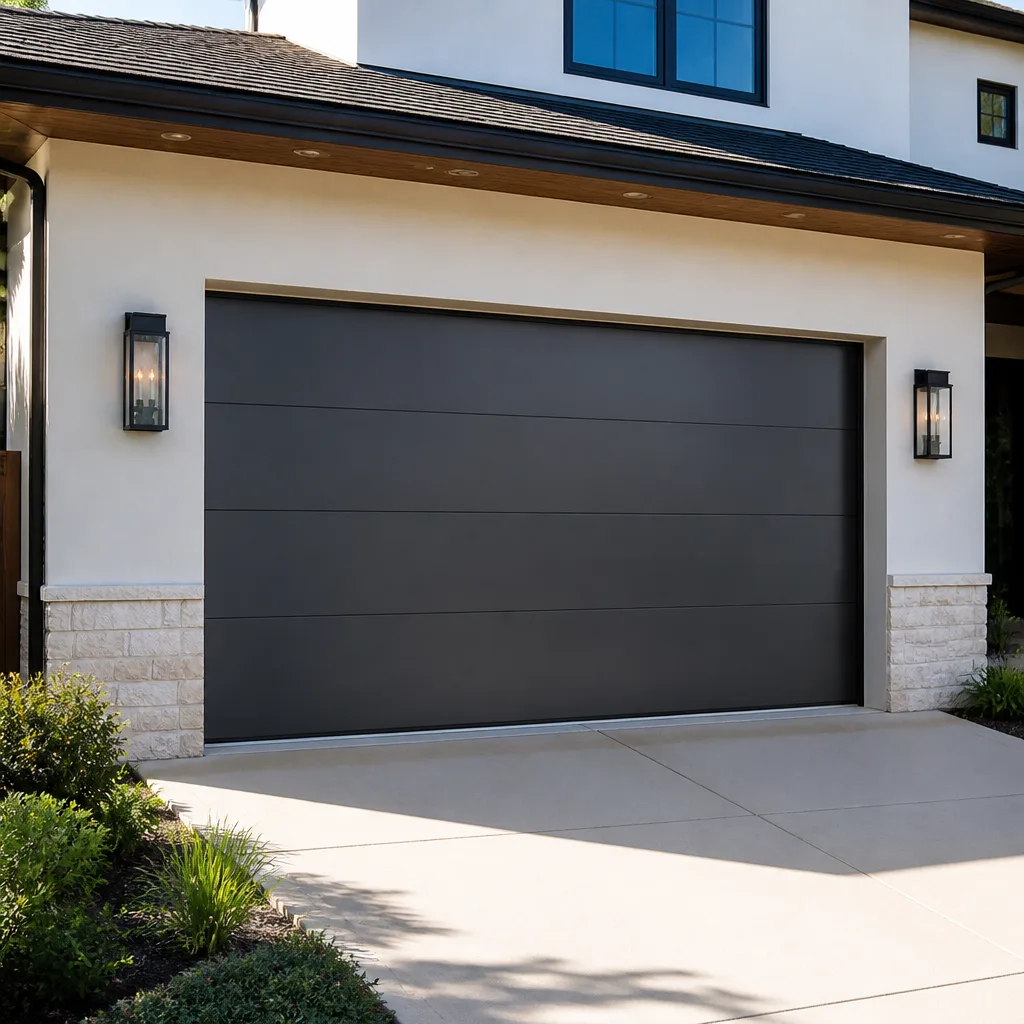 Modern flush
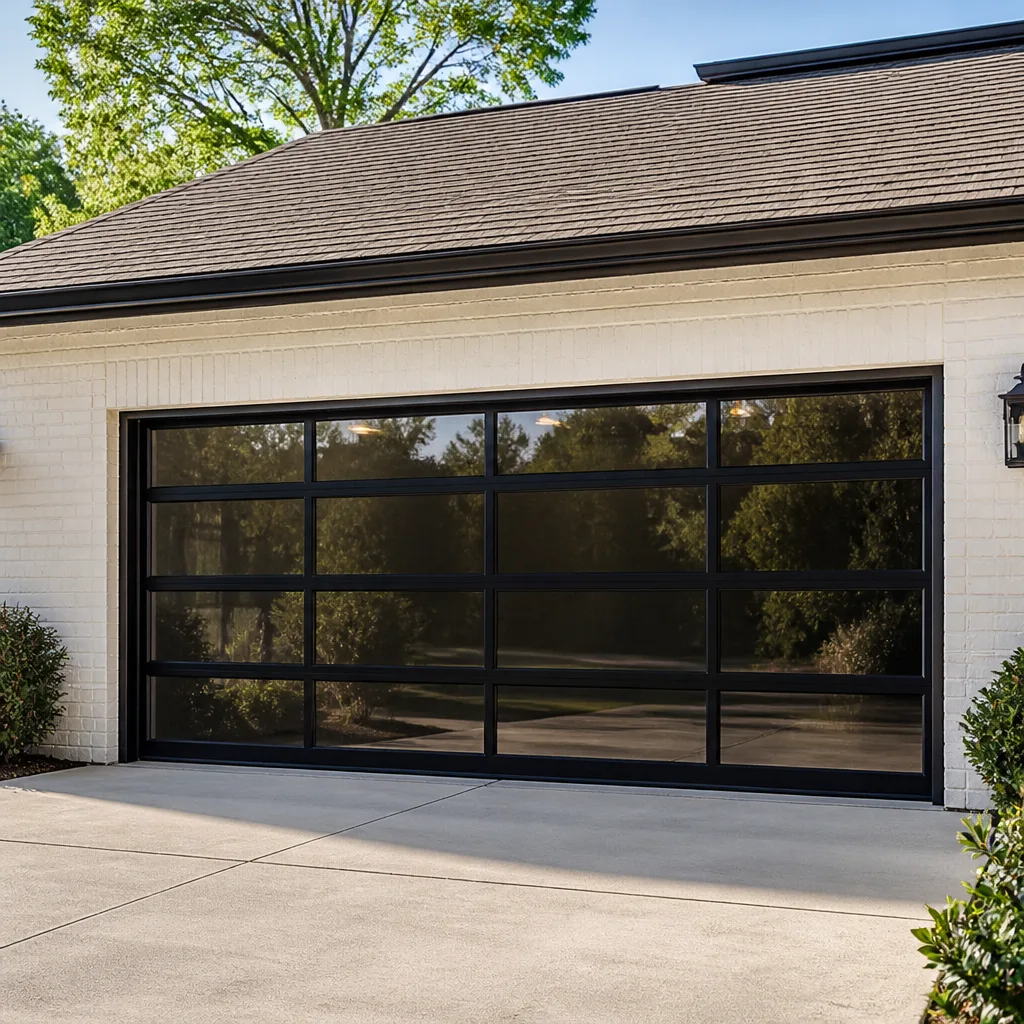 Full-view glass
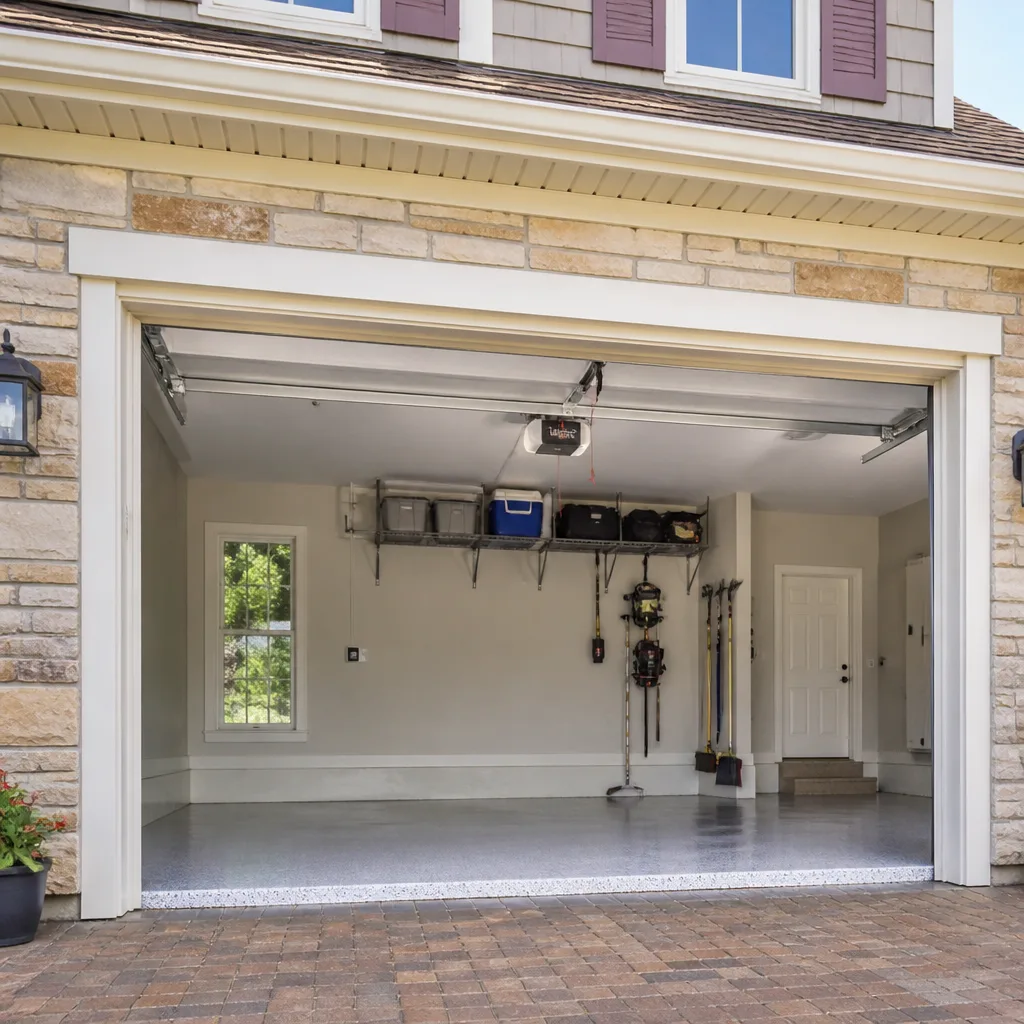 LiftMaster openers
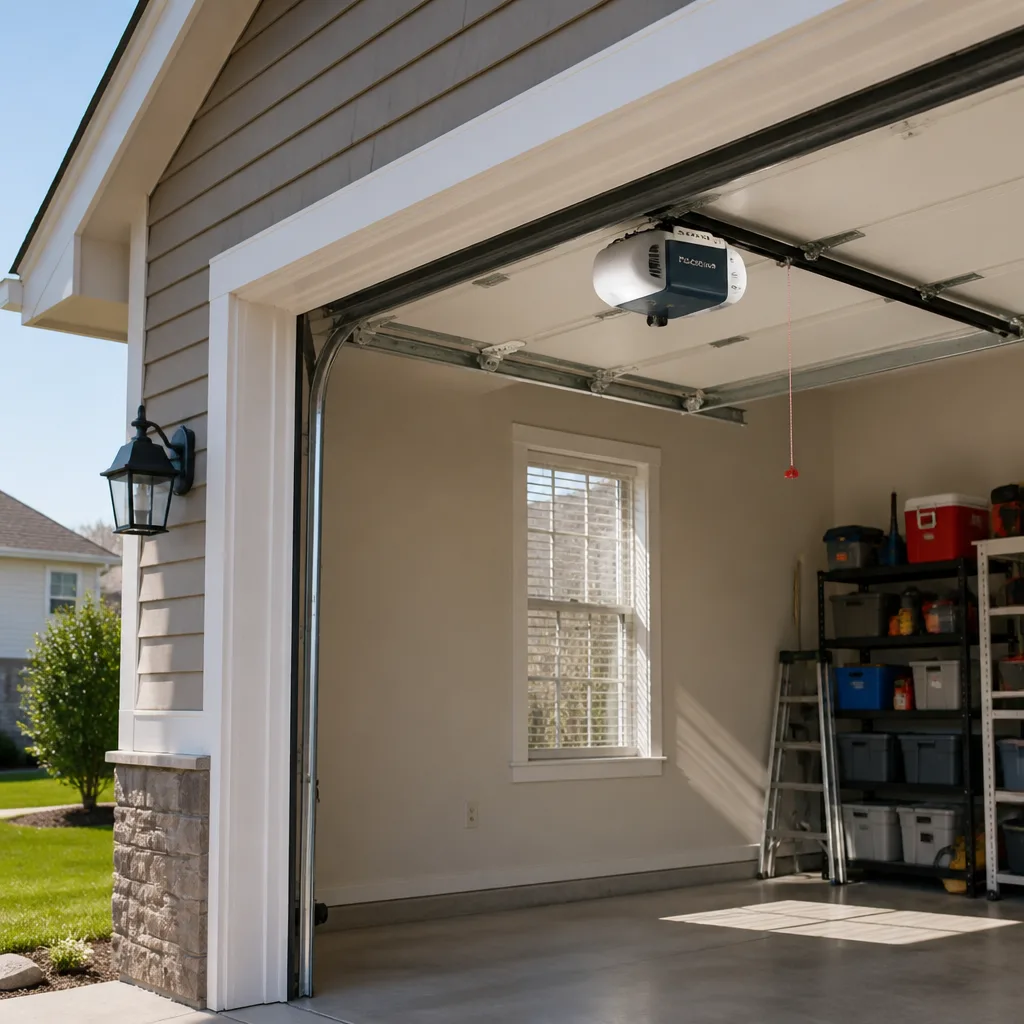 Chamberlain openers
Full 25-point door and opener safety check with every visit - springs, cables, rollers, tracks, and your LiftMaster or Chamberlain opener included
You get a price before we start. It does not change when the pro arrives.
Get your free estimateGarage Door Cost Breakdown: The Santa Maria Homeowner’s Reference for 2026
The $89 tune-up on the yard sign is a door opener for the sales pitch, not the finish line. That advertised price almost always leads to a call-out conversation about worn rollers, a tired spring, or a “safety upgrade” the technician recommends on the spot. None of that means the work isn’t needed. It means the number you were quoted at the curb rarely matches the number on the invoice. The point of this guide is different. Instead of handing you one made-up range for “a garage door repair,” we’re breaking the cost of each component down – springs, cables, rollers, seals, opener parts, labor – so you can read an itemized quote from any Santa Maria garage door company and know whether it’s fair. Budget clarity beats a single misleading number.
Quick Answer
Garage door repair in Santa Maria in 2026 typically runs about $95 to $175 for a basic service call, $220 to $350 to replace a single torsion spring, and $150 to $260 for a full tune-up with hardware. A one-piece opener repair (gear, logic board, or travel module) usually lands between $180 and $340, while a full new door installation with opener runs $1,600 to $4,200 depending on door style, size, and opener type. The written estimate always sets the final price – not the number on the phone, and not the number on the yard sign.
Styles & brands we work with
- Raised-panel steel
- Carriage house
- Modern flush
- Full-view glass
- LiftMaster openers
- Chamberlain openers
Table of Contents
- How garage door pricing actually works in Santa Maria
- Parts cost breakdown: springs, cables, rollers, and seals
- Labor benchmarks: what a service call should run
- Why brand matters: Clopay vs. generic import pricing
- Repair vs. replacement: when the conversation is legitimate
- Hidden cost triggers that can double a quote
- How to read an itemized quote line by line
- Common mistakes to avoid
How does garage door pricing actually work in Santa Maria?
Garage door pricing in Santa Maria is built from three buckets: parts, labor, and access. Parts are what they cost from a supplier, plus a small markup. Labor is the time the job takes, valued at a market rate. Access is everything that makes the job longer than expected – a low-clearance header, a non-standard door height, or opener wiring that hasn’t been touched since the house was built. The single biggest reason quotes vary wildly is that some contractors quote the minimum and adjust on-site, while others quote the full job up front. The second reason is that some quotes include the second spring, and some don’t.
A fair quote in Santa Maria looks like this:
- A free on-site assessment with the door operated in front of you.
- An itemized list: each part, each labor block, and any conditions affecting the job.
- A stated price for the work as described, not a range that expands later.
- The words “written estimate” somewhere on the page, with a price that holds unless you ask for more work.
We work on a lot of homes here, and the pattern is consistent. Houses built in the 1970s and 1980s around the northern neighborhoods often have original wood-section doors with hardware that’s been replaced piecemeal. Houses built in the 1990s and 2000s more often have steel doors with paired torsion springs. The parts and labor profile of a Santa Maria garage door job follows the build era more reliably than any other factor – which is why a careful contractor asks when the house was built before opening the tool bag.
Parts cost breakdown: springs, cables, rollers, and seals
Here’s the parts reality for 2026, expressed as ranges you’ll see in an itemized quote. These are estimates, and the written estimate always confirms the number.
Torsion springs
- Single standard torsion spring, oil-tempered: $220-$350 installed (the spring itself is $70-$130; the rest is labor and balance adjustment).
- Matched pair, replaced together: $340-$560. A pair is roughly twice a single spring, because the labor is nearly the same but the parts are doubled. Springs are matched; replacing one of a pair leaves the door out of balance.
- Extended-cycle spring (higher cycle rating, better steel): $290-$420 for a single because the spring itself costs more.
- Low-clearance or rear-mount torsion: $260-$400 for a single, because the hardware kit differs.
Torsion springs are the single most dangerous component on any residential garage door. They’re under extreme tension. We don’t recommend homeowners attempt spring replacement, ever. If your door is stuck, call a professional. This is the one part of the trade where doing it yourself can send you to the emergency room.
Cables and drums
- Single lift cable replacement: $95-$160.
- Cables and drums as a pair: $160-$260.
Rollers, hinges, and bottom seals
- Standard nylon rollers, set of 10: $90-$150.
- Sealed-bearing rollers, set of 10: $140-$220.
- Full tune-up kit (rollers, hinges, bearing plates, lube): $150-$260 installed.
- Bottom rubber seal, single-car door: $90-$160 installed.
- Bottom rubber seal, double-car door: $140-$240 installed.
The central coast climate is mild, so the seasonal cycle that destroys doors in colder regions doesn’t apply here. Heat and dust are the bigger factors, which is why rollers and bottom seals wear faster in Santa Maria than the hardware on the same door would in a cooler climate. A door that’s been lubricated once a year and kept clean usually goes longer between roller replacements than the calendar suggests.
Labor benchmarks: what a service call should actually run
Labor is where most of the confusion lives. A service call in Santa Maria for a routine issue – door off track, opener not responding, sensor out of alignment – should run $95 to $175 in labor if no parts are needed. A simple adjustment and lubrication is usually at the low end of that. A full realignment with track straightening is usually at the top. Anything in the openers or door section that needs disassembly moves past that range because the job becomes a proper repair.
Ranges you should expect for common jobs
- Routine service call (no parts): $95-$175.
- Single torsion spring replacement, standard: $220-$350 (part and labor together).
- Full tune-up with hardware: $150-$260.
- Opener repair (gear, board, or travel module): $180-$340.
- Opener replacement, installed: $420-$850 depending on opener type and features.
- New door installation (door only, no opener): $1,100-$2,800.
- New door plus opener, installed: $1,600-$4,200.
What should and should not be in a labor line
- Time for setup, safe disengagement of the door, and re-testing. A careful contractor includes all three.
- A balance test and force test at the end of a spring job. This is part of the labor line; if it’s an extra line, ask why.
- Disposal of old hardware where relevant.
- No hidden “diagnostic” fee on top of a quoted job. The estimate is free, and the price is per job.
In our experience, the biggest cause of a high garage door bill isn’t the trade rate itself – it’s a job that should have been diagnosed differently. That’s why we treat opener work as a distinct service, with technicians trained on the electronics and drive systems, rather than a generalist handyman guessing at a gear set. Call (866) 361-7506 for a free estimate. We answer 24/7. Fast dispatch from 7am to 7pm, Sunday through Friday.
Why does brand matter for the quote?
Brand matters for two reasons. The first is parts compatibility. A Clopay spring, for example, is matched to a specific Clopay door geometry; a generic import spring might physically fit the shaft but run a different cycle profile, so it doesn’t last as long. A Wayne Dalton door in a Santa Maria garage may use proprietary hardware that a generalist contractor won’t recognize. The second reason is that technicians who aren’t familiar with a brand sometimes recommend a replacement door when a repair would have done the job – simply because they don’t know the replacement parts are available. We’re factory-familiar with eight brands: LiftMaster, Chamberlain, Genie, Clopay, Amarr, Wayne Dalton, Craftsman, and Raynor. That covers most of what’s in a Santa Maria garage, and it’s why we don’t say “we don’t service that.”
Where brand actually changes the number
- A Clopay torsion spring replacement runs $20-$60 more than the equivalent generic spring because the matched genuine part costs more. On a single door, that difference is often worth it; on a multi-door property, weigh it door by door.
- A Craftsman or LiftMaster opener repair may cost $15-$50 more than a generic opener because LiftMaster logic boards and travel modules are priced higher than the aftermarket equivalents. We usually recommend the OEM part unless the door is near retirement.
- A Raynor or Wayne Dalton door repair can go either way: many common failures (rollers, cables, seals) use standard parts, but panel and hardware-specific issues need the matched brand part.
- Opener compatibility matters when replacing an opener – a smart opener tied to a specific brand ecosystem (LiftMaster’s MyQ, for example) may not integrate cleanly with a different brand’s remote and app ecosystem.
The brand-agnostic approach is this: diagnose the actual problem, then recommend the part that fixes it, not the part that’s easiest to stock. A quote that skips that step is not really a quote – it’s a sales call.
Repair vs. replacement: when the conversation is legitimate
There is a point where replacement is the honest answer, and a point where it isn’t. A garage door has six major components that wear – springs, cables, rollers, bottom seal, hinges, and the opener – and each has its own lifespan. A door is a genuine replacement candidate when the panels themselves are structurally damaged, when the door has been repaired three or more times in the last few years, or when the labor cost of repairing it approaches the cost of a new door and opener together. It is not a replacement candidate simply because the door is old. A 25-year-old Clopay with original steel panels can easily outlast a cheap import door installed 5 years ago in the same neighborhood.
Signals that repair is the right call
- The door panels are structurally intact and the door runs close to level.
- The failure is limited to one component (a spring, a cable, a roller set).
- The opener is functioning and matches the door’s weight and speed requirements.
- The job comes in under about half the cost of a replacement door plus opener.
Signals that replacement is the honest call
- Panel sections are rusted through, dented beyond repair, or delaminating.
- The door manufacturer no longer makes matching replacement panels for the model.
- The same section of the door has failed repeatedly.
- The opener is unsafe (missing safety reversal, no photo-eye sensors) in a way that can’t be corrected.
When a quote recommends replacement, ask which of these signals applies and where the reasoning is on the itemized list. A good quote answers that without a sales pitch. That’s what “right fix, not the easiest upsell” looks like on paper. If you want a second opinion on your Santa Maria garage door, Halo Garage Door Repair offers free estimates, and we’re happy to explain what we see before any work starts.
What are the hidden cost triggers that can double a quote?
These are the conditions that turn a straightforward job into a bigger one. A good contractor identifies them on the first visit and prices them into the written estimate. A bad one quotes the minimum and adds them on-site, when the door is already disassembled and you’re not in a position to push back.
Non-standard door heights and widths
Standard residential doors are 7 feet tall and 8 to 16 feet wide. A door taller than that (common in Santa Maria homes with high-ceiling garages or RV bays) means different spring sizing, different cable lengths, and often a custom opener arm. A 9-foot RV door can add $80 to $250 to a spring or opener job because the parts aren’t standard. That’s a legitimate adjustment, not an upsell – but it should be visible on the quote, not a surprise at the invoice.
Low headroom setups
Some Santa Maria garages – especially in neighborhoods with tighter street frontage – have low headroom above the door. That means a rear-mount torsion system or a low-clearance conversion, and a different hardware kit. Spring replacement in these setups runs about $40 to $90 more than the standard range, because the labor involves careful repositioning and often a different part.
Older opener wiring
Openers wired before modern safety standards (or openers with a non-standard control circuit) can require re-running low-voltage wiring to the wall station and photo eyes. This can add $80 to $220 to an opener repair or replacement, depending on the run length and whether the wire is accessible. Older Craftsman and LiftMaster units in Santa Maria homes often fall into this category – the opener itself is fine, but the wiring to it isn’t safe to reuse.
Two-car and multi-door configurations
Two-door garages are two jobs, not one. That’s obvious once you’re looking at the door, but a quote that lumps them together hides the cost. A property manager handling a multi-unit Santa Maria building should ask for per-door line items so the accounting is clear later.
How do you read an itemized quote line by line?
Here’s the process we recommend to any Santa Maria homeowner holding a garage door quote. It’s short, and it works with any contractor.
- Count the parts. Springs, cables, rollers, hinges, seal, opener parts – each should be its own line with a quantity and a price. If the quote bundles these into “spring repair, $X,” ask for the itemization. It should take one minute to produce.
- Check the labor. Labor should be one line, either as a block rate or an hours estimate. Compare it to the benchmarks above for the job type.
- Look for the words “written estimate.” A price should be stated and held, not described as “in the range of” or “starting at.”
- Confirm what’s included in the safety check. A spring job should include a balance test and a force test at completion. If those aren’t mentioned, ask.
- Spot the conditions. Any non-standard aspect – door height, headroom, wiring – should be a line item with a price. If it’s not there but the technician mentioned it verbally, ask for it in writing.
- Ask about the brand. If the quote is for a LiftMaster, Chamberlain, Genie, Clopay, Amarr, Wayne Dalton, Craftsman, or Raynor door, ask whether the parts are OEM or aftermarket and why. Both answers can be correct; the quote should justify the choice.
- Compare the total to the door’s replacement cost. If the repair quote is more than half of a new door plus opener, replacement deserves consideration.
A quote that survives all seven of those steps is a good quote. A quote that doesn’t isn’t necessarily dishonest, but it’s incomplete, and you have a right to a complete quote before agreeing to anything. When you’re ready, our garage door repair team can walk through what we see on your door and what a fair fix looks like – diagnosed, not guessed.
Common Mistakes to Avoid
- Accepting a “tune-up special” without asking what’s included. Many advertised tune-ups cover a lube and a visual inspection only. Ask which parts are included and which are extra before the technician arrives. Two sentences with the scheduler save an argument on the driveway.
- Letting the contractor pick the spring without asking about the cycle rating. A cheap spring that fails in two years isn’t a bargain. Ask for the cycle rating on the spring being installed, and ask how it compares to the original.
- Assuming two springs means two identical jobs. Springs are matched to the door’s weight. Ask whether both will be replaced together, and whether the quote includes both. A quote that lists one spring but says “pair” is not a pair.
- Skipping the brand question on a repair to a Raynor or Wayne Dalton door. These doors sometimes use proprietary hardware. A brand-agnostic diagnosis will recognize that; a contractor who doesn’t work with these brands often defaults to replacement, which costs far more than a part.
- Ignoring the opener wiring age. A new opener on old, unsafe wiring is a real problem in a Santa Maria home with original 1990s wiring. The quote should address low-voltage wiring separately.
- Trusting a quote that skips the brand name. Any quote for a branded door or opener should name the brand. If it doesn’t, ask. Naming the brand is how the quote tells you the contractor knows the equipment.
- Choosing on price alone. The lowest quote in Santa Maria is not automatically the best quote. Choose on completeness of the diagnosis, itemization, and whether the technician ran the door and tested balance at the end.
See the difference
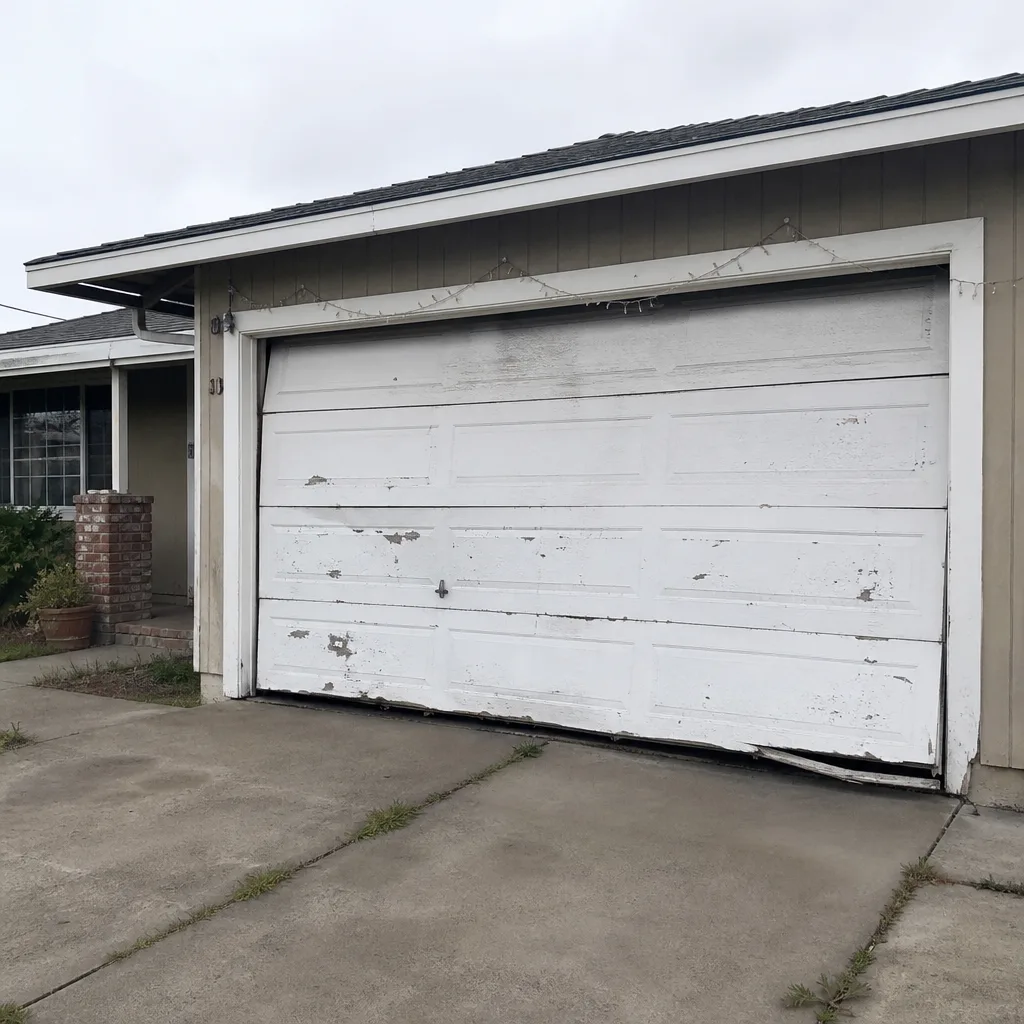 Before
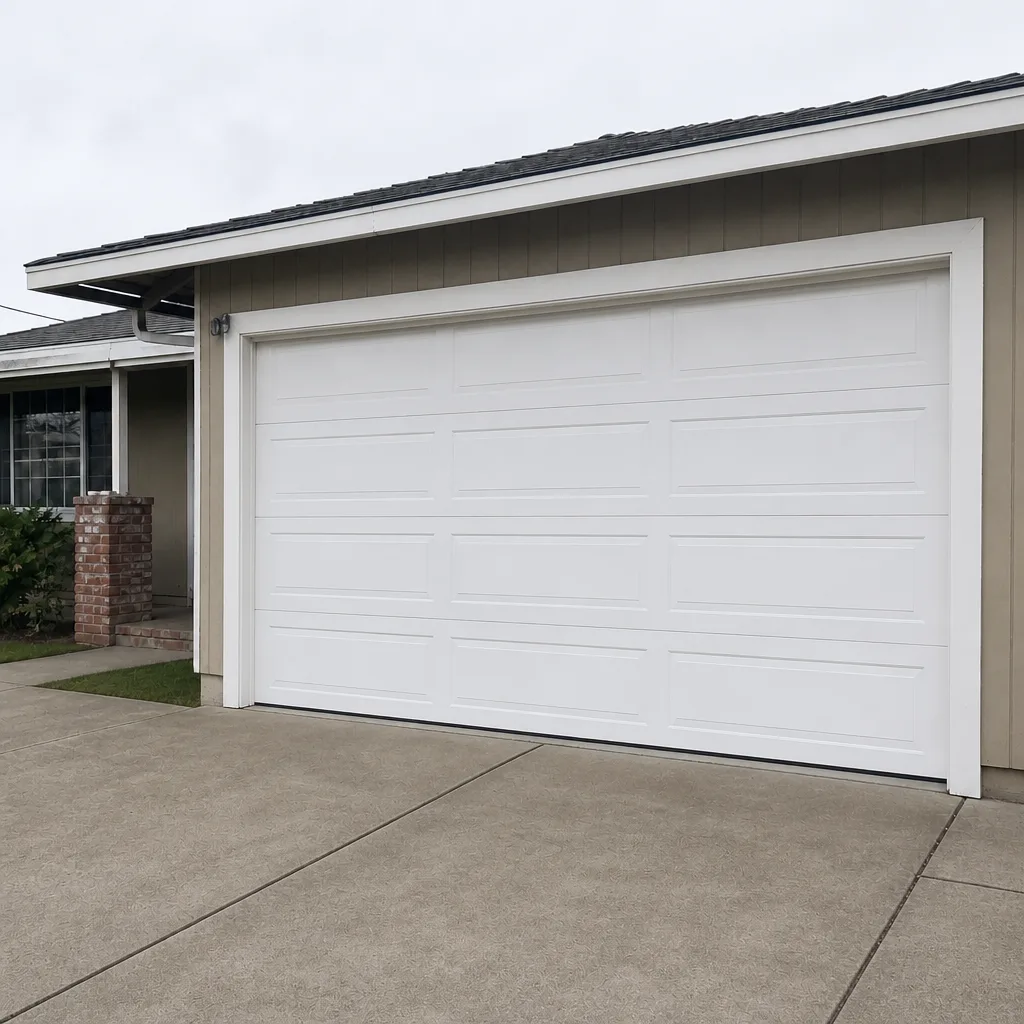 After
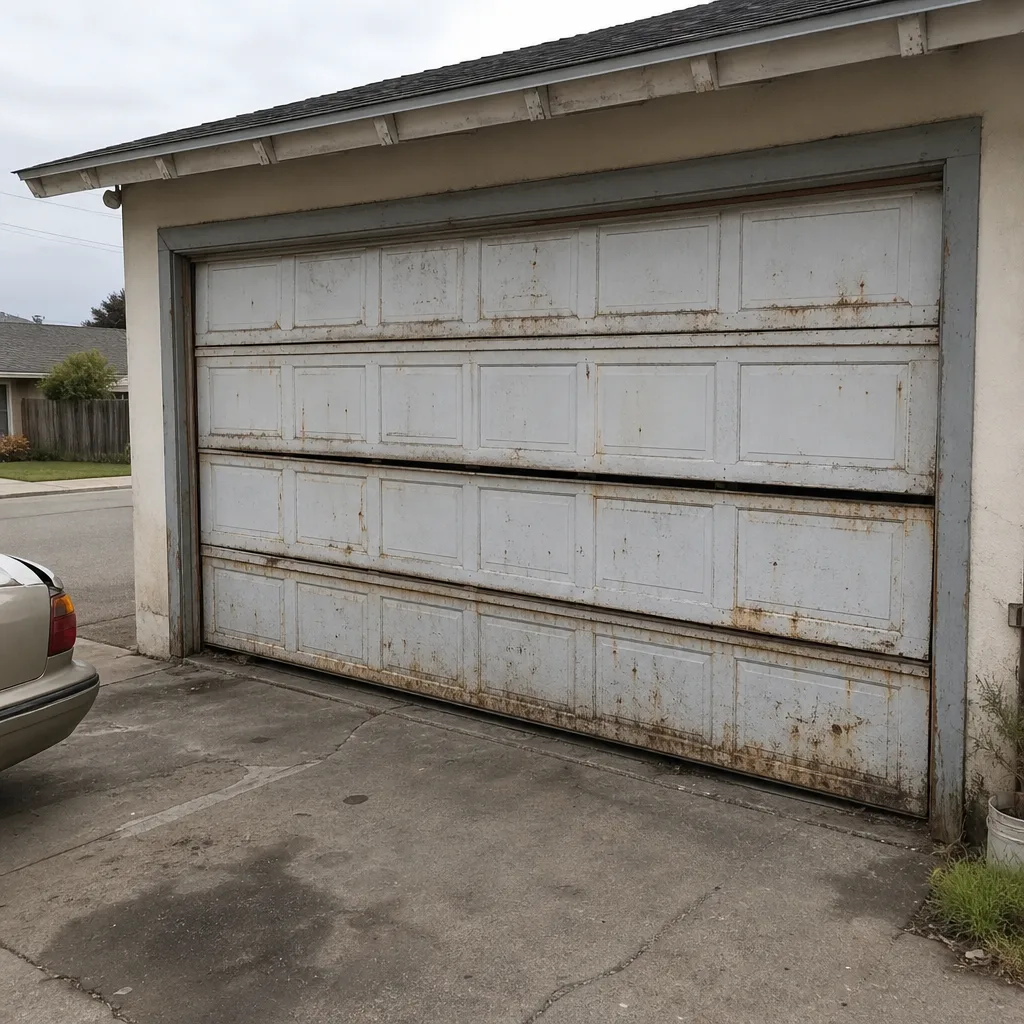 Before
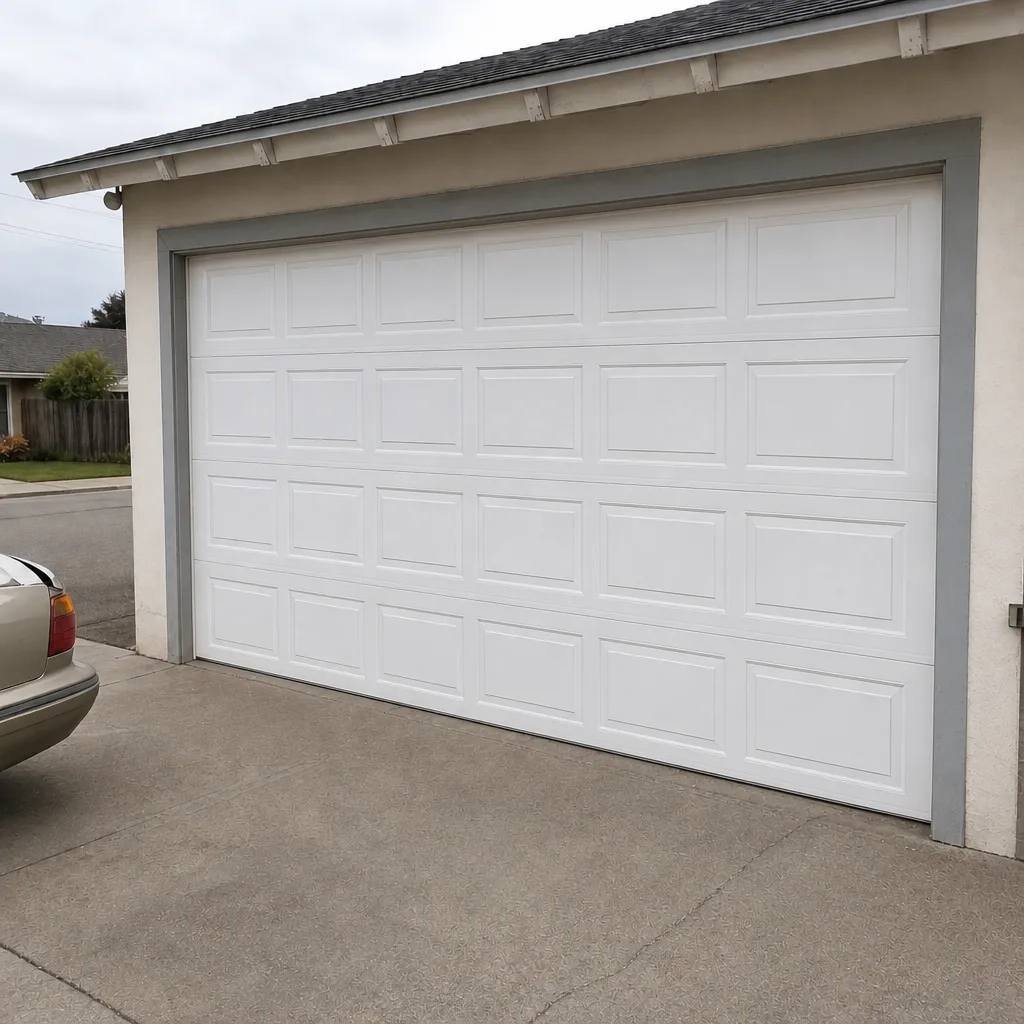 After
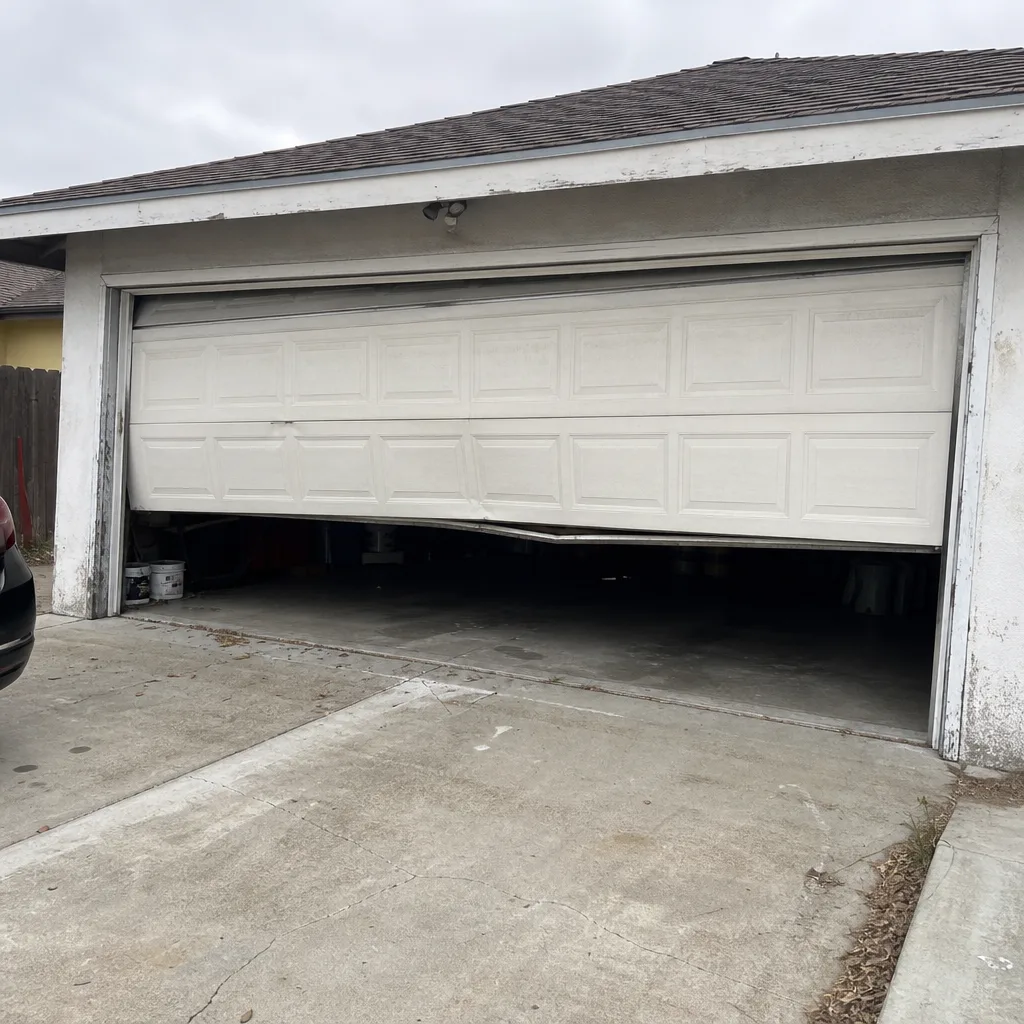 Before
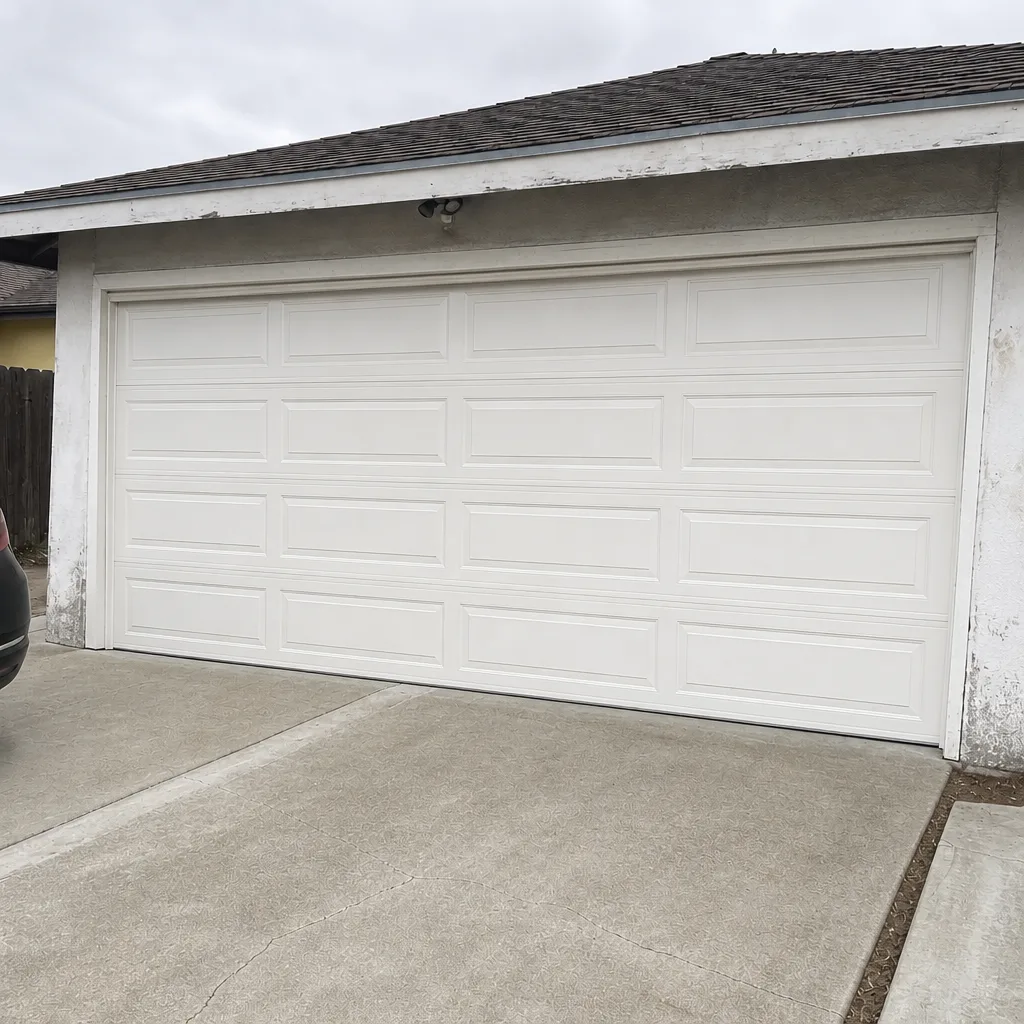 After
When to Call a Professional
Some repairs are homeowner-safe; some aren’t. Springs, cables, and the mechanical tension of the door system are for trained technicians, full stop. The parts are under enough force to cause serious injury, and the procedure requires tools most households don’t own. Opener electronics are usually safe to inspect visually, but diagnosing a failed logic board or travel module takes a multimeter and a step-by-step check that most people don’t want to do on a ladder. If the door is off its track, if the opener runs but the door doesn’t move, if the door reverses on its own, or if you’re hearing a loud bang from the garage, that’s a professional call. Also call a professional if the door is a brand you don’t recognize and a contractor is telling you it needs to be replaced – a second opinion from someone who works on that brand costs nothing and can save a lot.
Halo Garage Door Repair offers free estimates in Santa Maria, and we work on LiftMaster, Chamberlain, Genie, Clopay, Amarr, Wayne Dalton, Craftsman, and Raynor equipment. If you’re not sure whether you need garage door opener repair or a full door repair, call (866) 361-7506 and we’ll talk it through before anyone is dispatched. We answer 24/7. Fast dispatch from 7am to 7pm, Sunday through Friday. We’re closed on Saturday, but a Saturday call is booked into the next opening.
Frequently Asked Questions
Garage door repair in Santa Maria in 2026 typically runs $95 to $350 depending on what’s being fixed. A routine service call with no parts is $95 to $175. A single torsion spring replacement is $220 to $350. A full tune-up with hardware is $150 to $260. The written estimate always sets the final price, so use these ranges for budgeting and let the on-site assessment confirm the number. Call (866) 361-7506 for an exact quote – estimates are free.
A real tune-up is worth it on any door more than a few years old. It replaces the rollers and bearings that are about to fail, checks the spring balance, and catches cable wear before it snaps. The reason to be careful is that many advertised tune-ups are not real tune-ups – they’re a lube and a look, with an upsell attached. Ask which parts are included and which are extra before you agree to the visit. For a Santa Maria home, a real tune-up every two years catches most wear before it becomes a repair. Call (866) 361-7506 if you want to know what your door actually needs – the estimate is free.
A quote higher than the standard range is usually the result of a condition the online range doesn’t account for. Non-standard door height, low headroom, old opener wiring, or a second door in the same job all raise the price legitimately. The test is whether the quote itemizes those conditions. If it does, the higher price is likely fair. If it doesn’t, ask for the itemization before you agree. Call (866) 361-7506 for an exact, itemized quote – estimates are free.
Replace both if they’re a matched pair, which is the usual setup on any door more than a few years old. A pair is roughly twice a single spring in parts, but the labor is nearly identical. Replacing one spring of a matched pair leaves the door out of balance and tends to cause the other to fail soon. A single spring on a single-spring door is a different situation; ask which configuration you have before approving the work. Call (866) 361-7506 for an exact quote – estimates are free.
Yes, in most cases. Non-standard heights and low headroom setups need different springs, cables, and hardware than a standard 7-foot door, but the door panels themselves usually aren’t the problem. The right fix is a matched spring kit and the appropriate hardware for the setup, not a new door. That’s why a careful diagnosis matters before anyone quotes a replacement – the part exists, the contractor just needs to know which one to order. Call (866) 361-7506 for an exact quote – estimates are free.
If it’s a good quote, no. A written estimate should hold unless the scope of the job changes because you asked for additional work. If a technician arrives and says the job is bigger than quoted, ask for the reason in writing and compare it to the on-site assessment in the original quote. When the original quote itemized everything, this happens rarely. When it didn’t, it happens often enough that we built our quote process around preventing it. Call (866) 361-7506 for an exact quote – estimates are free.
Yes. Our technicians are experienced, insured, and state-licensed, and they hold the training to handle both door mechanicals and opener electronics. The work is performed by independent local professionals we connect you with, and every job ends with a door that’s balanced, force-tested, and safe to operate – not just “good enough.” If a technician can’t show credentials on request, ask why. Call (866) 361-7506 for an exact quote – estimates are free.
The Bottom Line
A single garage door price range tells you almost nothing, because the number that actually matters depends on your door brand, spring configuration, opener type, and whether the previous owner left you with a non-standard setup. Use the ranges in this guide as a framework for reading any Santa Maria quote: look for parts by line, labor by line, and conditions by line. If everything is itemized, the price holds. If it isn’t, ask. Around the Vandenberg AFB corridor and across Santa Maria, homeowners who read quotes this way stop overpaying for garage door work – and stop underpaying for repairs that were going to fail again anyway. That’s the real reason this breakdown exists. For a free, itemized estimate on your Santa Maria garage door, call (866) 361-7506. We answer 24/7. Fast dispatch from 7am to 7pm, Sunday through Friday.
Written by the team at Halo Garage Door Repair.